


Does Male Fertility Really Decline With Age?
Unlike women, men do not have a fixed number of reproductive cells — the body produces new sperm throughout life. In fact, cases of men fathering children beyond age 90 have been documented — although such cases are rare and not representative of typical fertility potential.[^1] This has led to a widespread belief that male fertility is somehow “timeless.” It is not.
A landmark 2023 meta-regression analysis of samples collected globally found that mean sperm concentration fell from about 101 million/ml in 1973 to 49 million/ml in 2018 — a 51.6% decline.[^2] Perhaps more alarming, the pace of this decline accelerated from 1.16% per year to 2.64% per year after the year 2000.[^2]
While this global trend reflects environmental and lifestyle factors beyond individual aging, it sets the stage: men today may be starting from a lower baseline. Add the natural age-related decline in semen quality, and the picture becomes serious. The 2025 European Association of Urology (EAU) guidelines now list advancing paternal age as a recognized clinical risk factor for male infertility.[^3]
How Do Semen Parameters Change With Age?
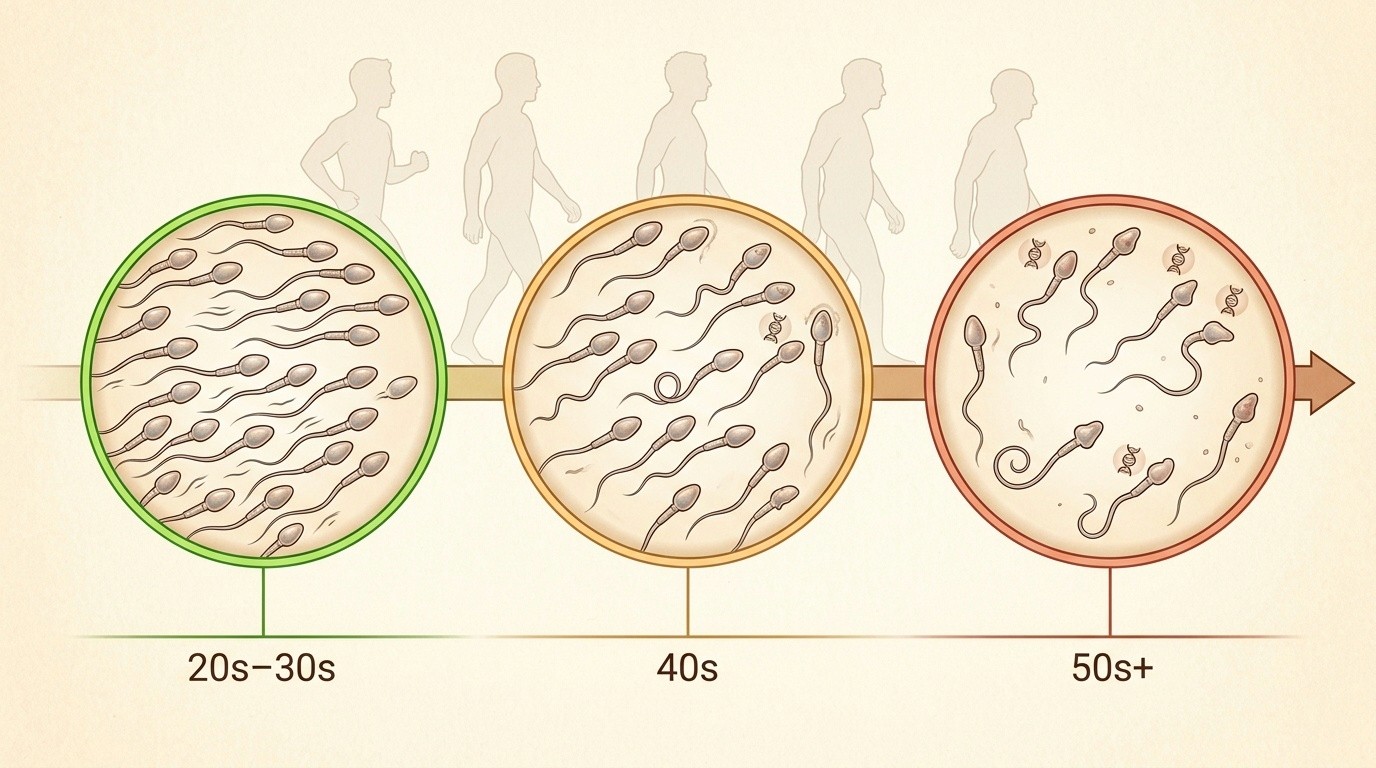
A comprehensive meta-analysis by Johnson et al. (2015), covering 90 studies and over 93,000 men, concluded that increasing paternal age negatively affects nearly all semen parameters.[^1] A follow-up literature review by Jimbo et al. (2022) identified 17 additional studies published since 2014, and the most consistent findings were:[^1]
Semen volume: decreased in 7 out of 9 studies
Sperm motility: decreased in 9 out of 10 studies
DNA fragmentation index (DFI): increased in 11 out of 11 studies
The effect on sperm concentration was less clear — some studies reported decreases, others found no change or even slight increases.[^1] However, total sperm count and progressive motility showed the most reliable age-related decline.[^1] A 2025 study of men undergoing Assisted Reproductive Technology (ART) found an association between increasing male age and reduced sperm quality and DNA integrity.[^5]
Summary of Age-Related Changes in Semen Parameters
Parameter | Volume | Count | Motility | Morphology | DFI |
Meta-analysis (93,839 men) | ↓ | ↓ | ↓ | ↓ | ↑ |
Post-2014 studies (17 studies) | 7/9 ↓ | Mixed | 9/10 ↓ | Mixed | 11/11 ↑ |
Source: Johnson et al. meta-analysis (2015) and Jimbo et al. systematic review (2022)[^1]
↓ = decrease with age; ↑ = increase with age; DFI = DNA Fragmentation Index.
What Is Sperm DNA Fragmentation and Why Does It Matter?
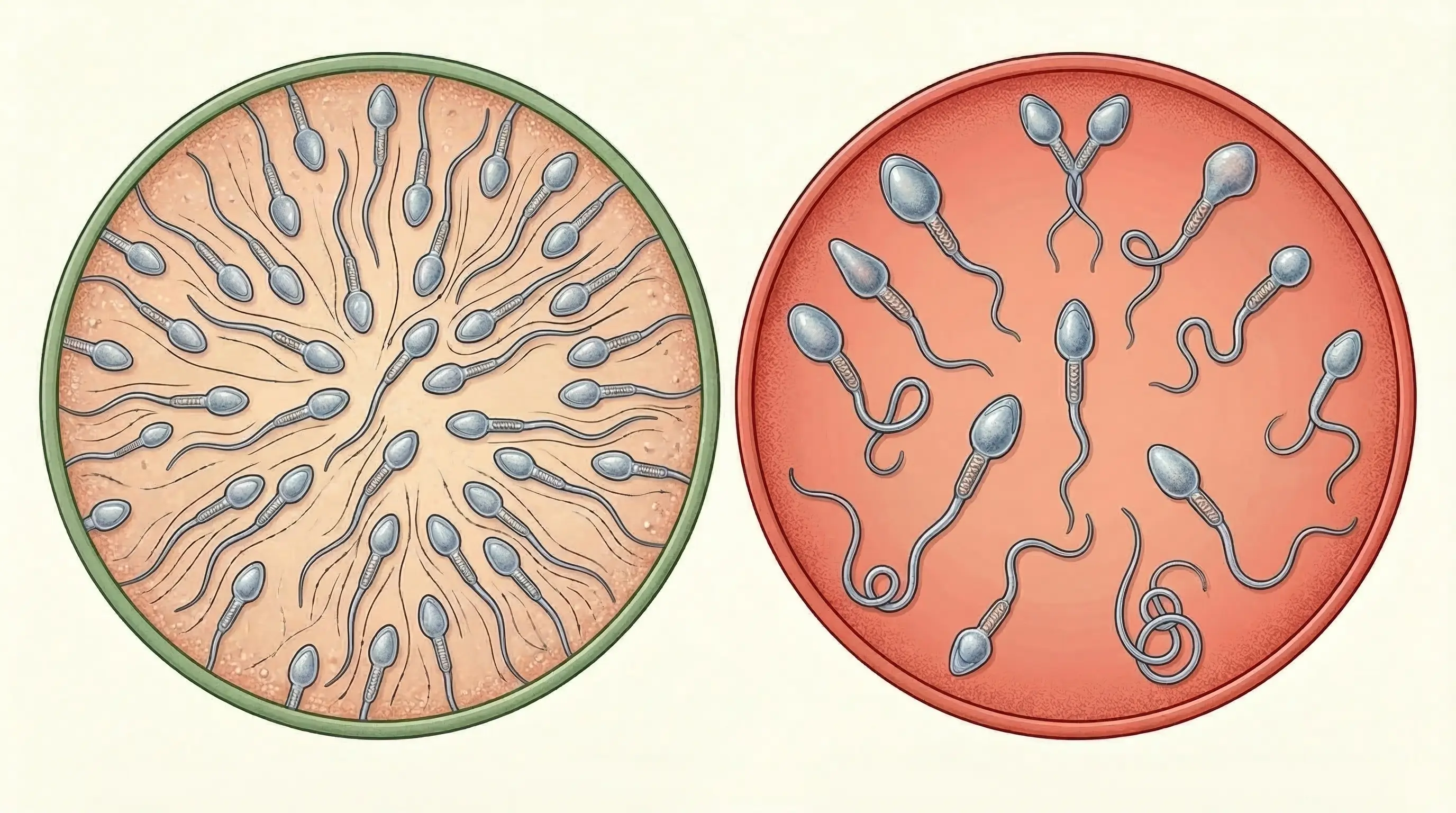
Standard semen analysis measures count, motility, and morphology — but it does not assess the integrity of the DNA packed inside each sperm cell. Sperm DNA fragmentation (SDF) refers to single- or double-strand breaks within the sperm’s DNA chromatin. A high fragmentation index means that even if sperm look normal and swim well, the genetic material they carry may be compromised.[^8]
A 2022 systematic review found that advanced paternal age is consistently associated with elevated sperm DNA fragmentation, even in men whose other semen parameters appear normal.[^8] Since SDF testing isn’t part of a standard semen analysis, it requires a separate, dedicated test. There’s no universally agreed-upon threshold, though some research suggests a DFI above 20% may help distinguish fertile from infertile men. Oxidative stress — a major driver of DNA fragmentation — can also be measured, although the 2025 EAU guidelines note that routine oxidative stress testing remains to be validated in well-designed clinical trials.[^3]
This is significant because high SDF has been linked to:[^1][^3][^8]
Lower fertilization rates
Impaired embryo development and reduced blastocyst quality
Higher rates of miscarriage and recurrent pregnancy loss
Poorer outcomes in IVF and ICSI cycles
A 2023 study confirmed that advanced paternal age affects the sperm DNA fragmentation index and may lead to lower good-quality blastocysts[^6], reinforcing that DNA integrity testing can reveal damage invisible to a routine spermiogram. A 2025 ART study also demonstrated significantly higher DFI in older men, even when clinical pregnancy outcomes were not always statistically different.[^5]
Key Insight:
A man’s semen analysis can come back completely normal — yet his sperm DNA may still carry significant damage. That’s why SDF testing is increasingly recommended for men over 40 or couples with unexplained fertility issues.[^3][^8]
The 2025 EAU guidelines recommend SDF testing for couples with recurrent pregnancy loss, unexplained infertility, or repeated ART failure.[^3]
→ Learn more: Semen Analysis (Spermiogram)
How Do Hormones Change in Aging Men?
Male reproductive function is governed by the hypothalamic-pituitary-testicular (HPT) axis. With age, this system undergoes several changes:[^9][^10]
Testosterone declines gradually — total testosterone drops by about 1–2% per year after approximately age 30, and bioavailable testosterone declines even faster.[^9][^11]
Luteinizing hormone (LH) rises as the pituitary gland tries to compensate for declining testicular function.[^9][^10]
Follicle-stimulating hormone (FSH) increases in response to impaired spermatogenesis.[^10]
Sex hormone-binding globulin (SHBG) increases with age, further reducing the amount of free testosterone available.[^9]
These hormonal shifts do not just affect fertility. Low testosterone is associated with reduced libido, erectile dysfunction, fatigue, loss of muscle mass, and mood changes.[^9][^11] In aging men, decreased testosterone may also contribute to mitochondrial dysfunction and increased oxidative stress in testicular tissue, which further damages sperm.[^11][^17]
Important:
Exogenous testosterone therapy (testosterone replacement therapy, or TRT) may suppress sperm production and should be avoided in men who wish to conceive. Alternative hormonal treatments — such as selective estrogen receptor modulators (for example, clomiphene citrate) or gonadotropin therapy — are available that can address low testosterone without impairing fertility.[^3][^11]
→ Learn more: Male Hormonal Disorders, Hormonal Panel for Infertility
Does Paternal Age Affect Natural Conception?
Yes. Research shows that advanced paternal age (APA) is associated with longer time to pregnancy and higher miscarriage risk.[^1][^12][^13]
How Long Does It Take to Conceive?
Time-to-pregnancy data in this section reflect couple-level outcomes — meaning both maternal and paternal factors contribute. Isolating the independent effect of male age is difficult, but the trends are consistent.
In one study, 18–28% of couples where the male partner was aged 35–40 were unable to achieve pregnancy within 12 menstrual cycles.[^1] Another study found that the probability of conception taking longer than 12 months nearly doubled — from 8% to 15% — when comparing men under 25 to men over 35.[^1]
What About Miscarriage Risk?
A 2020 meta-analysis by du Fossé et al. calculated pooled miscarriage risks by paternal age group (using men aged 25–29 as the reference):[^12]
Paternal Age Group | Relative Miscarriage Risk |
30–34 years | 1.04 |
35–39 years | 1.15 |
40–44 years | 1.23 |
≥45 years | 1.43 |
Source: du Fossé et al. Hum Reprod Update (2020)[^12]
The risk of miscarriage was more pronounced when the female partner was also over 35 or had a low ovarian reserve.[^1][^12][^13] This means that in couples where both partners are older, the combined effect on pregnancy loss can be substantial.
Does Paternal Age Affect ART Outcomes?
The impact of paternal age on ART success rates — including In Vitro Fertilization (IVF) and Intracytoplasmic Sperm Injection (ICSI) — is one of the most debated topics in reproductive medicine.[^1][^7][^14]
Several studies have found a clear negative effect after age 50. An analysis of 2,425 IVF/ICSI cycles showed that clinical pregnancy and live birth rates significantly worsened in men over 50 compared with men under 40.[^1] In one study, men aged 25–30 had fertilization rates of 87.7%, which dropped to 46.0% in men over 55 — and no pregnancies at all were reported in the oldest age group within that specific study cohort.[^1]
However, other studies found no significant effect of paternal age on ART outcomes after controlling for maternal age.[^1][^14] These conflicting results may be explained by differences in study design, the absence of a standardized age cutoff for “advanced paternal age,” and the strong confounding role of maternal age.[^1][^7]
What is becoming clearer is that the decline in sperm fertilization capacity tends to start between ages 45 and 50[^1], likely driven by increasing DNA fragmentation, declining sperm parameters, and epigenetic changes.[^1][^7] The combination of both partners being older further compounds this effect. One study found that when the father was over 40 and the mother was 41 or older, the odds ratio of failure to conceive reached 5.74.[^1]
Can a Father’s Age Affect the Health of His Child?
This is one of the least-discussed yet most important aspects of paternal aging. The answer is yes — advanced paternal age is linked to a range of health risks in offspring.[^1][^13][^15][^16]
Why Does This Happen?
Male germ cells (spermatogonial stem cells) divide continuously throughout life. Estimates suggest that sperm in a 20-year-old man has undergone about 150 rounds of cell division, whereas sperm in a 40-year-old has undergone about 610 rounds.[^1] Each division carries a small risk of DNA replication errors — called de novo mutations. The male germline is estimated to accumulate approximately 1–2 new mutations per year of paternal age.[^1][^15] Oxidative damage further compounds this, especially as antioxidant defenses and DNA repair mechanisms decline with age.[^15][^17]
What Conditions Are Associated With Advanced Paternal Age?
Research has linked advanced paternal age to elevated risks across several categories:[^1][^13][^16]
Category | Example Conditions | Relative Risk Range |
Neurocognitive | Autism spectrum disorder, schizophrenia, bipolar disorder | 1.37–5.75 |
Genetic | Achondroplasia, Apert syndrome, Crouzon syndrome | 1.66–9.5 |
Congenital | Atrial septal defect, cleft palate, neural tube defect | 1.07–2.7 |
Cancer | Acute lymphoblastic leukemia, breast cancer | 1.06–1.97 |
Obstetric | Miscarriage, stillbirth, low birth weight | 1.12–6.73 |
Source: Jimbo et al. Fertil Steril (2022)¹ and Kaltsas et al. Genes (2023)[^13]
For readers unfamiliar with statistics: a relative risk (RR) or odds ratio tells you how much more — or less — likely something is to happen compared to a baseline group. A value of 1 means no difference; a value of 2 (or about 1.97) means roughly twice the risk.
A 2019 study in Nature Communications analyzed paternal-age-related de novo mutations and found significant associations with five specific disorders: autism, schizophrenia, intellectual disability, epilepsy, and congenital heart disease.[^16] These risks do not mean every older father will have an affected child — the absolute risk for any individual remains low — but they are statistically significant and should be part of preconception counseling.
What Can Older Men Do to Protect Their Fertility?
The good news is that many of the factors contributing to age-related fertility decline can be partially addressed through lifestyle changes, medical treatment, and planning.[^1][^3][^17][^18]
What Lifestyle Changes Help?
The 2025 EAU guidelines recommend informing infertile men about the detrimental effects of obesity, low physical activity, smoking, and high alcohol intake on sperm quality and testosterone levels.[^3] Lifestyle optimization is the foundation of any fertility preservation strategy:[^1][^17]
Maintain a healthy weight — obesity increases oxidative stress and disrupts hormonal balance.
Exercise regularly — moderate activity supports testosterone and sperm health.
Stop smoking — smoking is directly linked to increased sperm DNA damage.
Limit alcohol — high intake impairs both sperm quality and hormonal function.
Do Antioxidants Help?
Since oxidative stress is a central mechanism behind age-related sperm damage, antioxidant therapy has been widely studied. A Cochrane systematic review of 61 studies (6,264 men) concluded that antioxidants may improve live birth rates, but the quality of evidence was low.[^18] A more recent meta-analysis of 45 randomized controlled trials (4,332 men) found that antioxidant-treated patients had significantly higher sperm concentration, motility, and morphology.[^3]
Commonly studied antioxidants include vitamin C, vitamin E, selenium, zinc, L-carnitine, coenzyme Q10, and omega-3 fatty acids.[^1][^17] However, the optimal antioxidant type, dose, and duration remain unclear, and high-dose antioxidant therapy in men who are not oxidatively stressed could potentially create “reductive stress,” which may be equally harmful.[^15]
→ Learn more: Supplements for Men
What About Varicocele?
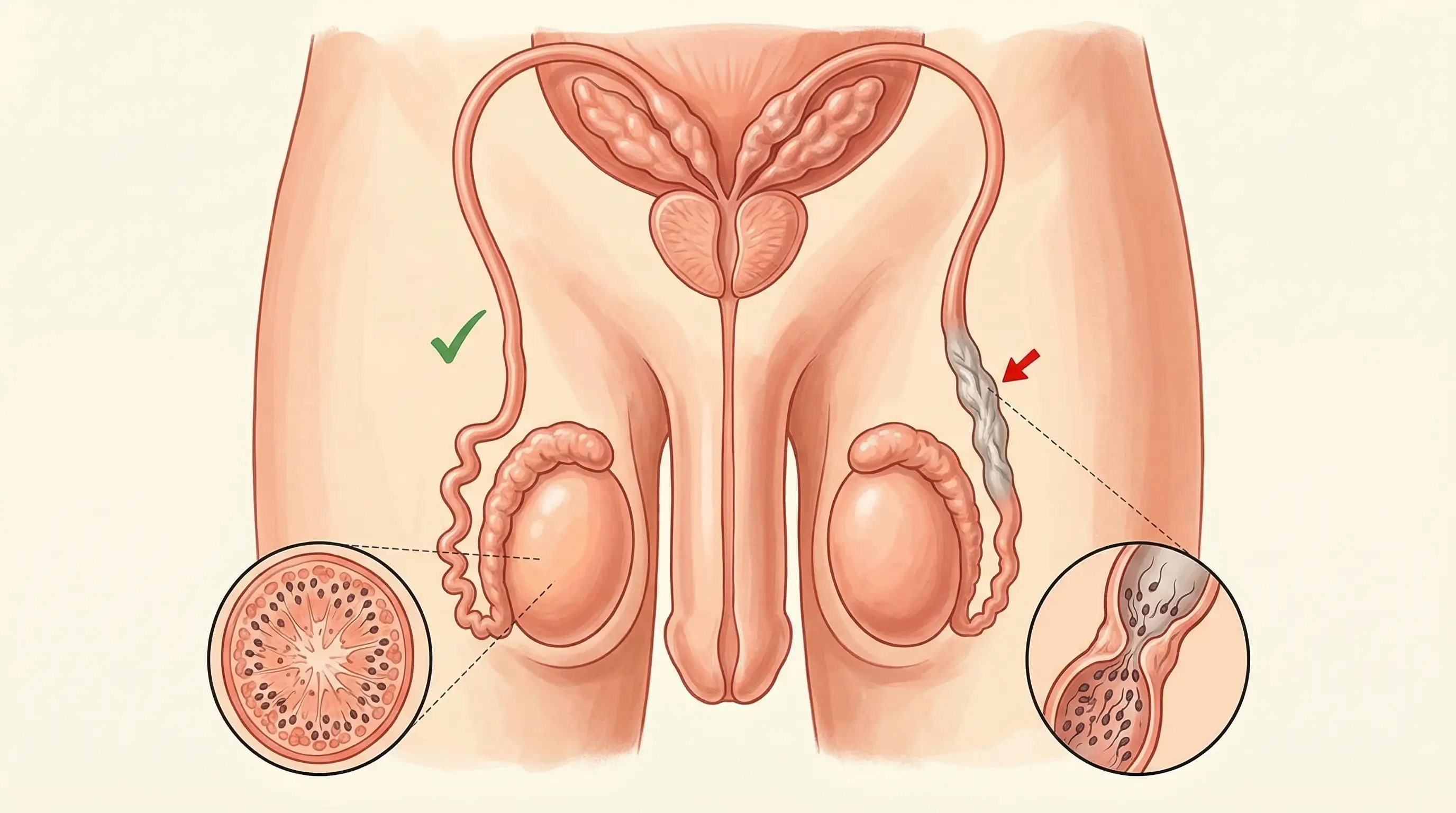
Varicocele — the abnormal dilation of veins in the scrotum — is the most common reversible cause of male infertility. Its prevalence increases by approximately 10% per decade of life, ranging from 18% in men aged 30–39 to 75% in men aged 80–89 in selected study populations.[^1] Varicocelectomy can improve semen parameters, reduce DNA fragmentation, and has been associated with improved pregnancy rates in men with abnormal sperm quality.[^1][^3]
Should Older Men Consider Sperm Cryopreservation?
For men who plan to delay fatherhood, sperm cryopreservation (sperm banking) is an option worth discussing with a specialist. Freezing sperm at a younger age preserves its quality at the time of collection.[^3] The 2025 EAU guidelines recognize cryopreservation as a fertility preservation strategy for men facing delayed fatherhood.[^3]
→ Learn more: Fertility and Age, Male Infertility
So, What Should You Do Now?
Whether you’re planning for the future or actively trying to conceive, here are the steps that matter most:
Step 1: Assess Your Baseline
Start with a semen analysis (spermiogram) — it’s simple, affordable, and can reveal issues that are otherwise invisible. If you’re over 40 or have been trying for 6–12 months without success, ask about advanced semen analysis — including DNA fragmentation testing, oxidative stress assessment, and other specialized assays.[^3][^8]
Step 2: Check Your Hormones
A hormonal panel (testosterone, FSH, LH) can identify hormonal imbalances. Remember: never start testosterone replacement therapy without medical guidance if you want to preserve fertility.[^3][^11]
Step 3: Optimize Your Lifestyle
Lose excess weight, quit smoking, cut back on alcohol, and consider an antioxidant-rich diet. These changes can improve semen quality and reduce oxidative damage.[^1][^3][^17]
Step 4: Get a Physical Examination
A urological assessment — including ultrasound — can detect varicocele, obstructions, or other treatable conditions. Depending on the diagnosis, options may include varicocelectomy, sperm retrieval procedures, or vasectomy reversal. Varicocelectomy remains the most well-established surgical treatment shown to improve semen parameters in selected patients.[^1][^3]
Step 5: Consider Fertility Preservation
If you’re not planning to have children soon, sperm banking now can protect against future decline. Talk to a fertility specialist about whether this option is right for you.[^3]
Step 6: Choose the Right Clinic
If you need assisted reproduction, choosing the right clinic matters. Consider factors such as reported success rates, available treatments, costs, and clinician experience.
→ Compare fertility clinics worldwide: MedicalNavigator.com/fertility-clinics
Too Long, Didn’t Read
Global sperm counts have declined by 51.6% since 1973, and the rate of decline is accelerating.
Advanced paternal age is associated with decreased semen volume, motility, and increased DNA fragmentation.
Miscarriage risk rises with paternal age — by up to 43% in men aged 45 and older.
Offspring of older fathers face higher risks of autism, schizophrenia, congenital heart defects, and genetic disorders.
Antioxidants, lifestyle changes, varicocelectomy, and sperm cryopreservation can help protect fertility.
If you’re over 35 and planning a family, start with a semen analysis and hormonal panel — consider early evaluation.
References
[^1]: Jimbo M, Kunisaki J, Ghaed M, Yu V, Flores HA, Hotaling JM. Fertility in the aging male: a systematic review. Fertil Steril. 2022;118(6):1022–1034.
[^2]: Levine H, Jørgensen N, Martino-Andrade A, et al. Temporal trends in sperm count: a systematic review and meta-regression analysis of samples collected globally in the 20th and 21st century. Hum Reprod Update. 2023;29(2):157–176.
[^3]: Minhas S, Bettocchi C, Boeri L, et al. EAU guidelines on male sexual and reproductive health: 2025 update on male infertility. Eur Urol. 2025;87(5):601–616.
[^4]: Schlegel PN, Sigman M, Collura B, et al. Diagnosis and treatment of infertility in men: AUA/ASRM guideline amendment. J Urol. 2024;211(5):687–698.
[^5]: Liu X, Zhang Y, Bai S, et al. Increasing age in men is negatively associated with sperm quality and DNA integrity but not pregnancy outcomes in assisted reproductive technology. Front Aging. 2025;6:1603916.
[^6]: Donatti LM, Martello CL, Andrade GM, Oliveira NP, Frantz N. Advanced paternal age affects the sperm DNA fragmentation index and may lead to lower good-quality blastocysts. Reprod Sci. 2023;30(8):2489–2494.
[^7]: Kaltsas A, Zikopoulos A, Vrachnis D, et al. Advanced paternal age in focus: unraveling its influence on assisted reproductive technology outcomes. J Clin Med. 2024;13(10):2731.
[^8]: Gonzalez DC, Ory J, Blachman-Braun R, et al. Advanced paternal age and sperm DNA fragmentation: a systematic review. World J Mens Health. 2022;40(1):104–115.
[^9]: Martins da Silva S, Anderson RA. Reproductive axis ageing and fertility in men. Rev Endocr Metab Disord. 2022;23(6):1109–1121.
[^10]: Bhasin S, Valderrábano RJ, Gagliano-Jucá T. Age-related changes in the male reproductive system. In: Feingold KR, et al., editors. Endotext. South Dartmouth (MA): MDText.com, Inc.; 2022.
[^11]: Pyo Y, Kwon KH. Aging, testosterone and male fertility therapy: a review. J Mens Health. 2024;20(8):1–10.
[^12]: du Fossé NA, van der Hoorn MLP, van Lith JMM, le Cessie S, Lashley EELO. Advanced paternal age is associated with an increased risk of spontaneous miscarriage: a systematic review and meta-analysis. Hum Reprod Update. 2020;26(5):650–669.
[^13]: Kaltsas A, Moustakli E, Zikopoulos A, et al. Impact of advanced paternal age on fertility and risks of genetic disorders in offspring. Genes. 2023;14(2):486.
[^14]: Gourinat A, Mazeaud C, Hubert J, Eschwege P, Koscinski I. Impact of paternal age on assisted reproductive technology outcomes and offspring health: a systematic review. Andrology. 2023;11(4):598–612.
[^15]: Aitken RJ. Paternal age, de novo mutations, and offspring health? New directions for an ageing problem. Hum Reprod. 2024;39(12):2645–2657.
[^16]: Taylor JL, Debost J-CPG, Morton SU, et al. Paternal-age-related de novo mutations and risk for five disorders. Nat Commun. 2019;10:3043.
[^17]: Wang X, Zhu H, Shen Q, Ping P, Ye J. Age-related decline of male fertility: mitochondrial dysfunction and the antioxidant interventions. Pharmaceuticals. 2022;15(5):631.
[^18]: de Ligny W, Smits RM, Mackenzie-Proctor R, et al. Antioxidants for male subfertility. Cochrane Database Syst Rev. 2022;5(5):CD007411.
This guide is for informational purposes only. Always consult qualified healthcare providers for personalized recommendations. For full details, read our Medical Disclaimer.

Author of the article
Date of publication