


What Is Ultrasound and How Does It Work?
Ultrasound (also called sonography) uses high-frequency sound waves — above the human hearing range — to create images of structures inside the body.[^1][^2] A hand-held device called a transducer sends sound pulses into the body. When the pulses hit tissues of different densities, they bounce back as echoes. The ultrasound machine converts those echoes into a real-time picture on a screen.[^2]
Dense structures like bone reflect most of the sound and appear bright (white) on screen. Fluids such as urine or blood reflect almost no sound and appear dark (black). Soft tissues appear in various shades of grey.[^2]
One of the greatest advantages of ultrasound is its safety: it uses no ionizing radiation, which is especially important for reproductive organs, as ovaries are particularly sensitive to radiation.[^3][^5] The procedure is non-invasive, widely available, portable, and cost-effective compared to MRI or CT scans.[^3]
Key principle:
Higher frequency waves produce sharper images but penetrate less deeply. Lower frequency waves reach deeper structures but with less detail. Doctors choose the right frequency for each clinical situation.[^2]
What Types of Reproductive Ultrasound Exist?
Reproductive ultrasound can be performed in several ways, each suited to a specific purpose. The table below summarises the main approaches.[^4][^5]
Type | How It Is Done | Main Uses in Fertility |
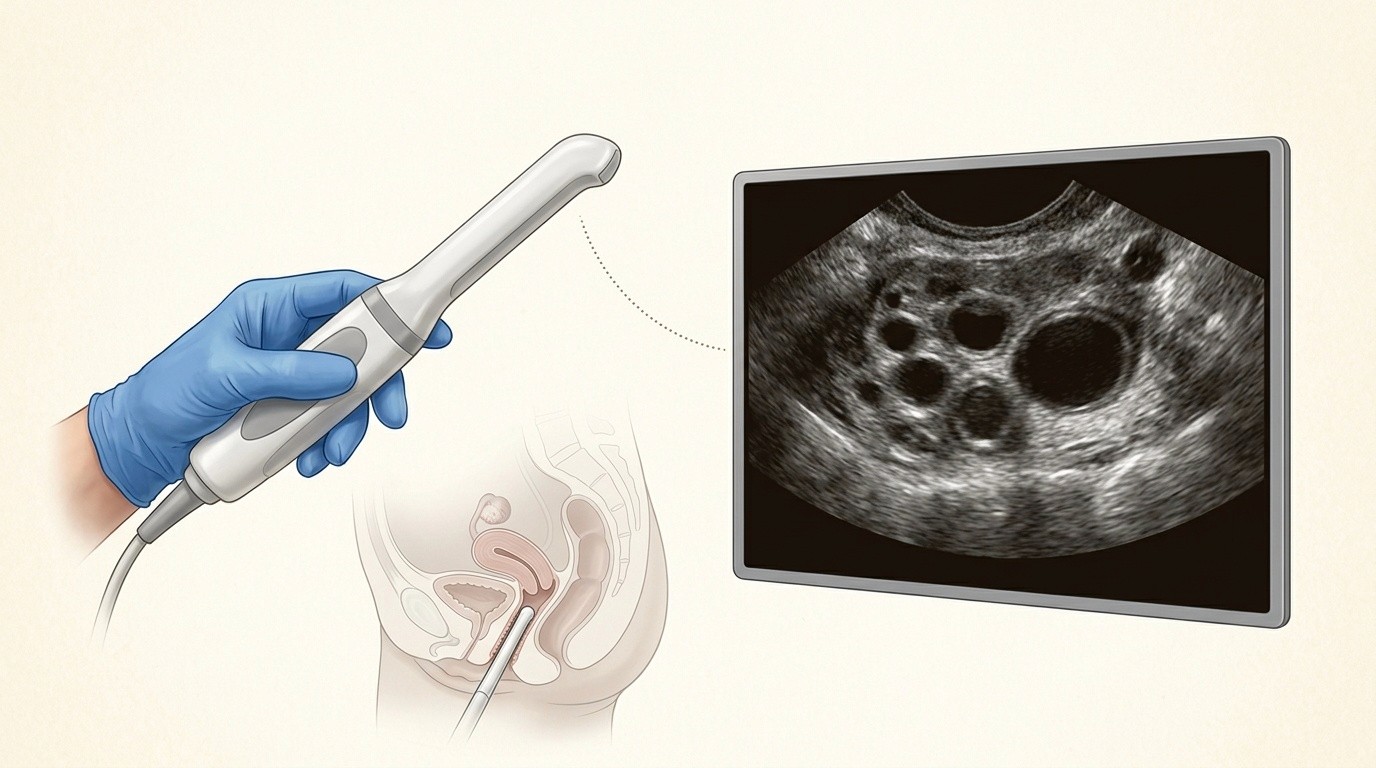
Transvaginal (TVS) | A slim probe is gently placed inside the vagina. Uses higher-frequency waves (typically 5–10 MHz) for close-up, high-resolution images. | Ovarian reserve assessment, follicle tracking, endometrial evaluation, early pregnancy confirmation, oocyte retrieval guidance. |
Transabdominal (TAS) | The transducer is placed on the lower abdomen, covered with gel. A full bladder is needed to push bowel loops aside and provide an acoustic window. | Initial pelvic survey, uterine size/shape assessment, embryo transfer guidance, later pregnancy monitoring. |
Doppler | Measures blood flow by detecting shifts in the frequency of returning sound waves. Can be color or spectral. | Evaluating blood supply to the ovaries and uterus, detecting varicocele in men, assessing ovarian torsion. |
Saline Infusion Sonography (SIS) | Sterile saline is injected into the uterine cavity during TVS to outline the inner walls. | Detecting uterine polyps, fibroids, adhesions (Asherman’s syndrome), and septums. |
3D / 4D Ultrasound | Computer software reconstructs multiple 2D images into three-dimensional views. 4D adds motion. | Detailed evaluation of uterine anomalies (e.g., septate or bicornuate uterus), complex ovarian masses. |
Source: Kondagari L et al., StatPearls (2023)[^4]; Dobaria DG et al., StatPearls (2025)[^5]
Transvaginal ultrasound is considered the gold standard imaging technique for pelvic evaluation in fertility assessment because the probe sits close to the ovaries and uterus, producing sharper images than a transabdominal scan.[^4][^5] Both approaches are often used together to get a complete picture.
How Is Ultrasound Used in Female Fertility Assessment?
When investigating female infertility, ultrasound provides a non-invasive window into the reproductive organs. It can assess the ovaries, uterus, endometrium, and surrounding structures — often in a single appointment.[^5][^10]
→ Learn more: Female Infertility
How Are the Ovaries Assessed?
Transvaginal sonography evaluates ovarian size, shape, and the number of small resting follicles known as the antral follicle count (AFC). A lower AFC may indicate a reduced ovarian reserve, meaning fewer eggs are available.[^10] The scan also identifies ovarian cysts — both functional (normal) and pathological (for example, endometriomas) — and helps characterize their size, location, and composition.[^10]
In women with polyendocrine metabolic ovarian syndrome (PMOS), an ultrasound may reveal the characteristic pattern of multiple small follicles arranged in a “string of pearls” within the ovary. The current diagnostic threshold — excluding clinical and hormonal signs — is 20 or more follicles per ovary or an ovarian volume of 10 mL or more.[^10]
→ Learn more: Polyendocrine Metabolic Ovarian Syndrome (PMOS)
How Are the Uterus and Endometrium Assessed?
The uterus is examined for size, shape, and position. Ultrasound can detect fibroids (benign growths in the uterine wall), polyps, and congenital anomalies such as a septate or bicornuate uterus that may interfere with implantation or increase miscarriage risk.[^5][^10]
The endometrial thickness is measured to assess whether the uterine lining is developing appropriately for the stage of the menstrual cycle. A thin or irregular endometrium may raise suspicion for conditions such as intrauterine adhesions (Asherman’s syndrome) or hormonal abnormalities, which require further evaluation.[^5][^9]
What Does Doppler Ultrasound Show?
Doppler ultrasound provides additional information by measuring blood flow to the uterus and ovaries. Adequate blood supply is considered important for follicle development and embryo implantation.[^11] Researchers have investigated the uterine artery and ovarian blood flow indices as potential predictors of IVF outcomes, though the clinical value of these measurements remains an active area of study.[^11]
Can Ultrasound Detect Endometriosis?
Endometriosis — the growth of tissue similar to the uterine lining outside the uterus — is a known cause of infertility. Transvaginal ultrasound can identify ovarian endometriomas (“chocolate cysts”) and, in experienced hands, may detect deep infiltrating endometriosis. A systematic review concluded that no single imaging modality is sufficiently accurate to replace surgical diagnosis for all forms of the disease.[^13]
→ Learn more: Endometriosis
How Does Ultrasound Guide Ovulation Monitoring?
Ovulation monitoring with ultrasound is considered the reference method for estimating ovulation timing by identifying characteristic follicular changes.[^18] Ovulation is the process in which an ovary releases a mature egg (ovum), usually once during each menstrual cycle, making it available for fertilization. Monitoring involves serial transvaginal scans that track how follicles in the ovary grow day by day.
How Does Follicle Tracking Work?
During a natural or stimulated cycle, the doctor measures the diameter of developing follicles every few days. Signs of ovulation include:[^18]
Sudden disappearance or decrease in the size of the dominant follicle
Increased echogenicity inside the collapsed follicle (indicating corpus luteum formation — a temporary structure that forms in the ovary after ovulation and produces hormones, mainly progesterone, to support the uterine lining for a possible pregnancy)
Free fluid in the pelvis
Transition of the endometrium from a “triple-line” pattern to a homogenous, bright appearance
A recent prospective cohort study of 311 subfertile couples found that the ultrasound-guided ovulation-monitoring group achieved a pregnancy rate twice that of the home ovulation-test group (adjusted OR = 2.12, 95% CI 1.32–3.39), with no evidence of increased emotional distress or impaired sexual function.[^17]
How Is Ovulation Monitored During IVF?
In IVF, controlled ovarian stimulation aims to produce multiple mature follicles. The European Society of Human Reproduction and Embryology (ESHRE) guidelines recommend either AFC or anti-Müllerian hormone (AMH) to predict ovarian response.[^14] Follicle-tracking scans during stimulation typically begin around day 5 of gonadotropin injections and are repeated every 1–2 days.[^9][^15]
A large retrospective analysis of over 9,000 ultrasound scans from 2,322 IVF cycles showed that data from stimulation day 5 were already highly predictive of trigger timing — the point when the clinician gives the ovulation trigger injection during an IVF cycle — and the risk of ovarian hyperstimulation syndrome (OHSS).[^15] This finding supports streamlined monitoring protocols that reduce the number of clinic visits without compromising safety.
→ Learn more: In Vitro Fertilization (IVF)
How Is Ultrasound Used in Male Fertility Evaluation?
Fertility is not only a female concern. Male factors are involved in about half of all infertility cases. Ultrasound is increasingly used to evaluate the male reproductive tract.[^5]
→ Learn more: Male Infertility
What Does Scrotal Ultrasound Reveal?
Scrotal ultrasound with color Doppler is the primary imaging modality for evaluating male reproductive organs. It assesses testicular volume, echogenicity, and blood flow.[^21][^22] The European Academy of Andrology (EAA) has promoted a multicentre study to establish normative scrotal ultrasound parameters using a cohort of 248 healthy, fertile men. The study confirmed that color Doppler ultrasound (CDUS) is useful for detecting abnormalities but noted it still suffers from a lack of standardization and often produces subjective diagnoses.[^19]
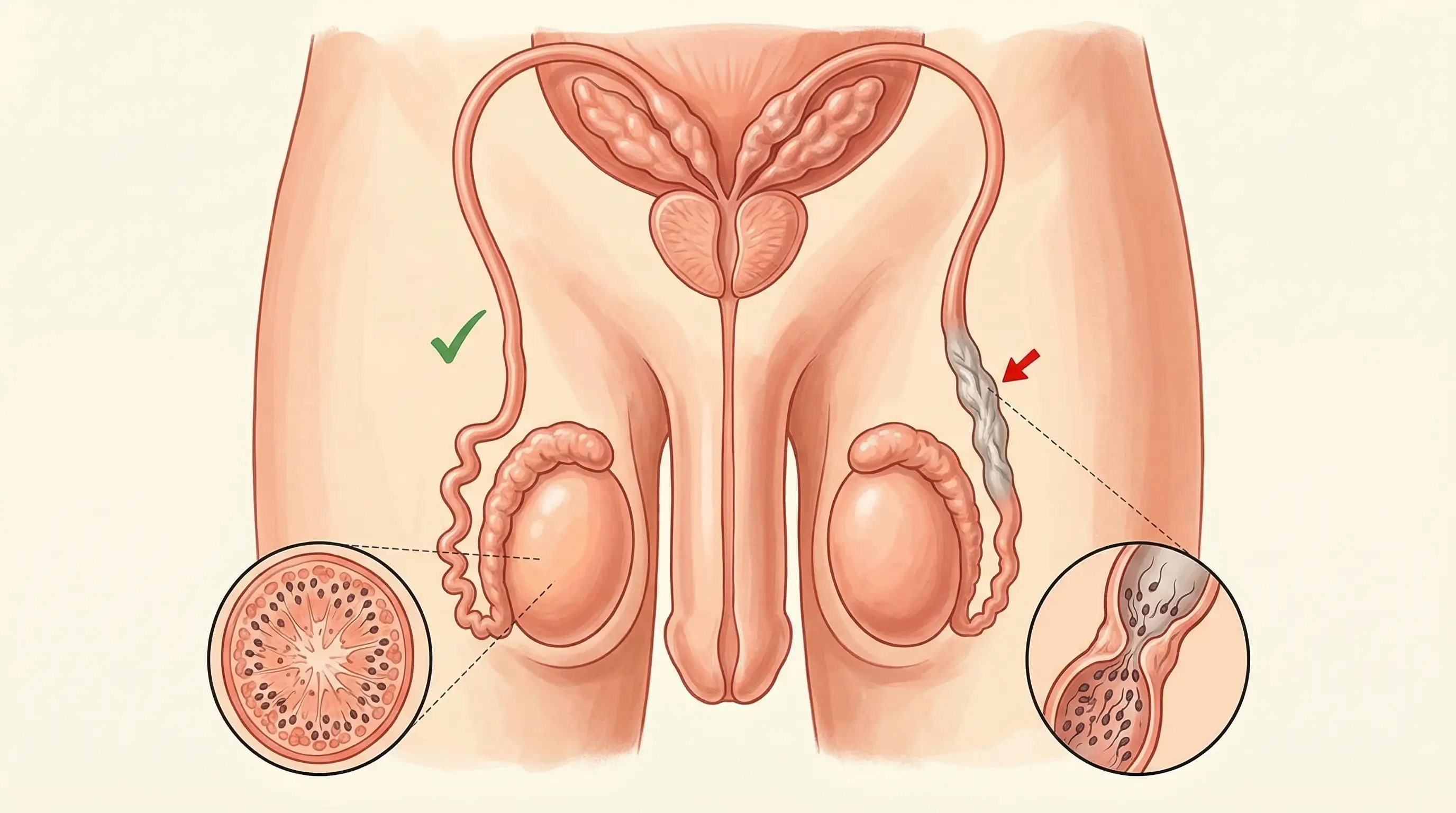
A key finding ultrasound can detect is varicocele — enlarged veins in the scrotum — which is the most common correctable cause of male infertility, found in approximately 15–20% of all men and up to 40% of infertile men.[^20] Ultrasound can detect substantially more scrotal abnormalities (such as varicocele or small testicular lesions) than clinical palpation alone.[^20]
A transabdominal ultrasound is usually sufficient as a screening examination for the prostate. Transrectal ultrasound (TRUS) is reserved for more detailed evaluation when specific concerns arise — such as suspected prostate pathology or investigation of ejaculatory duct obstruction.
When Is Transrectal Ultrasound (TRUS) Used?
TRUS evaluates the prostate gland, seminal vesicles, and ejaculatory ducts. It is especially useful for men with obstructive azoospermia (no sperm in the ejaculate due to a blockage). Research suggests that testicular volume may help distinguish between obstructive and non-obstructive causes, though standardized cut-off values have not yet been established.[^22]
What Are the Limitations of Ultrasound?
While ultrasound is remarkably versatile, it is not perfect. Being aware of its limitations helps set realistic expectations.
Limitation | Practical Impact |
Operator-dependent | Image quality and interpretation vary with the examiner’s skill and experience. |
Cannot replace surgical diagnosis | Some conditions (e.g., mild endometriosis, fallopian tube blockage) may be missed. Laparoscopy or HSG may still be needed. |
Full bladder requirement (TAS) | Transabdominal scans typically benefit from a full bladder, which may cause some discomfort. In procedures like embryo transfer, a moderately full bladder can improve ultrasound guidance, but is not strictly required. |
Physique | In patients with a higher body mass index (BMI), image quality may be reduced because soft tissue absorbs more of the ultrasound signal before it reaches the organs of interest. |
Cannot detect hormonal or lifestyle factors | Ultrasound shows structural abnormalities well but does not directly diagnose hormonal imbalances, poor egg quality, or lifestyle-related causes. |
Lack of standardization in male USG | Scrotal ultrasound still lacks universally agreed reference ranges and cut-offs, making findings somewhat subjective. |
Source: Koutras A et al. (2023)[^23]; D’Angelo A et al. (2022)[^24]; Thaker N et al. (2023)[^10]
Important:
Ultrasound is one part of a complete diagnostic picture. It works best when combined with clinical history, blood tests (hormone levels, AMH), semen analysis, and, when indicated, additional imaging or surgical procedures.
What Is It Like to Receive Ultrasound Findings?
Ultrasound is not merely a diagnostic tool — it is a human encounter. A recent article introduced the concept of “Sonopsychology,” emphasizing that ultrasound examinations involve complex psychological interactions between patient and examiner, before, during, and after the scan.[^26]
For many patients, especially those undergoing fertility investigations, an ultrasound scan can be emotionally charged. One study of 111 pregnant women showed that anxiety diminished after the ultrasound regardless of the trimester, and that first-trimester scans provided an additional benefit for psychosocial adaptation to pregnancy.[^25]
When findings are unexpected or abnormal, the emotional impact can be significant. A study of 42 Canadian women who received unexpected ultrasound results found that many were not prepared for bad news because they viewed ultrasound primarily as a pleasant opportunity to “see the baby,” rather than as a screening test.[^27] A comparative study at a Swedish university hospital showed that parents with abnormal findings were significantly more worried and anxious than those with normal results.[^28]
What Can Help?
Ask questions before the scan. Understanding what the examiner is looking for reduces anxiety.[^26]
Bring your partner or a support person. Having someone with you can help process the information.[^26]
Request clear communication. Depending on local practice, the examiner or your doctor may discuss the findings during or shortly after the scan.[^26]
So, What Should You Do Now?
If you’re preparing for a fertility assessment or have already received ultrasound results, here’s how to move forward.
Step 1: Ask Your Doctor Which Scans You Need
Not every patient needs every type of ultrasound. Ask your doctor which scans are recommended for your specific situation — transvaginal, transabdominal, Doppler, or a combination.
Step 2: Prepare for the Appointment
For a transabdominal scan, you may be asked to arrive with a full bladder. For transvaginal scans, an empty bladder is preferred. Ask the clinic in advance so you know what to expect.
Step 3: Understand What the Results Mean
Ultrasound findings are one piece of the puzzle. Your doctor will interpret them in conjunction with blood tests, semen analysis (if applicable), and your clinical history. Don’t hesitate to ask for a clear explanation.
Step 4: Follow Up on Any Abnormal Findings
If something unexpected is found — a cyst, fibroid, varicocele, or abnormal endometrium — ask about next steps. Some findings require monitoring, others may need further testing or treatment.
Step 5: Choose the Right Clinic
Ultrasound quality depends heavily on the operator’s experience. Look for a clinic with specialists in reproductive imaging. A second opinion can be valuable, especially for complex findings.
→ Compare fertility clinics worldwide: MedicalNavigator.com/fertility-clinics
Too Long, Didn’t Read
Ultrasound is safe, radiation-free, and one of the most important imaging tools in fertility medicine.
Transvaginal ultrasound is the gold standard for evaluating ovarian reserve (AFC), endometrial thickness, and uterine structure.
Ultrasound-guided ovulation monitoring may almost double pregnancy rates compared to home ovulation kits.
Varicocele — found in up to 40% of infertile men — is best detected by scrotal ultrasound with Doppler.
Ultrasound has limitations: it is operator-dependent, cannot reliably detect hormonal causes, and lacks standardized male assessment.
A study of 311 subfertile couples found no increase in emotional distress from ultrasound-guided monitoring.
References
[^1]: Neumann D, Kollorz E. Ultrasound. In: Maier A, et al., eds. Medical Imaging Systems. Springer; 2018. Chapter 11.
[^2]: Grogan SP, Mount CA. Ultrasound Physics and Instrumentation. StatPearls. Updated 2023 Mar 27.
[^3]: InformedHealth.org. In brief: How do ultrasound examinations work? IQWiG. Updated 2024 Oct 7.
[^4]: Kondagari L, Kahn J, Singh M. Sonography Gynecology Infertility Assessment, Protocols, and Interpretation. StatPearls. Updated 2023 Jun 7.
[^5]: Dobaria DG, Tafti D, Cohen HL. Pelvic Ultrasound. StatPearls. Updated 2025 Jan 22.
[^6]: Jayaprakasan K, Ojha K. Ultrasound guidance in reproductive surgery. Best Pract Res Clin Obstet Gynaecol. 2019;59:12–24.
[^7]: Iyoke CA, Ugwu GO, Ezugwu FO, Ajah LO, Mba SG. The role of ultrasonography in in-vitro fertilization and embryo transfer. Niger J Med. 2013;22(3):162–170.
[^8]: Porter MB. Ultrasound in assisted reproductive technology. Semin Reprod Med. 2008;26(3):266–276.
[^9]: Hull & East Riding Fertility. IVF Scans Explained — Ultrasounds You Can Expect Throughout Your Treatment. 2025.
[^10]: Thaker N, Dhande R, Parihar P. Role of Transvaginal Sonography in the Diagnosis of Female Infertility: A Comprehensive Review. Cureus. 2023;15(12):e50048.
[^11]: Choi YJ, Lee HK, Kim SK. Doppler ultrasound investigation of female infertility. Obstet Gynecol Sci. 2023;66(2):58–68.
[^12]: Dishuck CF, Perchik JD, Porter KK, Gunn DD. Advanced Imaging in Female Infertility. Curr Urol Rep. 2019;20(11):77.
[^13]: Nisenblat V, Bossuyt PM, Farquhar C, Johnson N, Hull ML. Imaging modalities for the non-invasive diagnosis of endometriosis. Cochrane Database Syst Rev. 2016;2(2):CD009591.
[^14]: ESHRE Guideline Group. ESHRE guideline: Ovarian stimulation for IVF/ICSI. Hum Reprod Open. 2020;2020(2):hoaa009.
[^15]: Robertson I, Chmiel FP, Cheong Y. Streamlining follicular monitoring during controlled ovarian stimulation. Hum Reprod. 2021;36(1):99–106.
[^16]: Revathi R, et al. A Comparative Analysis of Follicular Diameter Assessment Versus Doppler Ultrasound in Predicting Ovulation Timing. Cureus. 2024.
[^17]: Zhu Y, Xi Q, Li Z, Dai R, Lv X, Yu Y. Ultrasound-Guided Ovulation Monitoring Versus Home Ovulation Tests and Psychosocial Outcomes in Subfertile Couples. BJOG. 2025. Advance online publication.
[^18]: Su HW, Yi YC, Wei TY, Chang TC, Cheng CM. Detection of ovulation, a review of currently available methods. Bioeng Transl Med. 2017;2(3):238–246.
[^19]: Lotti F, Frizza F, Balercia G, et al. The European Academy of Andrology (EAA) ultrasound study on healthy, fertile men: Scrotal ultrasound reference ranges. Andrology. 2021.
[^20]: Mohi JK, Mittal MS, Kaur NK, Kaur A, Garg D. Role of trans rectal and scrotal ultra sonography in male infertility. Int J Med Res Rev. 2018;6(02):78–84.
[^21]: Lotti F, Maggi M. Ultrasound of the male genital tract in relation to male reproductive health. Hum Reprod Update. 2015;21(1):56–83.
[^22]: Sihag P, Tandon A, Pal R, Bhatt S, Sinha A, Sumbul M. Sonography in male infertility: a useful yet underutilized diagnostic tool. J Ultrasound. 2022;25(3):675–685.
[^23]: Koutras A, et al. Advantages and Limitations of Ultrasound as a Screening Test for Ovarian Cancer. Diagnostics. 2023;13(12):2078.
[^24]: D’Angelo A, Panayotidis C, Alteri A, McHeik S, Veleva Z. Evidence and consensus on technical aspects of embryo transfer. Hum Reprod Open. 2022;2022(4):hoac038.
[^25]: Simó S, Zúñiga L, Izquierdo MT, Rodrigo MF. Effects of ultrasound on anxiety and psychosocial adaptation to pregnancy. Arch Womens Ment Health. 2019;22(4):511–518.
[^26]: Dietrich CF, Moll JH, Blaivas M, et al. Sonopsychology: integrating psychological awareness and patient-centered outcomes into ultrasound practice. Med Ultrason. 2025.
[^27]: Mitchell LM. Women’s experiences of unexpected ultrasound findings. J Midwifery Womens Health. 2004;49(3):228–234.
[^28]: Larsson AK, Svalenius EC, Marsál K, Ekelin M, Nyberg P, Dykes AK. Parents’ worried state of mind when fetal ultrasound shows an unexpected finding. J Ultrasound Med. 2009;28(12):1663–1670.
This guide is for informational purposes only. Always consult qualified healthcare providers for personalized recommendations. For full details, read our Medical Disclaimer.

Author of the article
Date of publication