


What Is Unexplained Infertility?
Unexplained infertility (UI) is a diagnosis of exclusion. It means that after a standard fertility work-up, no clear cause for the couple’s inability to conceive has been identified.[^1]
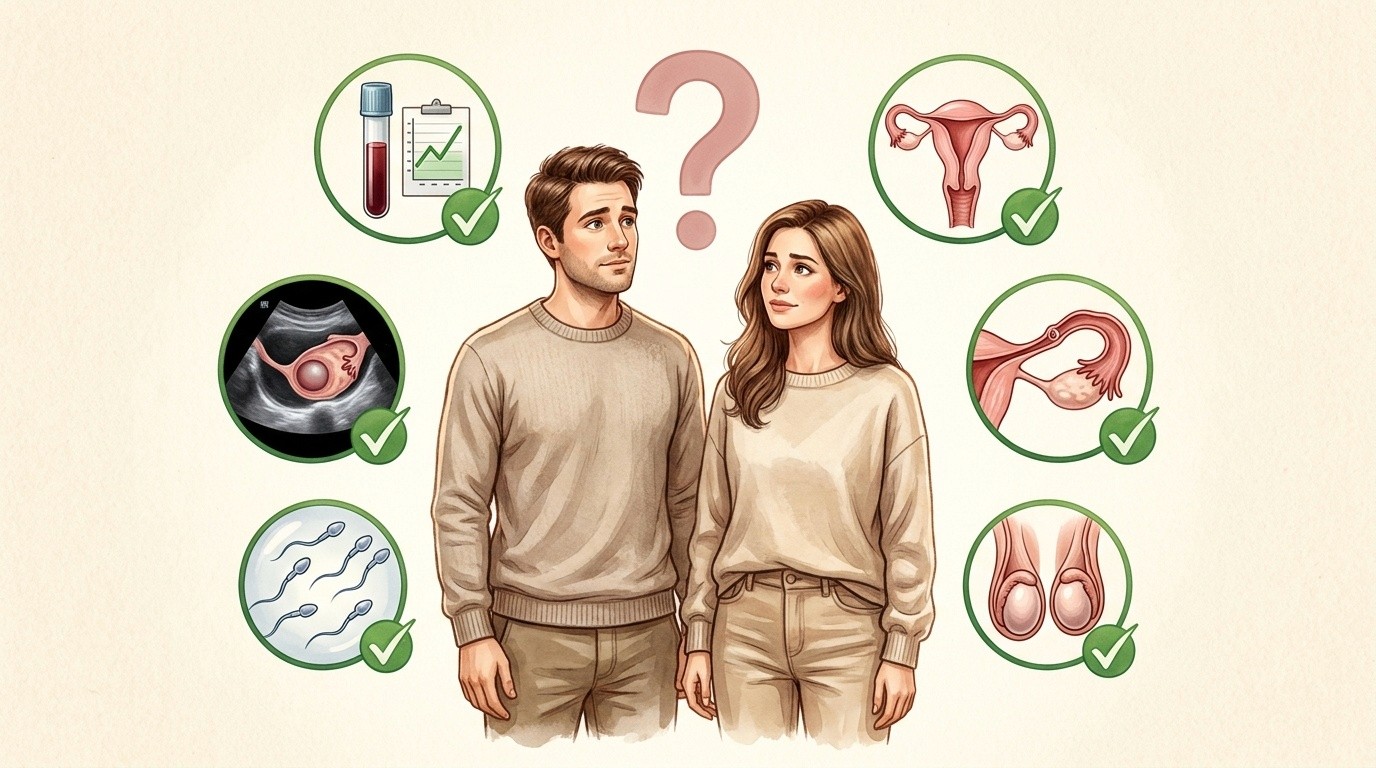
The International Committee for Monitoring Assisted Reproductive Technologies (ICMART) defines UI as “infertility in couples with apparently normal ovarian function, fallopian tubes, uterus, cervix and pelvis and with adequate coital frequency; and apparently normal testicular function, genito-urinary anatomy and a normal ejaculate.”[^1] In practical terms: ovulation, tubal patency, uterine anatomy, and semen parameters all appear normal — yet pregnancy does not occur.
A key nuance is embedded in the word “apparently.” The diagnosis depends entirely on which tests are performed and how “normal” is defined.[^2] A systematic review of 375 studies found that the criteria used to diagnose unexplained infertility varied enormously: only 39.5% of studies reporting semen analysis applied the WHO reference limits, and fewer than 50% of studies assessed the uterine cavity or hormone profile at all.[^2]
This heterogeneity means that the reported prevalence of unexplained infertility is subjective and highly variable, ranging from roughly 10% to 30% of infertile couples, depending on the clinic and the depth of investigation.[^1][^2]
Important:
Unexplained infertility is not the same as idiopathic male infertility. Idiopathic male infertility refers to men who have abnormal semen parameters with no identifiable cause, whereas in unexplained infertility, all standard test results appear normal.[^1]
→ Learn more: Infertility
How Is Unexplained Infertility Diagnosed?
Because UI is a diagnosis of exclusion, receiving it means that several core fertility assessments have already been completed. The 2023 guideline from the European Society of Human Reproduction and Embryology (ESHRE) recommends a minimum of three components before the label can be applied:[^1]
The Standard Diagnostic Triad
Assessment | What Is Checked | Key Method |
Ovulation | Confirmation that eggs are released regularly. Regular menstrual cycles (typically 24–38 days) strongly suggest ovulation, but this can be confirmed with hormonal or ultrasound testing. | Mid-luteal serum progesterone, urinary LH tests, ultrasound monitoring. |
Semen analysis | At least one basic semen examination according to WHO criteria, performed by a quality-controlled laboratory.1,5 | WHO 6th edition reference values (see table below). |
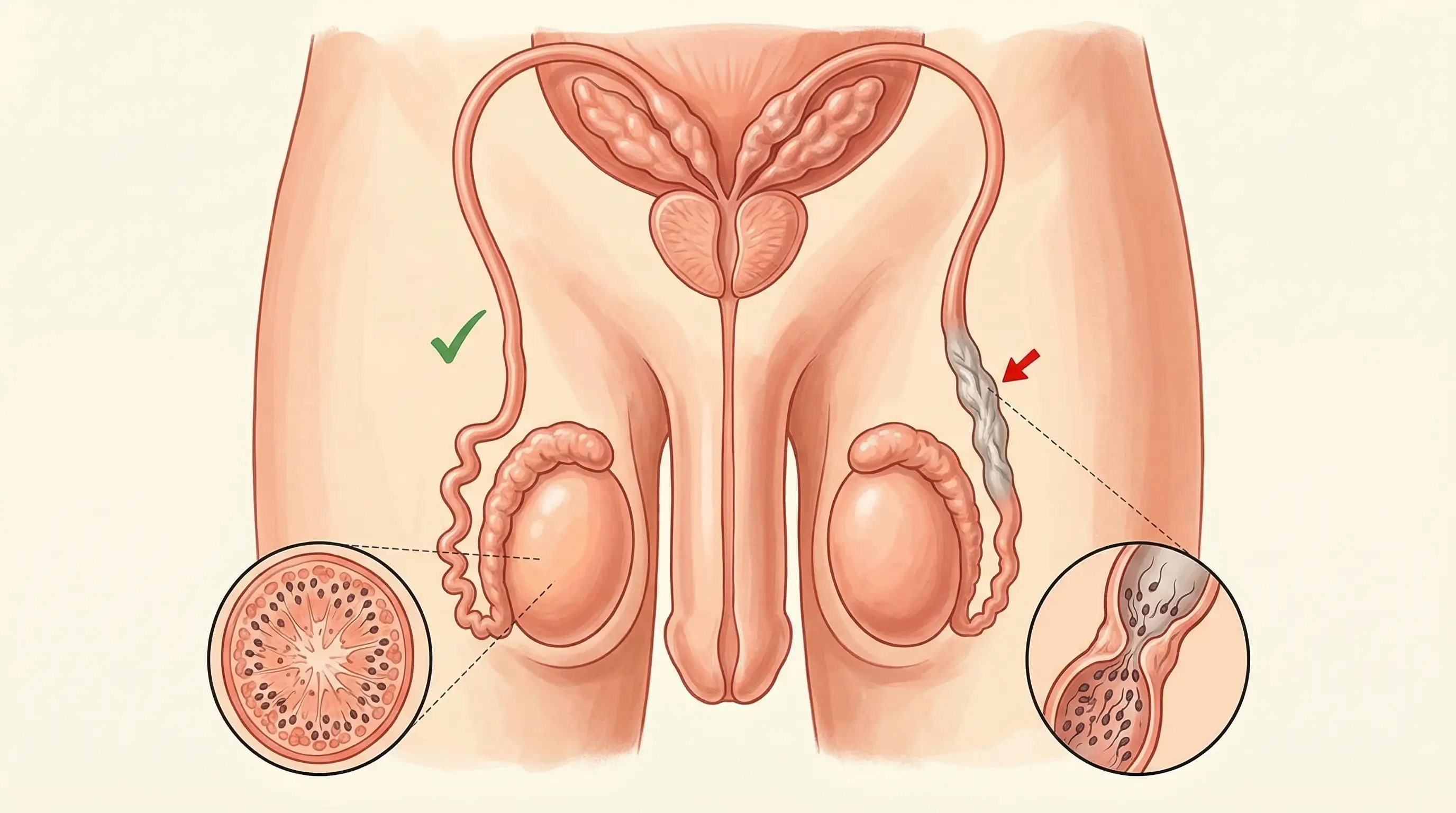
Tubal patency | Verification that at least one fallopian tube is open, allowing sperm and egg to meet. | HSG (Hysterosalpingography), HyCoSy, or laparoscopy. |
Source: ESHRE Evidence-based Guideline on Unexplained Infertility (2023)[^1]
ESHRE further recommends routinely taking a medical, reproductive, and sexual history from both partners.[^1] Should any abnormality emerge from history-taking or physical examination, the diagnosis of unexplained infertility would no longer apply.
WHO Semen Analysis Reference Values
Parameter | 5th Percentile | 95% CI |
Semen volume | 1.4 mL | 1.3–1.5 mL |
Sperm concentration | 16 × 10⁶/mL | 15–18 × 10⁶/mL |
Total sperm number | 39 × 10⁶/ejaculate | 35–40 × 10⁶/ejaculate |
Total motility (PR + NP) | 42% | 40–43% |
Progressive motility | 30% | 29–31% |
Vitality | 54% | 50–56% |
Normal forms (morphology) | 4% | 3.9–4.0% |
Source: WHO Laboratory Manual for Human Semen, 6th ed. (2021); ESHRE UI Guideline (2023)[^1][^5]
Values below the lower 5th percentile reference limit are considered clinically relevant for further investigation.[^1] Semen parameters show high biological variability.[^5] If results are clearly abnormal, a repeat analysis within 2–4 weeks is recommended. If findings are borderline, repeating after at least 3 months — allowing a full spermatogenesis cycle (approximately 74 days) — provides a more reliable picture.[^1][^5]
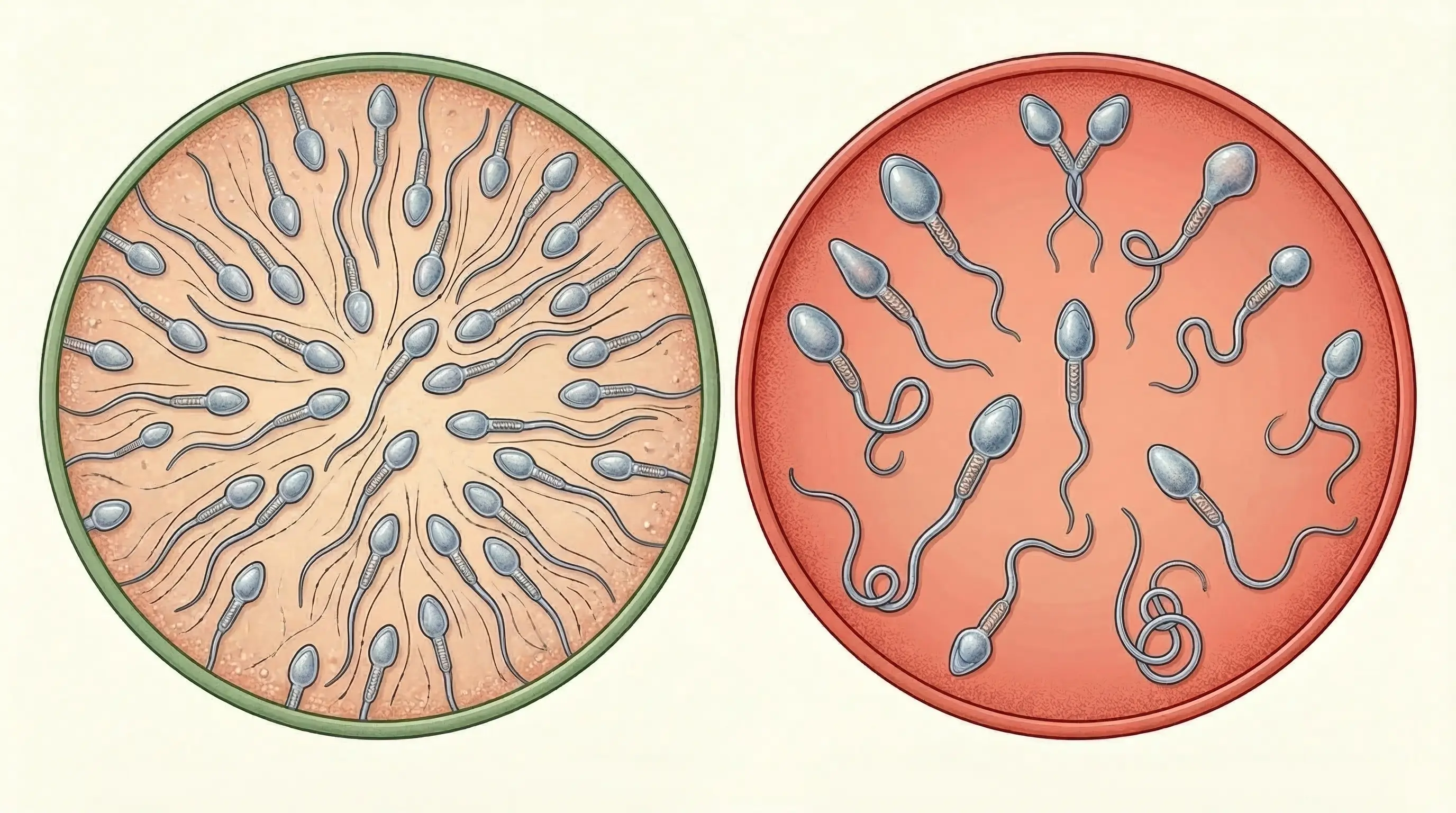
Semen parameters below these thresholds carry specific nomenclature: oligozoospermia (sperm concentration < 16 million/mL), asthenozoospermia (< 32% progressive motility), and teratozoospermia (< 4% normal forms).[^5] When all three abnormalities occur together, it is termed oligo-astheno-teratozoospermia (OAT) syndrome.[^5] The presence of clinically significant abnormalities usually leads to classification as male-factor infertility rather than unexplained infertility.
→ Learn more: Male Infertility
Additional Diagnostic Procedures
Beyond the core triad, some guidelines recommend or suggest further assessments, though these are not universally standardized:[^1][^7][^8]
Uterine cavity assessment: Transvaginal ultrasound or hysteroscopy to detect polyps, fibroids, or congenital anomalies.[^1][^7]
Hormonal profile: FSH, LH, estradiol, AMH, TSH, and prolactin levels to detect subtle endocrine imbalances.[^1][^4][^8]
Laparoscopy: Not routinely recommended before labelling a couple with UI, but may reveal mild endometriosis or pelvic adhesions otherwise undetectable.[^1]
Male genito-urinary examination: ESHRE highlights the importance of investigating the general and reproductive history of the male partner, with particular attention to sexual dysfunction.[^1][^8]
Possible Underlying Causes: What May Be Missed?
The label “unexplained” does not mean that no cause exists — it means the cause has not yet been found with the available tests.[^2][^7] Several biological factors can impair fertility yet remain invisible on routine investigations:
On the Female Side
Mild or minimal endometriosis: Detectable only by laparoscopy, subtle endometriotic lesions can alter the pelvic environment and impair egg quality or implantation.[^1][^7]
Immune imbalances: Shifts in adaptive immunity — including imbalances between humoral and cellular responses — have been identified in women with unexplained infertility and may interfere with implantation.[^9]
Implantation defects: Subtle abnormalities in uterine receptivity or uterine contractility may prevent an otherwise healthy embryo from successfully implanting.[^1][^7] Some clinics offer the endometrial receptivity array (ERA) test to investigate implantation timing and uterine receptivity, though it is not part of routine practice.
Oocyte quality: Current tests assess ovarian reserve (quantity), but there is no reliable clinical test for egg quality, which declines with age and can affect fertilization and embryo development.[^1]
On the Male Side
Subtle sperm defects: Standard semen analysis measures count, motility, and morphology, but does not evaluate sperm DNA integrity, oxidative stress, or functional capacity. Sperm DNA fragmentation, for instance, may contribute to infertility even when standard parameters appear normal, so an advanced semen analysis should be recommended.[^5][^8]
Antisperm antibodies: Antisperm antibodies may develop after disruption of the blood–testis barrier (for example, surgery, trauma, infection, or vasectomy). In women, they may develop as an immune response to sperm, interfering with fertilization.[^5]
Functional sperm abnormalities: Defects in the acrosome reaction, sperm-egg binding, or capacitation may remain undetected by routine testing.[^8]
Key insight:
Adhering to a stricter set of diagnostic criteria may lower the reported prevalence of unexplained infertility — in other words, more thorough testing often reveals a cause.[^2] The depth of investigation directly affects whether a couple receives this diagnosis.
→ Learn more: Female Infertility
Diagnostic Limitations and Controversies
One of the biggest challenges around unexplained infertility is the lack of a universally agreed-upon definition. A systematic review found that the existing guidelines from ICMART, the National Institute for Health and Care Excellence (NICE), the American College of Obstetricians and Gynecologists (ACOG), and ESHRE “vary hugely in their criteria and in the specificity of how they confirm positive and negative findings.”[^2]
For example, tubal patency was reported as bilateral in only 62.5% of studies and as unilateral in 10.3%.[^2] Ovulation was assessed using mid-luteal progesterone in 56.1% and by regular cycles alone in 42.4%.[^2] This inconsistency makes it difficult to compare study populations and treatment outcomes across centres.
The 2025 guidance from the Vlaamse Vereniging voor Obstetrie en Gynaecologie (VVOG) echoes this concern, noting that some biological factors remain untestable in routine clinical care.[^7]
The Cochrane review on interventions for unexplained infertility similarly highlights that uncertainty around the definition contributes to low or very low certainty of evidence for many recommended treatments.[^14]
Impact on Fertility and Natural Conception
One of the most important — and often reassuring — aspects of unexplained infertility is that many couples can still conceive naturally. Unlike couples with clearly identified barriers (blocked tubes, severe male factor), those with UI retain some fertility potential.[^12][^13]
A Dutch study following 437 couples with unexplained infertility reported an overall ongoing pregnancy rate of 55.4% within 3 years, with 27.4% conceiving naturally without any treatment.[^17]
Prognosis-Based Decision-Making
Because some couples with UI will conceive naturally, it isn’t always necessary — or beneficial — to start treatment immediately. Instead, the concept of prognosis-based management has emerged as best practice.[^12][^13]
The best-studied prediction model, the Hunault model, estimates the likelihood of natural conception within 12 months based on five factors:[^13]
Female age
Duration of subfertility
Whether subfertility is primary or secondary
Percentage of progressive motile sperm
Referral status (whether referred by a GP or self-referred)
Randomized clinical trials have shown that when a couple’s estimated 12-month natural conception chance exceeds 30%, immediate treatment with intrauterine insemination (IUI) and ovarian stimulation is not superior to expectant management for 6 months.[^12][^13] Below that 30% threshold, treatment with IUI is superior to waiting, but immediate IVF was not shown to be better than IUI as a first step.[^13]
Key insight:
Unexplained infertility is, in a sense, a two-faced condition. Although no identifiable cause is found, conception prospects — both natural and after treatment — are generally good. Young women with a short duration of infertility have the highest natural conception chances and the smallest benefit from immediate intervention.[^12][^13]
Treatment Options
Treatment for unexplained infertility follows a stepwise approach, starting with less invasive options and progressing based on the couple’s age, duration of infertility, prognosis, and response to previous treatments.[^1][^3]
Expectant Management (Watchful Waiting)
For couples with a good prognosis (Hunault-predicted natural conception rate > 30%), expectant management for 6 months is a reasonable first step.[^1][^12] This doesn’t mean doing nothing — it’s an opportunity to optimize lifestyle, prepare for pregnancy, and allow natural conception to occur.[^12]
One randomized controlled trial (RCT) — a study that tests a treatment by randomly assigning participants to compare outcomes objectively — comparing IUI with ovarian stimulation to expectant management in good-prognosis couples, found no difference in live birth rates.[^1][^12]
Ovarian Stimulation with IUI
Ovarian stimulation (OS) combined with IUI is the mainstay of first-line active treatment for unexplained infertility.[^3] The rationale is twofold: increasing the number of eggs released per cycle and placing prepared sperm closer to the site of fertilization.
Clomiphene citrate with IUI: An RCT of 201 couples showed a significantly higher live-birth rate compared to expectant management (31% vs. 9%).[^3]
Letrozole with IUI: Currently preferred by many clinicians over clomiphene citrate due to a more favourable safety profile and a lower risk of multiple pregnancy. A large retrospective study reported adjusted live-birth rates of 9.4% per cycle with letrozole versus 8.9% with clomiphene.[^3]
Gonadotropins with IUI: Injectable hormones (FSH, LH) yield the highest per-cycle live-birth rate (up to 32.2%) but carry a significantly higher risk of multiple pregnancy (up to 32% of live births).[^3]
In Vitro Fertilization (IVF)
IVF is often considered after several unsuccessful IUI cycles (commonly 3–6), particularly in women over 38 years of age or when the duration of infertility is long.[^1][^3][^15]
An individual participant data meta-analysis comparing IVF to IUI with ovarian stimulation in unexplained infertility found that IVF was associated with higher live-birth rates per cycle, but the cumulative difference over multiple IUI cycles narrowed considerably.[^15] A well-designed RCT reported per-cycle pregnancy rates of 7.6% for clomiphene-IUI, 9.8% for gonadotropin-IUI, and 30.7% for IVF.[^3]
Some clinics offer preimplantation genetic testing for aneuploidies (PGT-A) as an add-on to IVF, particularly for couples with repeated implantation failures. PGT-A is not recommended for routine use and involves additional cost, but it may help select chromosomally normal embryos for transfer in selected cases.[^1]
Treatment Summary
Treatment | How It Works | Approx. Live-Birth Rate | Key Consideration |
Expectant management | Timed intercourse without medication. | 9–27% within 12 months (Hunault model). | Best when Hunault-predicted natural conception rate > 30%. |
Clomiphene/letrozole + IUI | Oral medication to stimulate ovulation; prepared sperm is placed in the uterus. | 8–31% per cycle. | First-line active treatment. |
Gonadotropins + IUI | Injectable hormones for stronger stimulation; IUI at ovulation. | Up to 32% per cycle. | Higher multiple-pregnancy risk. |
IVF | Eggs retrieved, fertilized in a lab, embryo transferred to the uterus. | ~31% per cycle. | After failed IUI or in women > 38 years. |
Sources: ASRM (2020)[^3], ESHRE (2023)[^1], Lai et al. (2024)[^15], Ayeleke et al. (2020)[^16]
IUI = intrauterine insemination; IVF = in vitro fertilization; OS = ovarian stimulation.
Prognosis estimates are based on the Hunault prediction model, which uses female age, duration of subfertility, subfertility type (primary/secondary), sperm motility, and referral status.
→ Learn more: Intrauterine Insemination (IUI)
→ Learn more: In Vitro Fertilization (IVF)
Mechanical-Surgical Procedures
Although not first-line treatments, certain surgical interventions may benefit selected patients with unexplained infertility:[^1]
Tubal flushing with oil-based contrast: Evidence suggests that hysterosalpingography using oil-based contrast may have a small fertility-enhancing effect in the months following the procedure.[^1]
Laparoscopy for endometriosis: If mild or minimal endometriosis is suspected, diagnostic laparoscopy with treatment may improve the chances of natural conception.[^1]
Hysteroscopy: Removal of uterine polyps or small fibroids detected during workup may optimize the uterine cavity for implantation.[^1]
Treatment Outcomes and Success Rates
Understanding realistic success rates helps couples set expectations and make informed decisions.
A Cochrane review of IUI for unexplained infertility concluded that IUI in a stimulated cycle probably improves live-birth rates compared to expectant management in couples with a poor Hunault-predicted prognosis: if the chance of live birth with expectant management is assumed to be 9%, the chance with stimulated IUI rises to 17–50%.[^16]
In couples with an intermediate Hunault-predicted prognosis, the evidence was less certain: the live-birth rate with IUI in a stimulated cycle ranged from 12–32% compared to 24% with expectant management.[^16]
For IVF versus IUI, the 2024 individual participant data meta-analysis found that IVF is superior per cycle, but the difference diminishes when IUI is repeated across multiple cycles.[^15] The ASRM-reported per-cycle pregnancy rates were: clomiphene-IUI 7.6%, gonadotropin-IUI 9.8%, IVF 30.7%.[^3]
Overall, a long-term Dutch cohort found that 55.4% of couples with UI achieved an ongoing pregnancy within approximately 3 years. Of all pregnancies, 27.4% were natural conceptions, 15.7% followed IUI, and 12.3% resulted from IVF.[^17]
Emotional Impact and Living with the Diagnosis
Unexplained infertility carries a uniquely heavy psychological burden. When a couple receives a clear diagnosis, there is at least something concrete to address. With unexplained infertility, the absence of answers often amplifies feelings of frustration, helplessness, and self-blame.[^18][^20]
A 2023 metasynthesis of 19 qualitative studies involving 503 women identified three core emotional themes in infertility: personal reproductive trauma (including stress, grief, insomnia, anxiety, and guilt), impact on relationships (both strain and, sometimes, deeper intimacy), and feeling failed by the healthcare system.[^20]
Women described infertility as “a lonely road” where disclosure felt risky due to stigmatization, and where others who had not experienced it could not fully understand the depth of their grief.[^20] The sense of loss was compared to mourning a loved one.
The Value of Psychological Support
The ESHRE guideline explicitly recommends psychological support, including psychotherapy, for patients with unexplained infertility when needed.[^1] Although no studies were identified investigating psychotherapy specifically in UI couples, the broader ESHRE guideline on routine psychosocial care provides detailed guidance for fertility clinic staff on detecting and addressing patients’ emotional needs.[^18]
A 2023 meta-analysis of 58 randomized controlled trials found that psychological interventions for infertility improved combined psychological outcomes and modestly increased pregnancy rates (RR 1.25, 95% CI 1.07–1.47).[^19] While the effect size was small in Western populations, the evidence supports offering professional support as part of fertility care.
You are not alone. If the emotional weight of this diagnosis feels overwhelming, reaching out to a psychologist or counsellor experienced in fertility issues is not a sign of weakness — it’s a step toward your overall well-being.
So, What Should You Do Now?
If you suspect unexplained infertility or have already received the diagnosis, here is a practical path forward:
Step 1: Make Sure the Diagnostic Work-Up Is Complete
Confirm that all three core assessments have been done: ovulation check, semen analysis (with repeat testing if results were abnormal or borderline), and tubal patency test. Ask your doctor whether additional tests are warranted.
Step 2: Understand Your Prognosis
Ask your fertility specialist about your estimated natural conception chances. The Hunault model uses your age, duration of subfertility, type of subfertility, sperm motility, and referral status to calculate a 12-month prediction.
Step 3: Discuss a Treatment Plan with Your Doctor
If your prognosis is good (> 30% chance), expectant management for 6 months may be appropriate. If your prognosis is lower, IUI with ovarian stimulation is a reasonable first-line treatment.
Step 4: Consider the Emotional Side
Unexplained infertility takes a toll. Don’t hesitate to seek psychological support — it can improve both your well-being and, potentially, your treatment outcomes.
Step 5: Choose the Right Clinic
Selecting a clinic with experience in unexplained infertility, transparent success rates, and a supportive care team can make a meaningful difference. Compare options before committing.
→ Compare fertility clinics worldwide: MedicalNavigator.com/fertility-clinics
Too Long, Didn’t Read
Unexplained infertility affects up to 30% of infertile couples whose standard tests appear normal.
It is a diagnosis of exclusion — how thoroughly you are tested directly affects the label.
The standard work-up includes an ovulation check, semen analysis, and a tubal patency test.
Many couples still conceive naturally — up to 55% achieve ongoing pregnancy within 3 years.
The Hunault model estimates whether the chances of natural conception exceed 30%, guiding the wait-or-treat decision.
Treatment progresses from expectant management to IUI with ovarian stimulation, and when indicated, IVF.
References
[^1]: The Guideline Group on Unexplained Infertility, Romualdi D, Ata B, Bhattacharya S, et al. Evidence-based guideline: unexplained infertility. Hum Reprod. 2023;38(10):1881–1890.
[^2]: Raperport C, Desai J, Qureshi D, et al. The definition of unexplained infertility: A systematic review. BJOG. 2024;131(7):880–897.
[^3]: American Society for Reproductive Medicine. Evidence-based treatments for couples with unexplained infertility: a guideline. Fertil Steril. 2020;113(2):305–322.
[^4]: Adebisi OY, Singh M, Tobler KJ. Female Infertility. In: StatPearls [Internet]. Treasure Island (FL): StatPearls Publishing; 2025 Jan–.
[^5]: Leslie SW, Soon-Sutton TL, Khan MAB. Male Infertility. In: StatPearls [Internet]. Treasure Island (FL): StatPearls Publishing; 2025 Jan–.
[^6]: Quaas A, Dokras A. Diagnosis and treatment of unexplained infertility. Rev Obstet Gynecol. 2008;1(2):69–76.
[^7]: Abbib N, Heylen A, Neyens S, et al. Diagnostic workup for a couple with unexplained infertility – VVOG guidance. Eur J Obstet Gynecol Reprod Biol: X. 2025;27:100415.
[^8]: European Association of Urology. EAU Guidelines on Sexual and Reproductive Health: Male Infertility. 2025 Edition.
[^9]: Ehsani M, Mohammadnia-Afrouzi M, Mirzakhani M, Esmaeilzadeh S, Shahbazi M. Female Unexplained Infertility: A Disease with Imbalanced Adaptive Immunity. J Hum Reprod Sci. 2019;12(4):274–282.
[^10]: National Institute for Health and Care Excellence. Fertility problems: assessment and treatment (CG156). 2013 (updated 2017).
[^11]: Shingshetty L, Maheshwari A, McLernon DJ, Bhattacharya S. Should we adopt a prognosis-based approach to unexplained infertility? Hum Reprod Open. 2022;2022(4):hoac046.
[^12]: Au LS, Feng Q, Shingshetty L, Maheshwari A, Mol BW. Evaluating prognosis in unexplained infertility. Fertil Steril. 2024;121(5):717–729.
[^13]: Shingshetty L, et al. Prognosis-based management of unexplained infertility. Front Reprod Health. 2024.
[^14]: Wang R, et al. Interventions for unexplained infertility: A systematic review and network meta-analysis. Cochrane Database Syst Rev. 2019.
[^15]: Lai S, et al. IVF versus IUI with ovarian stimulation for unexplained infertility. Hum Reprod Update. 2024;30(2):174–185.
[^16]: Ayeleke RO, et al. Intra-uterine insemination for unexplained subfertility. Cochrane Database Syst Rev. 2020.
[^17]: Brandes M, Hamilton CJ, van der Steen JO, et al. Unexplained infertility: overall ongoing pregnancy rate and mode of conception. Hum Reprod. 2011;26(2):360–368.
[^18]: Gameiro S, Boivin J, Dancet E, et al. ESHRE guideline: routine psychosocial care in infertility and medically assisted reproduction. Hum Reprod. 2015;30(11):2476–2485.
[^19]: Dubé L, et al. Efficacy of psychological interventions for mental health and pregnancy outcomes in infertility. Hum Reprod Update. 2023;29(1):71–92.
[^20]: Assaysh-Öberg S, Borneskog C, Ternström E. Women’s experience of infertility & treatment – A silent grief and failed care and support. Sex Reprod Healthc. 2023;37:100879.
This guide is for informational purposes only. Always consult qualified healthcare providers for personalized recommendations. For full details, read our Medical Disclaimer.

Author of the article
Date of publication