



What Is Infertility?
Infertility is classified as a disease of the reproductive system by the World Health Organization (WHO), defined as the failure to achieve pregnancy after 12 months of regular, unprotected sexual intercourse.[^1]
It’s not a personal failure or bad luck—it’s a medical condition with identifiable causes and effective treatments.
When to Seek Help?
Age | When to See a Fertility Specialist |
Under 35 years | After 12 months of trying to conceive |
35–39 years | After 6 months of trying to conceive |
More than 40 years | Immediately |
Source: WHO Infertility Fact Sheet (2023)[^1] and ACOG Committee Opinion No. 589 (2014)[^3]
How Does Age Affect Fertility?
Female fertility declines gradually after age 30, more sharply after 35, and significantly after 40. By age 40, the average chance of conception per cycle is estimated to be below 5%, though individual fertility varies.[^3]
Types of Infertility
Not all infertility is the same. Understanding which type you’re dealing with helps guide the proper diagnostic approach:
Based on Your History
Primary Infertility: You’ve never achieved a pregnancy after 12 months of regular intercourse without contraception (or after 6 months if you are older than 35 years).
Secondary Infertility: You’ve had a previous pregnancy (even if it ended in miscarriage), but cannot conceive again. This is the most commonly observed form of infertility at the global level.[^4]
Based on a Cause
Unexplained infertility: All tests come back standard, yet pregnancy doesn’t happen. This accounts for 15–30% of cases.[^5]
Distribution of Infertility Causes
A common misconception is that infertility affects mainly women, but the reality is quite different. Research consistently shows that male and female factors play similarly significant roles. In fact, male factors are involved in about half of infertility cases.[^6]
Cause | Rate |
Female factors only | 20–35% |
Male factors only | 20–30% |
Combined male and female factors | 30–40% |
Unexplained factors | 15–30% |
Source: Agarwal A, et al. Reprod Biol Endocrinol (2015)[^6] and Vander Borght M, Wyns C. Clinical Biochemistry (2018)[^2]
Both partners must be assessed to ensure an accurate infertility diagnosis. Skipping the evaluation of one partner may lead to missed diagnoses, unnecessary delays, and extra costs.
What Causes Infertility?
Infertility may be caused by conditions affecting one or both partners. The good news is that most causes are identifiable and treatable.
Female Infertility Causes
Female factors account for approximately 20–35% of infertility cases when present alone and contribute to over 50% of cases when combined with male factors. The causes generally fall into two categories: ovulation problems and structural issues.
→ Learn more: Female Infertility
Ovulatory Disorders (25–40% of female infertility)
Ovulation — the monthly release of an oocyte (egg) — is essential for conception. When it doesn’t happen regularly, pregnancy becomes difficult. These disorders are among the most treatable causes of infertility:[^7]
Polycystic Ovary Syndrome (PCOS): The most common cause of ovulatory infertility, responsible for about 70% of cases. Characterized by irregular periods, elevated male hormones, and multiple small follicles on the ovaries.[^8]
Hyperprolactinemia: Elevated prolactin levels suppress ovulation. Usually caused by pituitary issues and is highly treatable with medication.[^9]
Other Hormonal Ovulation Disorders: Includes hypothalamic amenorrhea, thyroid dysfunction, and other hormonal imbalances preventing regular egg release.
→ Treatment option: Ovulation Induction
Ovarian Reserve Disorders
While ovulatory disorders affect whether an egg is released, reserve disorders affect how many eggs remain. Even with regular ovulation, reduced egg quantity can significantly impact fertility. However, ovarian reserve reflects response to stimulation, not immediate egg quality.
Important:
Ovarian reserve tests estimate egg quantity, not egg quality or the chance of natural conception in a given month.
Diminished Ovarian Reserve (DOR): Fewer eggs than expected for age, reducing chances of conception even with regular cycles. Diagnosed via AMH (Anti-Müllerian hormone) blood test and antral follicle count on ultrasound.[^3]
Age-Related Decline: Natural decline after age 30, accelerating after 35, and significant after 40 years. The most common cause of DOR. Affects all women, though rates vary.[^3]
Genetic Causes: Conditions such as Fragile X premutation or Turner syndrome mosaicism can lead to premature depletion of eggs. Consider testing if there’s a family history of early menopause (before age 40).[^31]
Oncology-Related Causes: Chemotherapy, radiation, and pelvic surgery can permanently damage ovarian function. Fertility preservation (egg/embryo freezing) before treatment is essential and should be discussed immediately at cancer diagnosis.[^28]
Surgical & Autoimmune Causes: Prior ovarian surgery (e.g., cyst or endometrioma removal) or autoimmune conditions (e.g., autoimmune oophoritis) may reduce ovarian reserve.
→ Treatment options: IVF, Donor Programs and Surrogacy
Structural Female Disorders
Physical abnormalities in the reproductive tract can prevent the egg and sperm from meeting, or stop a fertilized embryo from implanting properly.
Tubal Factor: Blocked or damaged fallopian tubes, often from untreated STIs (Sexually Transmitted Infections), previous pelvic surgery, and prior pelvic inflammatory disease (PID). Accounts for 20–35% of female infertility.[^10]
Endometriosis: Tissue similar to the uterine lining grows outside the uterus, causing inflammation and scarring. Approximately 30–50% of women with endometriosis experience infertility, particularly in moderate to severe cases.[^11]
Uterine Fibroids: Benign tumors in the uterine wall. Submucosal fibroids most significantly impact fertility by interfering with implantation.[^12]
Adenomyosis: Endometrial tissue grows into the muscular wall of the uterus, causing painful periods and has been associated with impaired implantation rates and reduced fertility outcomes.[^13]
→ Diagnostic procedure: Hysterosalpingography (HSG)
Male Infertility Causes
Male factor infertility contributes to approximately half of infertility cases, yet is frequently under-evaluated. The good news is that male fertility testing is simpler, faster, and far less invasive than female testing.
→ Learn more: Male Infertility
Sperm Abnormalities
Problems with sperm production, quality, or delivery account for most male infertility. A single semen analysis (spermiogram) can identify most clinically significant sperm abnormalities and inform future treatment pathways.
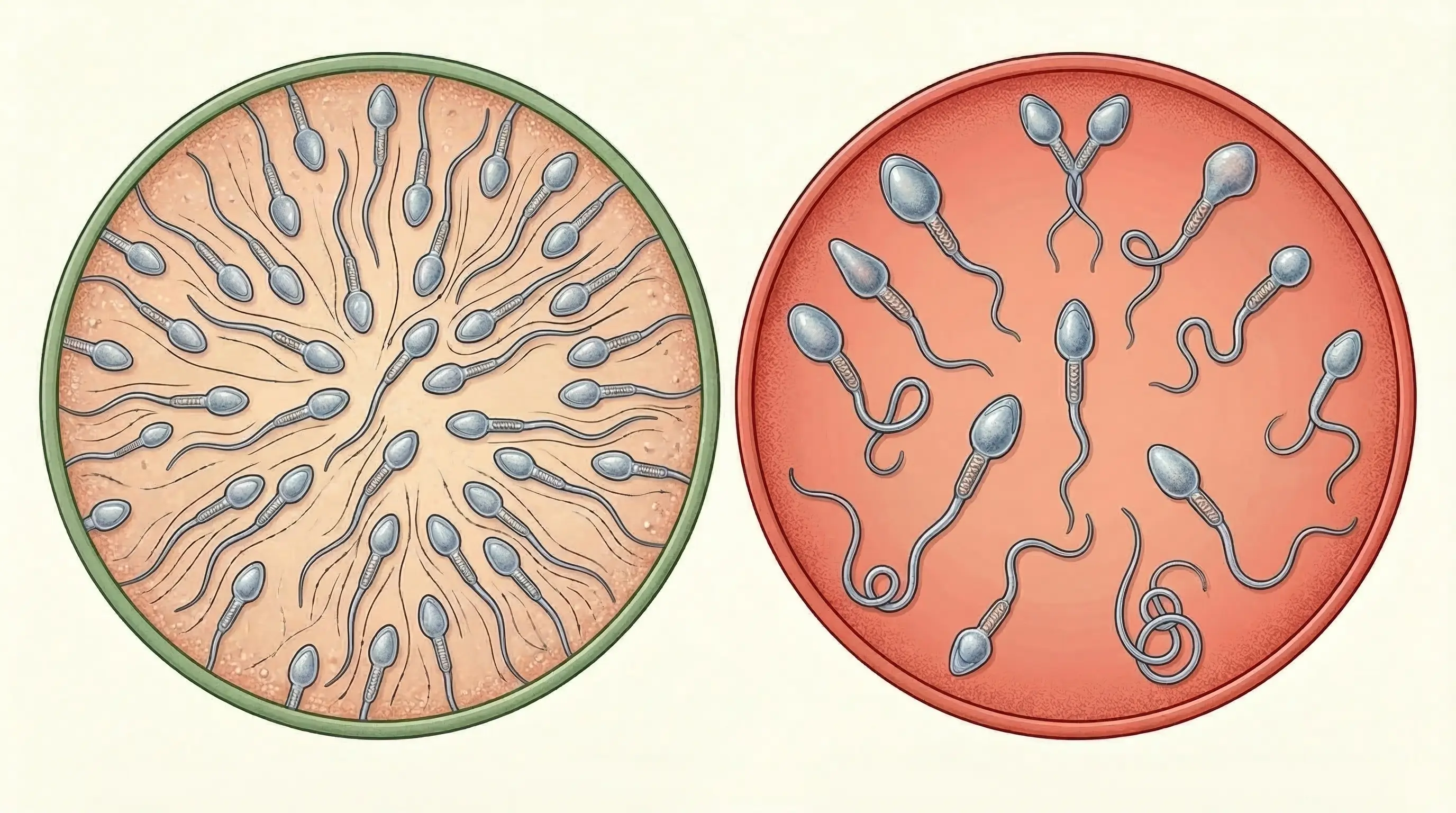
Azoospermia: Complete absence of sperm in the ejaculate. Affects about 1% of all men and 10–15% of infertile men.[^14]
Oligospermia & Asthenospermia: Low sperm count or poor motility. Normal reference values (WHO lower reference limit) are ≥16 million/mL; normal motility is ≥42%.[^15]
Teratospermia: Abnormal sperm shape, which may affect the ability to fertilize an egg. Often treatable with Intracytoplasmic Sperm Injection (ICSI).
Structural Male Disorders
Physical abnormalities can impair sperm production or delivery:
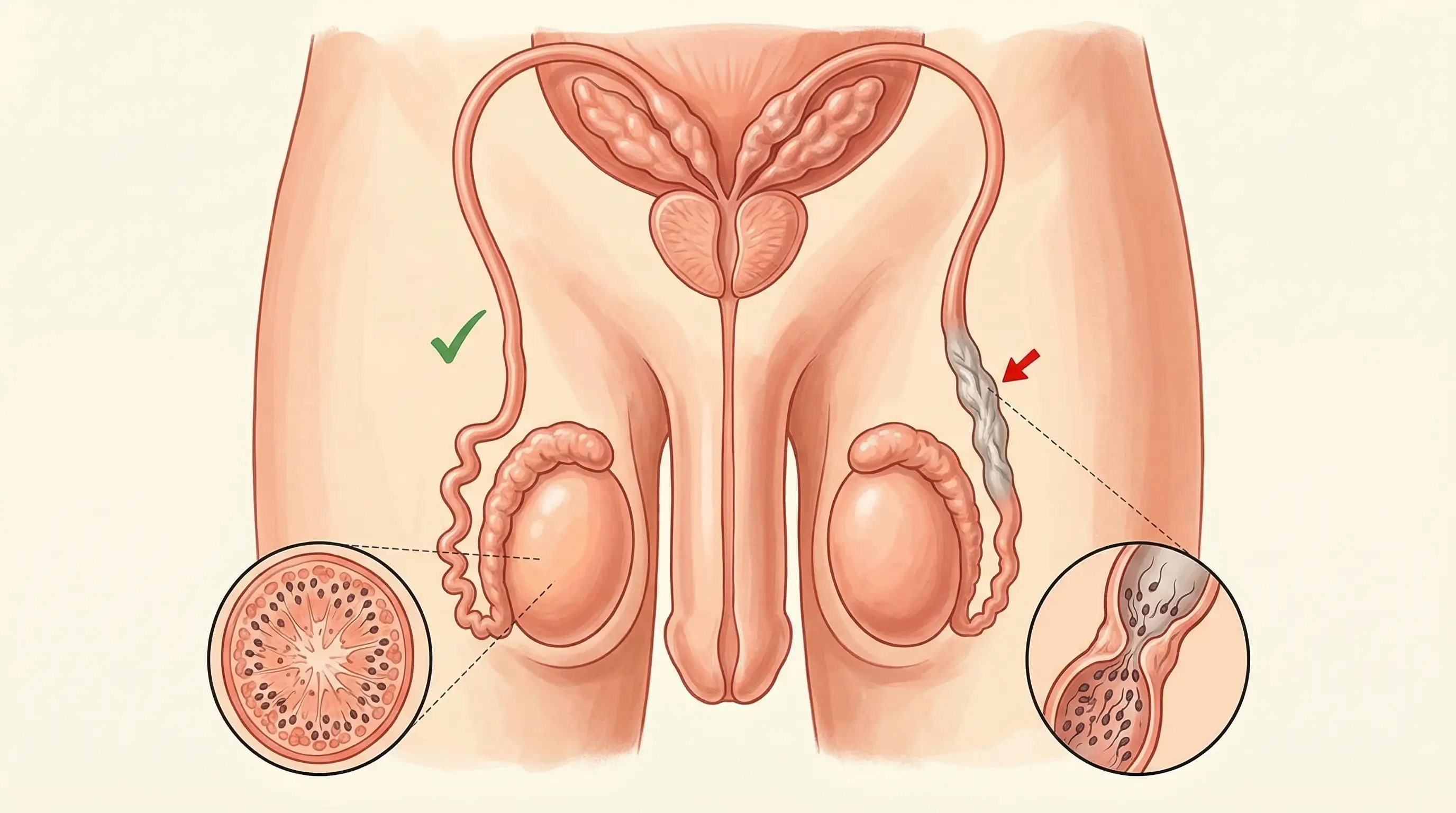
Varicocele: Enlarged veins in the scrotum. Varicoceles are present in approximately 15% of all men and up to 40% of men evaluated for infertility. While not all varicoceles affect fertility, clinically significant varicoceles are associated with abnormal semen parameters.[^16]
Obstruction: Blockages in the reproductive tract prevent sperm from reaching the uterus. It can result from infections, injury, or congenital issues.
Undescended testicles: If not corrected early in childhood, they can permanently impair sperm production.
Hormonal Male Disorders

The hormonal system controlling sperm production can malfunction:
Male Hormonal Disorders: Disorders of the hormonal system regulating sperm production (spermatogenesis), such as abnormalities in testosterone, prolactin, thyroid hormones, or pituitary function, can impair sperm production.[^17]
Anabolic steroid use: Severely suppresses natural testosterone and sperm production. Effects may take months to years to reverse.
Thyroid disorders: Both hyper- and hypothyroidism can affect sperm production and quality.
→ Diagnostic test: Hormonal Panel
Genetic Male Causes
Inherited genetic abnormalities can significantly impact male fertility:
Klinefelter syndrome (47, XXY): The most common chromosomal cause, occurring in approximately 1 in 600 males. Causes abnormal testicular development and often azoospermia. Fertility may still be possible with micro-TESE (Microsurgical Testicular Sperm Extraction) and ICSI.[^31]
Y-Chromosome Microdeletions: Deletions in the AZF region affect sperm production. Found in 10–15% of men with azoospermia. Prognosis varies by deletion location.[^14]
CFTR Gene Mutations: Can cause congenital absence of the vas deferens (CBAVD), leading to obstructive azoospermia. Genetic counseling is recommended.[^14]
Kallmann Syndrome: Causes hypogonadotropic hypogonadism, often with an absent sense of smell. Treatable with hormone therapy.[^33]
Infections and Inflammatory Male Conditions
Some male infertility causes are temporary and treatable with early intervention:
Epididymitis: Inflammation resulting from STIs (Sexually Transmitted Infections) or from non-sexually transmitted bacterial infections of the genitourinary tract. Can affect sperm transport. Early antibiotic treatment is essential.[^32]
Orchitis: Testicular inflammation, commonly from the mumps virus after puberty. Can cause testicular atrophy if severe.[^32]
Sexually Transmitted Infections (STIs): Untreated chlamydia and gonorrhea can cause scarring and obstruction. Early detection preserves fertility.[^32]
Risk Factors Affecting Both Partners
Beyond specific medical conditions, several lifestyle and environmental factors can impair fertility in both men and women. The encouraging news — many of these are modifiable.[^18]
Risk Factor | Effect on Female Fertility | Effect on Male Fertility |
Age | Sharp decline after 35; by 40, the average chance of conception per cycle is often cited as <5% [^3] | Gradual decline after 40; increased genetic risks [^3] |
Smoking | Damages eggs, accelerates menopause, reduces IVF success [^18][^19] | Reduces sperm count, motility, and DNA integrity [^19] |
Weight | Obesity disrupts ovulation; underweight causes amenorrhea [^21] | Obesity increases estrogen levels, lowers testosterone, and affects sperm quality [^18] |
Alcohol | Heavy or chronic alcohol use affects ovulation and implantation [^18] | Heavy chronic alcohol use reduces sperm count and quality [^18] |
STIs | Untreated chlamydia/gonorrhea causes tubal damage [^10] | Can cause blockages and inflammation [^32] |
Toxins | Pesticides and chemicals may affect egg quality [^18] | Exposure linked to reduced sperm parameters [^18] |
Primary source: Homan GF, et al. Hum Reprod Update (2007)[^18]
Key Insight:
Smoking contributes to an estimated 13–15% of all infertility cases.[^19] Quitting smoking prior to treatment is associated with improved natural and assisted reproduction outcomes.
How Is Infertility Diagnosed?
A thorough fertility evaluation examines both partners, as skipping either partner can result in missing half of the underlying causes. Testing is generally straightforward and less invasive than many people fear.
Female Diagnostic Tests
Test | What Does The Test Check? | Note |
Hormonal Panel | FSH (Follicle-Stimulating Hormone), LH (Luteinizing Hormone), AMH (Anti-Müllerian Hormone — a marker of ovarian reserve), estradiol, prolactin, TSH (Thyroid-Stimulating Hormone) | Simple blood test |
Transvaginal Ultrasound | Ovaries (follicle count, antral follicle count, cysts), uterus (fibroids, polyps) | Safe, minimally invasive imaging procedure |
HSG (Hysterosalpingography) | Tubal patency — are the fallopian tubes open? X-ray with contrast dye | Provides indirect information about the uterine cavity shape |
Source: Practice Committee of ASRM. Fertil Steril (2008)[^7]
Additional tests:
Hysteroscopy (a procedure using a small camera to directly visualize the uterine cavity) and laparoscopy (the gold standard for diagnosing endometriosis when clinically indicated).[^20]
Male Diagnostic Tests
Test | What Does The Test Check? | Note |
Spermiogram (Semen Analysis) | Sperm count, motility, morphology, volume, and pH level. Advanced semen analysis may include DNA fragmentation assays, functional analyses, MAR (Mixed Antiglobulin Reaction) test, and oxidative stress assays | The cornerstone of male fertility testing |
Hormonal Panel | Testosterone, FSH, LH, prolactin | Blood test if semen analysis is abnormal |
Scrotal Ultrasound | Detects varicocele, testicular abnormalities, and obstructions. Used selectively when clinical findings suggest pathology | Non-invasive |
Source: WHO Laboratory Manual for Human Semen, 6th ed. (2021)[^15] and ASRM Report on Optimal Evaluation of the Infertile Male (2006)[^14]
Important:
A single abnormal semen analysis should be confirmed with repeat testing after 2 to 4 weeks, and if it comes back abnormal for the second time, repeat after about 3 months for spermatogenesis to take a full cycle.[^15]
How Is Infertility Treated?
Treatment follows a stepwise approach, starting with simpler options and progressing based on diagnosis, age, and response.
Lifestyle Modifications: The First Step
Weight reduction (achieving a BMI of 19–25) restores ovulation in 50–60% of overweight women with PCOS.[^21] Quitting smoking prior to treatment is associated with improved natural and assisted reproduction outcomes.
Medications for Ovulation Induction
Ovulation induction involves medications that stimulate the ovaries to promote the development and release of an egg.
Letrozole: First-line therapy for women with PCOS, associated with higher live birth rates than clomiphene (27.5% vs. 19.1%).[^23][^34]
Clomiphene citrate: An oral agent that induces ovulation in approximately 70–80% of women, with cumulative pregnancy rates of about 30–40% over multiple cycles.[^22]
Gonadotropins: Injectable FSH and LH are used for more intensive ovarian stimulation when oral medications are unsuccessful or as part of IVF treatment.
Surgical Solutions
Varicocelectomy: Surgical correction of varicocele. Can improve sperm parameters in 60–70% of men.[^16]
Laparoscopy: Minimally invasive surgery for endometriosis and adhesions. May improve pregnancy rates in selected patients, particularly in minimal to mild endometriosis.[^24]
Hysteroscopy: Camera-guided removal of fibroids, polyps. Removal of said fibroids or endometrial polyps has been associated with improved pregnancy outcomes.[^25]
Testicular Sperm Extraction (TESE): Surgical sperm retrieval for men with azoospermia (primarily non-obstructive). Often combined with ICSI due to limited sperm quantity.
→ Treatment Options: Surgical Solutions for Infertility
Assisted Reproductive Technology (ART)
When simpler treatments don’t work or aren’t appropriate, ART offers highly effective options.
Method | Method Description | Success Rate | Best for |
IUI | Prepared sperm are placed directly into the uterus at ovulation. | 10–15%/cycle (varies with age and indication). | Mild male factor, unexplained infertility. |
IVF | Eggs are retrieved, fertilized in a lab by adding a drop of sperm, cultivated, and embryo(s) transferred to the uterus. | 40–50% per cycle in women under 35 years using their own eggs. | Blocked tubes, endometriosis, age above 38 years. |
ICSI | A single sperm is injected directly into each egg, cultivated, and the embryo(s) are transferred to the uterus. | Similar to conventional IVF. | Severe male factor infertility (very low sperm count, poor motility, or surgical sperm retrieval), previous IVF fertilization failure. |
Source: CDC 2021 ART Fertility Clinic and National Summary Report (2023)[^26]
IVF Success by Age: *
Age | Live Birth Rate per Cycle |
Under 35 years | 40–50% |
35–37 years | 35–40% |
38–40 years | 25–30% |
41–42 years | 10–15% |
Over 42 years | 3–7% |
Source: CDC 2021 ART Fertility Clinic and National Summary Report (2023)[^26]
*Rates shown are approximate live birth rates per cycle using own eggs and vary by clinic
→ Learn more: Assisted Reproductive Technology (ART)
How To Protect Your Future Fertility
Whether you’re not ready for children yet, facing medical treatment that could affect fertility, or need to use donor gametes, modern medicine offers powerful fertility preservation options.
Egg Freezing (Oocyte Cryopreservation): Freeze your eggs now for use later. Success rates are highest when treatment is performed before age 35, likely due to better egg quality. Increasingly popular for “social freezing.”[^27]
Oncofertility: Urgent fertility preservation before cancer treatment. Options: sperm freezing, egg freezing, embryo freezing, ovarian tissue cryopreservation.[^28]
Donor Programs: Donor eggs (success rates primarily reflect donor’s age rather than recipient age), donor sperm, and donor embryos.[^29]
Specific Infertility Scenarios
Some fertility challenges require specialized approaches:
Recurrent Pregnancy Loss: Two or more miscarriages require a comprehensive workup, including genetic testing, uterine evaluation, and targeted thrombophilia testing when clinically indicated.[^30]
Fertility and Age: AMH testing to assess ovarian reserve (not egg quality), understanding IVF success rates after 40 years, and when to consider donor eggs.
Unexplained Infertility: When all tests are normal, but pregnancy doesn’t happen. Treatment typically progresses from timed intercourse to IUI to IVF, depending on age and duration of infertility.
So, What Should You Do Now?
If you’ve been trying to conceive without success, here’s a clear path forward:
Step 1: Determine If It’s Time to Seek Help
Under 35 years old? Seek evaluation after 12 months of trying.
35–39? Seek evaluation after 6 months of trying.
40+? Don’t wait—consult a specialist now.
Known risk factors? (irregular periods, PCOS, endometriosis, varicocele) Seek help sooner.
Step 2: Get Evaluated—Both Partners
For her: Hormonal panel, ultrasound, possibly HSG.
For him: Semen Analysis (Spermiogram)—it’s simple, inexpensive, and can rule out half of the potential causes.
Step 3: Understand Your Diagnosis
Once you know the cause, you can make informed treatment decisions. Most causes have effective solutions.
Step 4: Explore Your Treatment Options
Treatment depends on your specific diagnosis, age, prior treatments, and personal preferences: ovulation induction, surgery, IUI, IVF, or ICSI.
Step 5: Choose the Right Clinic
If you need assisted reproduction, choosing the right clinic is crucial. Consider factors such as reported success rates, available treatments, costs, and clinician experience.
→ Compare fertility clinics worldwide: MedicalNavigator.com/fertility-clinics
Too Long, Didn’t Read
Male and female factors contribute roughly equally.
Always test both partners—skipping one misses half the problem.
Age matters: after age 35, seek help at 6 months of trying; after 40, don’t wait.
Treatment progresses from lifestyle changes and medications to IUI, or IVF when indicated.
First steps: semen analysis for him, hormonal testing + ultrasound for her.
References
[^1]: World Health Organization. Infertility Fact Sheet. November 2023.
[^2]: Vander Borght M, Wyns C. Fertility and infertility: Definition and epidemiology. Clinical Biochemistry. 2018;62:2-10.
[^3]: ACOG. Female age-related fertility decline. Committee Opinion No. 589. 2014.
[^4]: Mascarenhas MN, et al. National, regional, and global trends in infertility. PLoS Medicine. 2012;9(12).
[^5]: Gelbaya TA, et al. Definition and epidemiology of unexplained infertility. Obstet Gynecol Survey. 2014;69(2).
[^6]: Agarwal A, et al. A unique view on male infertility around the globe. Reprod Biol Endocrinol. 2015;13:37.
[^7]: Practice Committee of the ASRM. Current evaluation of amenorrhea. Fertil Steril. 2008;90(5).
[^8]: Rotterdam ESHRE/ASRM. Revised 2003 consensus on PCOS. Hum Reprod. 2004;19(1).
[^9]: Melmed S, et al. Diagnosis and treatment of hyperprolactinemia. J Clin Endocrinol Metab. 2011;96(2).
[^10]: ASRM. Role of tubal surgery in the era of ART. Fertil Steril. 2021;115(5).
[^11]: Bulun SE. Endometriosis. N Engl J Med. 2009;360(3).
[^12]: Pritts EA, et al. Fibroids and infertility: systematic review. Fertil Steril. 2009;91(4).
[^13]: Vercellini P, et al. Uterine adenomyosis and IVF outcome. Hum Reprod. 2014;29(5).
[^14]: ASRM. Report on optimal evaluation of the infertile male. Fertil Steril. 2006;86(5 Suppl 1):S202-S209.
[^15]: WHO. WHO laboratory manual for human semen. 6th ed. 2021.
[^16]: Jensen C, et al. Varicocele and male infertility. Nat Rev Urol. 2017;14.
[^17]: Sengupta P, et al. Endocrinopathies and male infertility. Life (Basel). 2021;12(1):10.
[^18]: Homan GF, et al. Lifestyle factors and reproductive performance. Hum Reprod Update. 2007;13(3).
[^19]: Sharma R, et al. Cigarette smoking and semen quality. Eur Urol. 2016;70(4).
[^20]: Dunselman GA, et al. ESHRE guideline: endometriosis management. Hum Reprod. 2014;29(3).
[^21]: Silvestris E, et al. Obesity as a disruptor of female fertility. Reprod Biol Endocrinol. 2018;16(1).
[^22]: ASRM. Use of clomiphene citrate in infertile women. Fertil Steril. 2013;100(2).
[^23]: Legro RS, et al. Letrozole versus clomiphene for PCOS. N Engl J Med. 2014;371(2).
[^24]: Jacobson TZ, et al. Laparoscopic surgery for endometriosis-related subfertility. Cochrane Database. 2010.
[^25]: Bosteels J, et al. Hysteroscopy’s effectiveness in improving pregnancy rates. Hum Reprod Update. 2010;16(1).
[^26]: CDC. 2021 ART Fertility Clinic and National Summary Report. 2023.
[^27]: ASRM. Evidence-based outcomes after oocyte cryopreservation. Fertil Steril. 2021;116(1).
[^28]: Oktay K, et al. Fertility preservation in cancer patients: ASCO guideline. J Clin Oncol. 2018;36(19).
[^29]: Henry L, et al. FIGO position statement: Gamete donations. Int J Gynaecol Obstet. 2025;170(1):15-24.
[^30]: ASRM. Evaluation and treatment of recurrent pregnancy loss. Fertil Steril. 2012;98(5).
[^31]: Zorrilla M, Yatsenko AN. The genetics of infertility: Current status of the field. Curr Genet Med Rep. 2013;1(4):247-260.
[^32]: Bachir BG, Jarvi K. Infectious, inflammatory, and immunologic conditions resulting in male infertility. Urol Clin North Am. 2014;41(1):67-81.
[^33]: Yadav RK, et al. Kallmann syndrome: diagnostics and management. Clin Chim Acta. 2025;565:119994.
[^34]: Teede HJ, Tay CT, Laven JSE, et al. Recommendations from the 2023 International Evidence-Based Guideline for the Assessment and Management of Polycystic Ovary Syndrome. J Clin Endocrinol Metab. 2023;108(10):2447-2469.
[^35]: Society of Reproductive Surgeons (SRS). FAQ Quick Facts About Infertility. connect.asrm.org/srs. Accessed 2026.
This guide is for informational purposes only. Always consult qualified healthcare providers for personalized recommendations. For full details, read our Medical Disclaimer.

Author of the article
Date of publication