


What Is Libido and Why Does It Decrease?
Libido refers to a person’s overall sexual desire or drive, shaped by biological, psychological, and social factors.[^4] It isn’t a single switch — it’s the product of hormonal signals, neurological pathways, psychological state, and relationship dynamics all working together.[^4][^6] Some men experience a gradual decline over the years. Others notice a sudden drop after a medication change, a stressful event, or the onset of a new health condition.
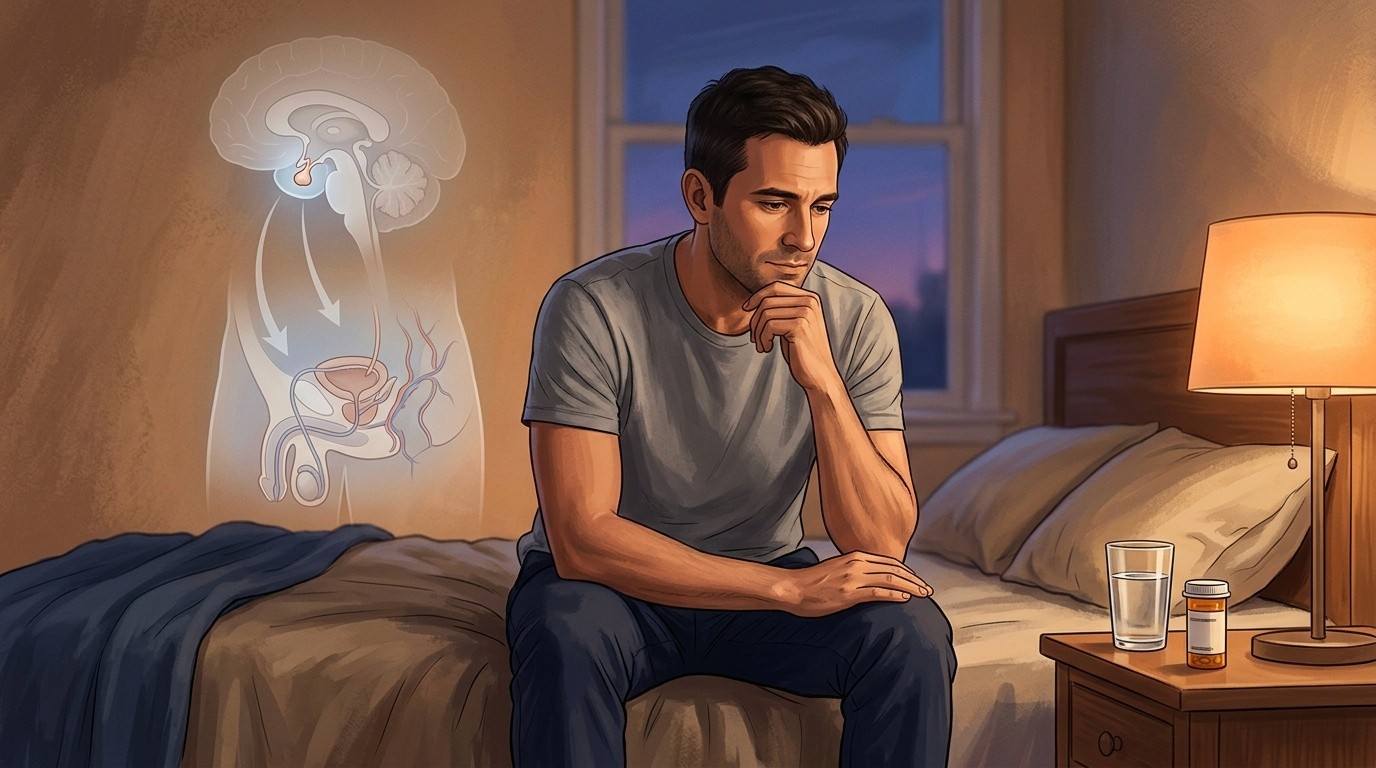
The brain’s role here is central. Sexual desire is regulated by brain regions including the hypothalamus and limbic system, where hormonal and neurochemical signals — including testosterone, dopamine, and oxytocin — converge to produce the subjective experience of wanting sex.[^4][^6] When any of these signals weaken, desire fades.
Common causes of reduced libido in men include:[^1][^4][^21]
Low testosterone (hypogonadism): The most widely recognized hormonal cause of low sex drive. Testosterone doesn’t just fuel erections — it drives desire itself.
Hyperprolactinemia: Elevated prolactin levels suppress GnRH (a hormone that signals the body to produce testosterone), which in turn lowers testosterone and dampens libido.
Thyroid disorders: Both hypothyroidism and hyperthyroidism can disrupt sexual desire.
Medications: Antidepressants (especially SSRIs), antihypertensives, opioids, and antipsychotics are frequent culprits.
Depression and chronic stress: These don’t just reduce motivation — they alter the neurochemical environment that supports desire.
Relationship conflict and performance anxiety: Psychological factors can suppress libido independently of any hormonal problem.
Important:
Low libido and erectile dysfunction often coexist, but they aren’t the same condition. A man can have a strong desire but struggle with erections (vascular or neurological ED), or he can have perfectly functional erections but no interest in sex (hormonal or psychological). Distinguishing between the two is the first step toward the right treatment.[^1][^3]
→ Learn more: Steroids and Male Infertility
What Is Erectile Dysfunction and How Common Is It?
Erectile dysfunction (ED) is defined as the consistent inability to achieve or maintain a penile erection sufficient for satisfactory sexual intercourse.[^1] It was formerly called “impotence,” but that term has fallen out of clinical use. Clinical guidelines typically define ED as symptoms persisting for at least 3–6 months.[^1]
How common is it? Far more than most men assume.
The best available data from the Massachusetts Male Aging Study indicate that 52% of men between the ages of 40 and 70 have some degree of erectile dysfunction.[^1] At age 40, roughly 40% of men are affected. By age 70, that number rises to approximately 70%.[^1] Globally, an estimated 150 million men have ED, and projections suggest this figure could exceed 300 million by 2030.[^1]
A 2019 review in BJU International reported that the global prevalence of ED ranges from 3% to 76.5%, depending on the population studied and the definition used.[^2] That same review found that a man with ED has approximately 26% higher odds of dying from any cause and 43% higher odds of dying from cardiovascular causes compared to a man without ED.[^2]
Yet many cases go unreported. Physicians are often reluctant to ask, and patients are often too embarrassed to bring it up.[^1] The real numbers are almost certainly higher.
What Causes Erectile Dysfunction?
The cause of ED is almost always multifactorial — meaning several factors contribute at once.[^1] Clinicians typically classify causes as organic (physical), psychogenic (psychological), or mixed.[^1] The vast majority of men with ED have an organic component, though psychological factors are nearly always present as well.[^1]
Organic Causes
Any disease process that affects penile arteries, nerves, hormone levels, smooth muscle, or the corporal endothelium can cause ED.[^1] The most significant categories include:
Category | Examples |
Vascular | Cardiovascular disease, hypertension, hyperlipidemia, atherosclerosis, diabetes mellitus. |
Neurological | Multiple sclerosis, spinal cord injury, stroke, pelvic surgery-related nerve damage. |
Hormonal | Hypogonadism (low testosterone), thyroid disorders, hyperprolactinemia. |
Medication-induced | SSRIs, antihypertensives, antipsychotics, opioids, recreational drugs. |
Structural | Peyronie’s disease, priapism sequelae, pelvic fractures. |
Source: Leslie SW, Sooriyamoorthy T. StatPearls (2024)[^1] and Salonia A et al. EAU Guidelines (2025)[^3]
Prescription medications may contribute to up to 25% of ED cases in some populations.[^1] Of the 12 most commonly prescribed drugs in the United States, 8 list erectile dysfunction as a possible side effect.[^1] SSRIs, thiazide diuretics, and sympathetic blockers are among the worst offenders — while angiotensin-converting enzyme (ACE) inhibitors and calcium channel blockers are least likely to cause problems.[^1]
Psychogenic Causes
Not all ED starts in the body. Depression, performance anxiety, relationship conflict, and past sexual trauma can all produce or worsen erectile difficulties — particularly in younger men.[^1][^5][^22] Clues that may suggest a psychogenic origin include sudden onset (especially linked to a new partner or major life event), normal erections during masturbation, good morning erections, and high day-to-day variability in rigidity.[^1]
Here’s the catch. Even when ED has a clear organic cause, psychological consequences follow almost immediately — shame, anxiety, reduced self-esteem, and relationship strain.[^1][^5] Performance anxiety activates the sympathetic nervous system, which in turn inhibits the parasympathetic pathways responsible for erection — creating a self-perpetuating cycle even when the original cause was physical.[^6] A 2023 review in Current Directions in Psychological Science documented that men with ED commonly report feelings of emasculation, isolation, and increased depression.[^5] A cross-sectional study confirmed a significant association between ED severity and higher levels of both depression and anxiety.[^14]
So the organic and the psychological feed each other. That’s why effective treatment often needs to address both.
How Does ED Connect to Heart Disease?
This is the part that surprises most men — and the part that could save your life.
Cardiovascular disease is one of the most significant risk factors for ED. The penile cavernosal arteries and coronary arteries are similar in diameter and develop atherosclerotic plaque in much the same way.[^1] But the cavernosal arteries are smaller, which means they get blocked earlier. The clinical result: vasculogenic ED often appears 3 to 5 years before coronary artery disease, myocardial infarction, or stroke.[^1]
Almost 50% of men with angiographically confirmed coronary artery disease have significant ED.[^1] And it works the other direction too — a meta-analysis of 14 studies covering over 90,000 men with ED found 44% more cardiovascular events, 62% more heart attacks, 39% more strokes, and a 25% higher risk of death compared to men without ED.[^1]
For younger men, the signal is even louder. Some studies report that those who present with unexplained ED may have a substantially elevated cardiovascular risk — in relative terms — compared to age-matched controls, though the absolute baseline risk in this age group remains low.[^1]
Important:
Erectile dysfunction is not just a sexual health issue — it is a recognized, independent cardiovascular risk factor. Every man diagnosed with ED should be screened for underlying heart disease, hypertension, diabetes, and hyperlipidemia.[^1][^3]
An interesting piece of medical history: sildenafil (Viagra) was originally developed as a treatment for hypertension and angina. During clinical trials, researchers discovered its beneficial effects on erectile function — an unexpected finding that ultimately transformed the treatment of ED.[^15]
How Do Hormones Affect Libido and Erectile Function?
Hormones are deeply involved in both desire and erection — but not always in the way people expect.
Testosterone is the hormone most men think of first. And they’re partially right: testosterone plays a key role in sexual desire and has a permissive role in erectile function.[^4] When levels drop below a certain threshold (a condition called hypogonadism), libido typically declines, and erections may become weaker.[^1][^4] Up to 35% of all men with ED also have hypogonadism.[^1]
But here’s what’s less obvious. Testosterone’s role in erectile function itself is actually secondary to vascular health. Research has shown that in men with normal testosterone levels, testosterone had no measurable effect on ED — while DHEA-S and estradiol levels were significantly associated with erectile difficulties.[^8] Vascular disease and diabetes are far more likely causes of ED than testosterone deficiency.[^1]
Other Hormones That Matter
Prolactin: Elevated levels (hyperprolactinemia) suppress GnRH (a hormone that signals the body to produce testosterone), reduce testosterone, and directly dampen sexual desire. Prolactin should be measured in any man with ED who also has low testosterone.[^20]
Thyroid hormones: Both overactive and underactive thyroid can disrupt sexual function and libido.[^21]
Estradiol and DHEA-S: Emerging evidence suggests these hormones play roles in erectile function independent of testosterone — particularly in men who aren’t classically hypogonadal.[^8]
Age correlates significantly with both the severity of ED and the levels of total testosterone, free testosterone, LH, FSH, and SHBG.[^7] But age itself isn’t the cause — it’s the accumulation of vascular damage, hormonal decline, and comorbidities that drives the link.
→ Learn more: Does Age Affect Male Fertility?
Can Lifestyle Changes Improve Erectile Function?
Yes — and in some cases, dramatically.
The association between modifiable risk factors and ED is among the most consistent findings in the literature. Obesity, smoking, excessive alcohol, poor diet, and physical inactivity all contribute to the vascular damage, hormonal imbalance, and chronic inflammation that impair erections.[^1][^12]
Obesity
Obesity is associated with a 50% increase in ED compared to men of normal weight.[^1] One-third of obese men with ED who participated in a structured weight loss program resolved their ED within two years.[^1] Bariatric surgery has been shown to significantly improve sexual performance in morbidly obese men.[^1]
Smoking
Over half of men older than 40 have some degree of ED — and smokers face an even higher risk, independent of age and other comorbidities.[^10] In smokers who quit, erectile quality improved by 25% after one year.[^1] Smoking damages the corporal endothelium and accelerates atherosclerosis in penile arteries — the same mechanism that links ED to heart disease.[^10]
Alcohol
The relationship between alcohol and ED is dose-dependent. Moderate consumption may reduce performance anxiety through disinhibition, but chronic heavy use damages the corporal endothelium, can damage smooth muscle tissue over time, and accelerates neuropathy.[^1][^11] A meta-analysis confirmed that heavy drinkers face increased ED risk.[^11]
Exercise
A systematic review and meta-analysis found that aerobic exercise produced significant improvements in erectile function among men with ED who weren’t taking PDE5 inhibitors.[^9] Pelvic floor muscle training may provide benefit, though evidence is less consistent compared to aerobic exercise. Combined aerobic-resistance training also didn’t show the same magnitude of improvement — it was aerobic exercise specifically that made the clearest difference.[^9]
Diet
A 2025 systematic review and meta-analysis examining the link between dietary patterns and ED confirmed that healthier dietary patterns are associated with improved erectile function.[^18]
Lifestyle Factor | Impact on ED |
Obesity | 50% increased risk; weight loss resolves ED in one-third of cases. |
Smoking | Higher ED risk is independent of age; 25% improvement after quitting. |
Heavy alcohol | Increased risk through endothelial damage and neuropathy. |
Aerobic exercise | Significant improvement in erectile function. |
Mediterranean diet | Associated with better erectile function. |
Source: Leslie SW et al. StatPearls (2024)[^1], Chen Z et al. Andrology (2024)[^9], and Yang B et al. Asian J Androl (2025)[^18]
What Role Do Psychological Factors Play?
More than most men realize. And it cuts both ways.
Psychological factors — including personality traits, depression, chronic stress, and cognitive interference such as performance worry — contribute to erectile problems independently of physical causes.[^5] A 2022 literature review noted that psychological ED is particularly relevant in younger men, where organic causes are less likely.[^23]
But the psychological impact of having ED is equally damaging. Men with erectile dysfunction commonly experience feelings of emasculation and humiliation, decreased self-confidence, social isolation, and worsening depression.[^5] A cross-sectional study found that as ED severity increases, so do levels of both anxiety and depression — creating a self-reinforcing cycle.[^14]
ED is also a multifactorial condition when mental health is involved, and it often requires a multidisciplinary approach combining medical and psychological interventions.[^6][^22]
The good news: psychological ED can respond well to targeted treatment. A randomized controlled trial demonstrated that online cognitive behavioral therapy (CBT) for non-organic ED in reproductive-age men produced statistically significant improvements compared to controls in erectile function, intercourse satisfaction, orgasmic function, and overall sexual satisfaction.[^13]
Key Insight:
Even when ED has a clear organic cause, virtually all patients develop psychological consequences — anxiety, performance pressure, and relationship strain. Addressing these alongside the physical problem is essential for a successful outcome.[^1][^5]
What Are the Treatment Options for Erectile Dysfunction?
ED is almost always treatable.[^1] The approach is usually stepwise — starting with the least invasive option and escalating only if needed.[^3][^16]
Step 1: Lifestyle Modifications
Before any medication, clinicians recommend addressing modifiable risk factors: lose weight, increase physical activity, quit smoking, reduce alcohol, and manage diabetes, lipids, and blood pressure.[^1][^3] These changes not only improve erections but reduce cardiovascular risk — which matters, given the link between ED and heart disease.
Step 2: Oral PDE-5 Inhibitors (First-Line Therapy)
Phosphodiesterase type 5 (PDE-5) inhibitors — including sildenafil, tadalafil, vardenafil, and avanafil — are usually the first medications prescribed.[^1][^3][^15] They work by blocking the degradation of cyclic GMP, which increases blood flow to the corpora cavernosa.[^1]
PDE-5 inhibitors don’t create erections on their own — sexual stimulation is still required to initiate the process.[^1] Their overall success rate is approximately 70–80%, depending on the population studied.[^1] Side effects occur in about 40% of patients but are usually mild: headache, nasal congestion, indigestion, and temporary visual changes.[^1]
Important:
PDE-5 inhibitors must never be combined with nitrates (used for chest pain) due to the risk of severe, life-threatening hypotension. Patients who fail one PDE-5 inhibitor should try at least one other — up to 50% of initial failures respond to a different drug in the same class.[^1][^3]
Step 3: Testosterone Supplementation (When Appropriate)
Testosterone is more effective at treating low libido than ED itself.[^1] For men with confirmed hypogonadism who’ve already failed PDE-5 therapy — or who also have low desire — adding testosterone supplementation is reasonable. Only about 35% of hypogonadal men with ED show significant improvement in erections from testosterone alone, and those with the most severe hypogonadism benefit the most.[^1] Testosterone monotherapy is generally less effective for ED alone, but may improve outcomes in men with confirmed hypogonadism.[^1]
An important warning for men planning a family: testosterone replacement therapy (TRT) suppresses the body’s own production of sperm and should not be used in men who wish to conceive. The EAU Guidelines include a strong recommendation against testosterone therapy for the treatment of male infertility.[^3]
→ Learn more: Steroids and Male Infertility
Step 4: Intracavernosal Injections
If oral medications fail, intracavernosal injections of vasoactive agents (most commonly prostaglandin E1, or combination “TriMix” therapy) are the typical next step.[^1] These are injected directly into the side of the penis and produce an erection within minutes. Effectiveness reaches up to 94%.[^1]
Step 5: External Vacuum Devices
Vacuum erection devices are a non-surgical alternative that works mechanically — drawing blood into the penis via negative pressure, then trapping it with a constriction band. Efficacy is reported at 70–80%, though patient satisfaction tends to be lower than with other methods.[^1]
Step 6: Penile Prostheses
Reserved for men who’ve failed all other options, penile prosthesis implantation involves surgically placing inflatable or malleable devices into the corpora cavernosa. Modern prostheses have a mechanical failure rate of less than 5% over five years and patient satisfaction scores of approximately 90%.[^1]
Treatment | Efficacy | Notes |
Lifestyle changes | Variable | First step; also reduces cardiovascular risk. |
Oral PDE-5 inhibitors | Approx. 70–80% | First-line drug therapy; requires sexual stimulation. |
Testosterone | 35% of hypogonadal men | Best for low libido; less effective as ED monotherapy. |
Intracavernosal injections | Up to 94% | Second-line; prostaglandin E1 or TriMix. |
Vacuum devices | 70–80% | Non-invasive; lower satisfaction. |
Penile prostheses | Approx. 90% satisfaction | Last resort; surgical. |
Source: Leslie SW et al. StatPearls (2024)[^1], Salonia A et al. EAU Guidelines (2025)[^3], and Burnett AL et al. AUA Guideline (2018)[^16]
→ Treatment options: Assisted Reproductive Technology (ART)
When Should You See a Doctor?
Many men delay seeking help — sometimes for years. But ED is both treatable and potentially a warning sign of something more serious.
See a doctor if:
You’ve had persistent difficulty achieving or maintaining erections for several weeks or more.
Your erection problems started suddenly — especially after a new medication, injury, or stressful life event.
You’ve noticed a decrease in sexual desire alongside ED.
You have known risk factors: diabetes, hypertension, heart disease, or obesity.
Your erection problems are causing relationship strain or emotional distress.
You’re a younger man (under 40) with unexplained ED — this may signal early cardiovascular disease.[^1][^3]
What to Expect at the Appointment
A clinician should take a detailed medical and sexual history — including questions about morning erections, erections during masturbation, onset pattern, and relationship factors.[^1] A physical examination will check cardiovascular status, genital anatomy, and signs of hormonal imbalance.[^1]
Blood tests typically include a morning testosterone level, HbA1c (for diabetes screening), a lipid profile, and basic metabolic markers.[^1][^16] If hypogonadism is detected, the workup may expand to include LH, prolactin, and thyroid function.[^1]
The 2018 AUA Guidelines emphasize shared decision-making: the clinician presents evidence-based treatment options, and the patient (ideally with their partner) selects the approach that matches their values and goals.[^16]
Key Insight:
Doctors should be proactively asking about sexual function — but many don’t. If your physician hasn’t raised the topic, bring it up yourself. A direct question like “I’ve been having trouble with erections” is enough to start the conversation.[^16][^19]
How Does ED Affect Fertility?
For couples trying to conceive, erectile dysfunction adds a layer of complexity. If a man can’t achieve or maintain an erection sufficient for intercourse, timed intercourse during the fertile window becomes difficult or impossible — even if his sperm quality is normal.
ED and infertility also share common risk factors: obesity, diabetes, hormonal imbalance, and lifestyle factors — all of which impair both erectile function and sperm production, but ED itself does not directly impair sperm production.[^1] Estimates of how many men with ED also have premature ejaculation vary widely across studies (30–60%), reflecting differences in definitions and study populations.[^1] Successfully treating the ED often resolves the ejaculation issue as well — likely through reduced performance anxiety.[^1]
If ED is preventing natural conception, treatment options range from PDE-5 inhibitors (which can restore sufficient function for timed intercourse) to assisted reproductive technologies such as intrauterine insemination (IUI) or in vitro fertilization (IVF) when ED can’t be fully resolved.[^3]
Infertility is classified as a disease of the reproductive system by the World Health Organization (WHO), defined as the failure to achieve a clinical pregnancy after 12 months of regular, unprotected sexual intercourse (or 6 months if the female partner is over 35).[^3] When erectile dysfunction is the barrier to that intercourse, it becomes a fertility issue — not just a sexual one.
→ Diagnostic test: Semen Analysis (Spermiogram)
So, What Should You Do Now?
If erection problems or low libido are affecting your life, your relationship, or your plans for a family — here’s a practical path forward:
Step 1: Be Honest About What’s Happening
Track your symptoms for a few weeks. Note whether erections improve with masturbation, whether morning erections still occur, and when the problem started. This information is valuable for your doctor.
Step 2: Address the Obvious Lifestyle Factors
If you smoke, drink heavily, carry excess weight, or are sedentary — start there. Aerobic exercise alone has measurable benefits for erectile function. These changes won’t replace medical treatment if you need it, but they improve outcomes across the board.
Step 3: See a Doctor — Don’t Wait
Request a physical examination, cardiovascular examination, blood tests (including morning testosterone, HbA1c, and a lipid panel), and a candid conversation about treatment options. If your doctor doesn’t bring up sexual health, you bring it up.
Step 4: Include Your Partner
ED affects both people in a relationship. Having your partner involved in the discussion — and in the treatment process — significantly improves outcomes.
Step 5: Choose the Right Clinic
If you need specialized evaluation or fertility treatment, choose a clinic with experience in male reproductive health. Not all clinics offer the same level of diagnostic depth or treatment range.
→ Compare fertility clinics worldwide: MedicalNavigator.com/fertility-clinics
Too Long, Didn’t Read
Erectile dysfunction affects roughly 52% of men between the ages of 40 and 70.
ED is a recognized cardiovascular risk factor and may precede heart disease by up to 5 years.
Testosterone primarily drives libido, while vascular health matters more for erectile function.
Lifestyle changes — exercise, weight loss, quitting smoking — measurably improve erectile function.
PDE-5 inhibitors are first-line treatment with approximately 70–80% success rates.
Psychological factors both cause and result from ED — treatment should address both.
References
[^1]: Leslie SW, Sooriyamoorthy T. Erectile Dysfunction. [Updated 2024 Jan 9]. In: StatPearls [Internet]. Treasure Island (FL): StatPearls Publishing; 2026 Jan-.
[^2]: Kessler A, Sollie S, Challacombe B, Briggs K, Van Hemelrijck M. The global prevalence of erectile dysfunction: a review. BJU International. 2019;124(4):587–599.
[^3]: Salonia A, Capogrosso P, Boeri L, et al. European Association of Urology Guidelines on Male Sexual and Reproductive Health: 2025 Update. European Urology. 2025;88(1):76–102.
[^4]: Rastrelli G, Antonio L, Carrier S, Isidori A, Maggi M. The hormonal regulation of men’s sexual desire, arousal, and penile erection. Sexual Medicine Reviews. 2025;13(4):433–455.
[^5]: Allen MS, Wood AM, Sheffield D. The Psychology of Erectile Dysfunction. Current Directions in Psychological Science. 2023;32(6):487–493.
[^6]: Calabrò RS, Cacciola A, Bruschetta D, et al. Neuroanatomy and function of human sexual behavior: A neglected or unknown issue? Brain and Behavior. 2019;9(12):e01389.
[^7]: Porav-Hodade D, Gherasim RD, Kosovski IB, et al. Hormones, Age, and Erectile Dysfunction: Should Routine Testing Be Part of the Initial Evaluation? Diagnostics. 2025;15(3):294.
[^8]: Fujita N, Okamoto T, Yamamoto H, et al. Association between sex hormones and erectile dysfunction in men without hypoandrogenism. Scientific Reports. 2024;14:13433.
[^9]: Chen Z, Wang J, Jia J, et al. Effect of different physical activities on erectile dysfunction in adult men not receiving phosphodiesterase-5 inhibitors therapy. Andrology. 2024;12:1632–1641.
[^10]: Kovac JR, Labbate C, Ramasamy R, Tang D, Lipshultz LI. Effects of cigarette smoking on erectile dysfunction. Andrologia. 2015;47(10):1087–1092.
[^11]: Li S, Song JM, Zhang K, Zhang CL. A Meta-Analysis of Erectile Dysfunction and Alcohol Consumption. Urologia Internationalis. 2021;105(11-12):969–985.
[^12]: Ghantous I, Tlais M, Khatib A, et al. Impact of Obesity, Smoking, and Alcohol on Erectile Dysfunction: A Cross-Sectional Study of Lebanese Men. Cureus. 2025;17(11):e95891.
[^13]: Han M, Wang X, Yang H, et al. Efficacy of online cognitive behavioral therapy for nonorganic erectile dysfunction in reproductive-age males. The Journal of Sexual Medicine. 2023;20(11):1325–1332.
[^14]: Quang N, Van Truong L, Chung E, et al. Predicting Anxiety and Depression Among Erectile Dysfunction Patients: A Cross-Sectional Study. American Journal of Men’s Health. 2024;18(1):15579883231223502.
[^15]: Hakky TS, Jain L. Current use of phosphodiesterase inhibitors in urology. Turkish Journal of Urology. 2015;41(2):88–92.
[^16]: Burnett AL, Nehra A, Breau RH, et al. Erectile Dysfunction: AUA Guideline. The Journal of Urology. 2018;200(3):633–641.
[^17]: Lowy M, Ramanathan V. Erectile dysfunction: causes, assessment and management options. Australian Prescriber. 2022;45(5):159–161.
[^18]: Yang B, Wei C, Zhang YC, et al. Association between improved erectile function and dietary patterns: a systematic review and meta-analysis. Asian Journal of Andrology. 2025;27(2):239–244.
[^19]: Mazzilli F. Erectile Dysfunction: Causes, Diagnosis and Treatment: An Update. Journal of Clinical Medicine. 2022;11(21):6429.
[^20]: Zeitlin SI, Rajfer J. Hyperprolactinemia and erectile dysfunction. Reviews in Urology. 2000;2(1):39–42.
[^21]: Maggi M, Buvat J, Corona G, Guay A, Torres LO. Hormonal causes of male sexual dysfunctions and their management. The Journal of Sexual Medicine. 2013;10(3):661–677.
[^22]: Vasan SS, Pandey S, Rao STS, et al. Association of Sexual Health and Mental Health in Erectile Dysfunction: Expert Opinion From the Indian Context. Cureus. 2025;17(1):e77851.
[^23]: Ciaccio V, Di Giacomo D. Psychological Factors Related to Impotence as a Sexual Dysfunction in Young Men: A Literature Scan for Noteworthy Research Frameworks. Clinics and Practice. 2022;12(4):501–512.
This guide is for informational purposes only. Always consult qualified healthcare providers for personalized recommendations. For full details, read our Medical Disclaimer.

Author of the article
Date of publication