


How Does Cryopreservation Work?
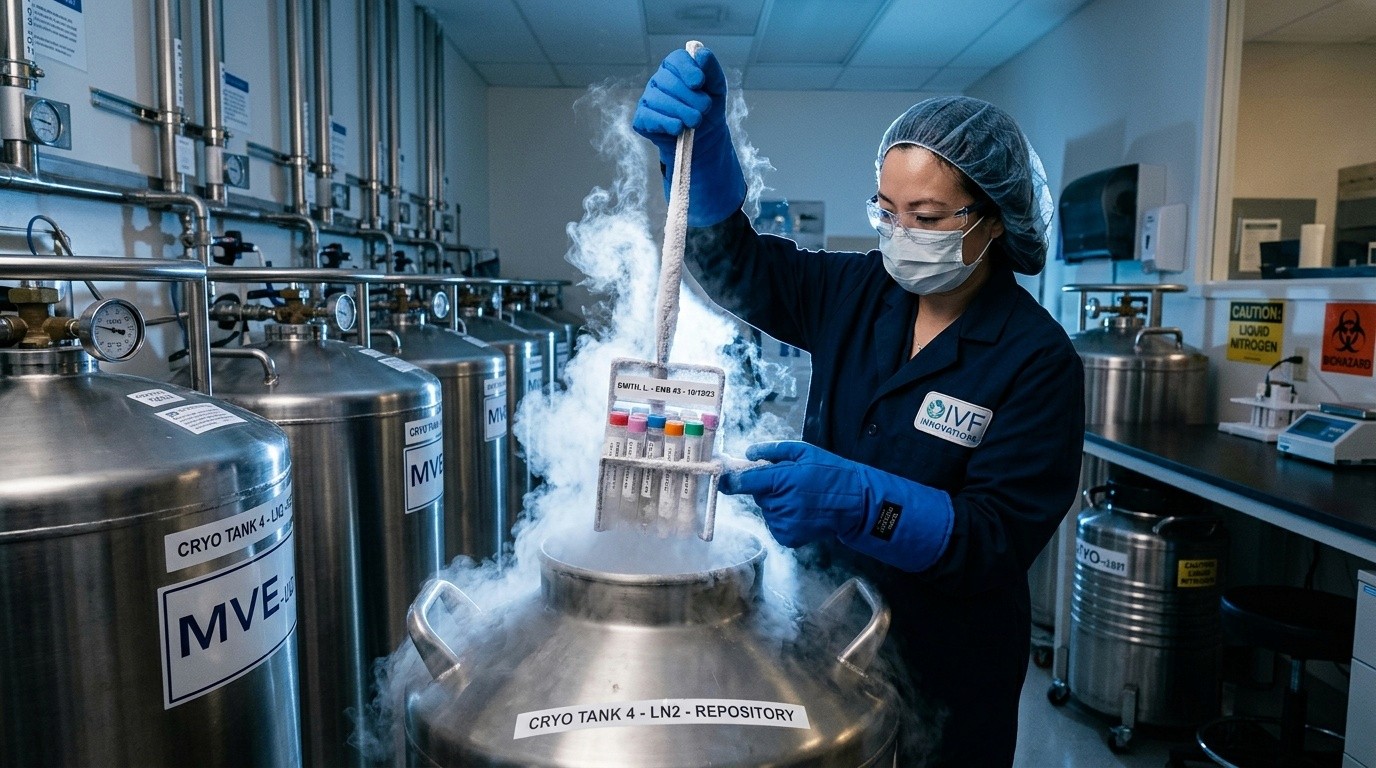
Cryopreservation (freezing for long-term storage) is the process of cooling biological cells — such as eggs (oocytes), sperm, or embryos — to extremely low temperatures for storage for future use.[^3][^4] At −196 °C, the temperature of liquid nitrogen, cellular metabolism becomes effectively negligible.[^3][^5] Think of it as pressing a "pause button" on biology — cellular activity is effectively halted, but the cells remain viable and can resume function after thawing.
The biggest challenge during freezing is the formation of ice crystals inside the cell, which can puncture membranes and damage internal structures.[^5][^30] To prevent this, laboratories use special substances called cryoprotective agents (CPAs) — essentially "antifreeze" for cells — that draw water out of the cell before freezing begins.[^3][^5]
What Is Vitrification?
There are two main freezing methods. The older approach, slow freezing, lowers the temperature gradually at about 0.5–1 °C per minute.[^30] The newer and now preferred method for eggs and embryos is called vitrification — an ultra-rapid technique where the temperature drops by hundreds or even thousands of degrees per minute.[^1][^30] Vitrification turns the cell contents into a glass-like solid state, bypassing ice crystal formation entirely.[^1][^6]
Vitrification has dramatically improved survival rates for thawed eggs and embryos and is now the gold standard recommended by both ASRM and ESHRE.[^1][^2] The field continues to advance — newer ultra-rapid protocols can complete the entire freezing and thawing cycle in a matter of a few minutes, further improving efficiency while maintaining high survival rates.
What About Sperm?
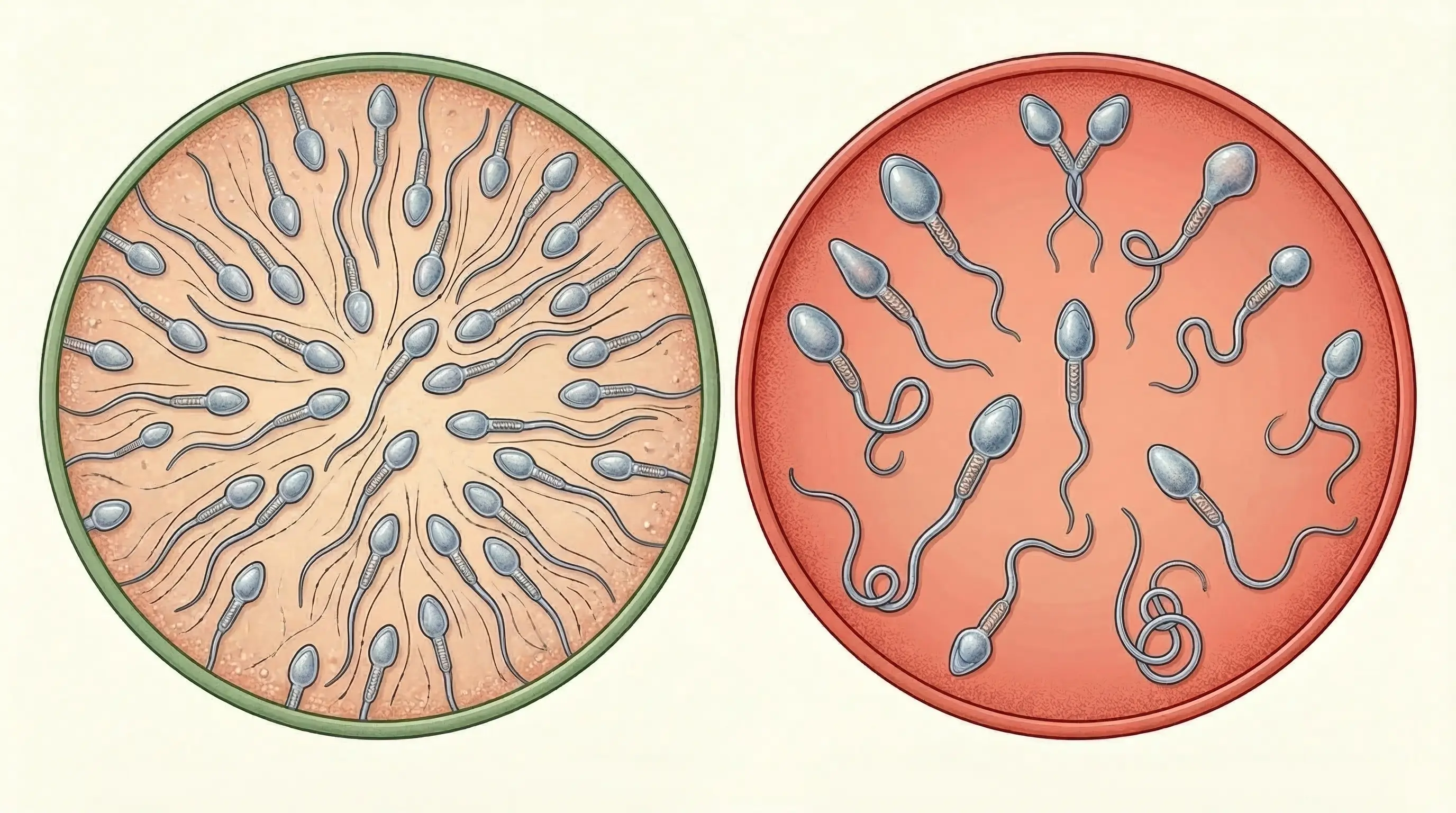
Sperm cryopreservation has been in clinical use even longer than egg freezing — the first human live birth from frozen sperm was reported in 1953.[^20] Sperm are typically frozen using slow freezing or liquid nitrogen vapor methods rather than vitrification, because their small size and high surface area make them relatively resilient to the freezing process.[^19][^30] However, sperm cryopreservation is not without effects — after thawing, between 25% and 50% of sperm may lose motility or viability, depending on pre-freeze semen quality.[^30] Despite this decline in laboratory parameters, clinical pregnancy outcomes remain comparable to fresh sperm when using assisted reproduction techniques such as ICSI (Intracytoplasmic Sperm Injection).[^18][^19]
How Long Can Frozen Embryos Last?
In theory, biologically indefinitely. At −196 °C, enzyme activity is almost completely suppressed and cellular metabolism is at a standstill.[^13] There is no known biological "expiration date" based on current evidence for properly stored embryos. In practice, however, factors beyond biology — such as storage facility protocols, equipment integrity, and legal storage limits that vary by country — can determine how long samples remain available for use.
The clinical evidence supports this. A landmark study analyzing 58,001 vitrified blastocysts over 11 years found no association between storage time and live birth rate.[^29] The factors that actually influenced outcomes were the patient's age at the time of egg retrieval, embryo quality, body mass index, and the underlying cause of infertility — not how long the embryo had been stored.[^29]
Additional studies confirm this pattern. Research on embryos stored for 12 to 17.1 years (mean storage time: 13.9 years) reported clinical pregnancy rates of 30.43% and live birth rates of 21.74% — outcomes comparable to those with shorter storage durations.[^16] A large retrospective study also found no significant negative effects of long-term embryo cryopreservation on frozen embryo transfer (FET) outcomes.[^17]
Multiple other studies involving thousands of cycles consistently show that the storage time of vitrified embryos does not affect pregnancy or neonatal outcomes.[^14][^15]
→ Learn more: In Vitro Fertilization (IVF)
How Long Can Frozen Sperm Last?
Just like embryos, frozen sperm can remain viable for decades. The longest documented case of a successful live birth from frozen sperm involved samples stored for 40 years.[^25] A study examining long-term semen cryostorage in a human sperm bank concluded that storage duration does not affect clinical outcomes, even though some laboratory quality metrics (such as motility) may show a slight decline over time.[^18]
Comprehensive reviews of sperm cryopreservation confirm that while the freeze-thaw process itself causes measurable changes — reduced motility, some membrane damage, and potential DNA fragmentation — these changes occur during the initial freezing, not during storage.[^19][^20] Once the sample is safely stored in liquid nitrogen, no further degradation occurs.[^20]
The Human Fertilization and Embryology Authority (HFEA) confirms that frozen sperm can be stored for many years and used successfully in fertility treatment.[^21] Most modern sperm banks now use nitrogen vapor storage rather than submerged liquid nitrogen, which reduces the theoretical risk of cross-contamination between samples.[^19][^20]
How Long Can Frozen Eggs Last?
One of the largest studies on vitrified egg storage analyzed over 41,700 oocytes from 5,362 donation cycles, with storage durations of up to 8 years. The results were clear: survival, fertilization, pregnancy, and live birth rates were unaffected by storage duration.[^22]
The longest documented storage of frozen eggs resulting in a live birth to date is 14 years.[^22] A cohort study of women who froze their eggs for social reasons found that the average storage time before use was 3.9 years, and outcomes remained favorable.[^23]
A critical finding across multiple studies is that the age at which a woman freezes her eggs is a far more important predictor of success than the length of storage.[^24] A 15-year analysis from a major university fertility center confirmed this: eggs stored for multiple years still produced good results when thawed, and age at freezing — not storage duration — determined the outcome.[^24]
Important:
The ESHRE guideline and the ASRM guideline both support egg freezing (oocyte cryopreservation) as an established, no longer experimental procedure — for both medical indications (such as before cancer treatment) and planned fertility preservation.[^2][^7][^8][^9]
→ Learn more: Fertility and Age
What Are the Longest Successful Storage Cases?
The records of successful births from long-frozen samples are truly remarkable and continue to push the boundaries of what we thought possible.
Sample Type | Storage Duration | Outcome | Source |
Embryo | 27 years | Healthy live birth (Gibson family). | Li et al. (2023) |
Embryo | 30+ years | Healthy twins were born. | CNN (2022) |
Sperm | 40 years | Healthy live births. | Szell et al. (2013) |
Eggs (oocytes) | 14 years | Live birth — longest to date. | Torra-Massana et al. (2023) |
Embryo (study) | 12–17.1 years | Clinical pregnancies and live births achieved. | Yuan et al. (2019) |
Sources: Li et al. Front Endocrinol (2023)[^15]; CNN (2022)[^26]; Szell et al. J Assist Reprod Genet (2013)[^25]; Torra-Massana et al. Reprod Biomed Online (2023)[^22]; Yuan et al. Hum Reprod (2019)[^16]
These cases are not medical oddities — they are proof of concept that properly stored frozen reproductive cells can remain functional for decades. The record-breaking births demonstrate what large-scale studies confirm: time in storage by itself does not diminish the chances of a successful pregnancy.
Are Babies Born from Long-Frozen Samples Safe?
This is one of the most common — and most important — questions patients ask. The evidence is deeply reassuring.
A systematic review of outcome data on children born after cryopreservation of embryos or eggs found no significant difference in birth defects, developmental outcomes, or epigenetic anomalies compared to naturally conceived children.[^27] Although this review drew on earlier cohorts, more recent studies have confirmed similar findings.
A retrospective cohort study specifically examining babies born from very long-term embryo cryopreservation confirmed that these children are not at higher risk of obstetric or neonatal complications.[^28]
The large-scale analysis of 58,001 vitrified blastocysts over 11 years further supports this conclusion: storage duration had no impact on clinical outcomes, including miscarriage rates and live birth rates.[^29]
Key Insight:
The moments of freezing and thawing are when damage can occur — not the years in between. Once your cells are safely stored in liquid nitrogen, they are in a state of suspended animation, with no meaningful ongoing biological processes that would degrade them under proper storage conditions.[^3][^5][^29]
What Actually Threatens Your Frozen Samples?
If time is not the enemy, what is? The real risks to frozen reproductive cells are not about the calendar — they are about the freezing process, storage equipment, and human error.
The Freeze-Thaw Process Itself
The most vulnerable moments for eggs, sperm, and embryos are during the initial freezing and during thawing. This is when ice crystals can form, membranes can be damaged, and osmotic stress can injure cells.[^30][^5] The shift to vitrification has significantly reduced these risks for eggs and embryos.[^1]
Storage Equipment and Tank Failures
Publicized cases of cryogenic storage tank failures have caused understandable concern among patients.[^31] A survey of IVF laboratories revealed that up to 51% of respondents had experienced some form of tank failure, though 55% of those failures occurred without significant specimen loss — thanks to proper emergency response plans.[^31]
Modern laboratories mitigate these risks with daily tank inspections, remote monitoring alarm systems, backup tanks, and strict quality management protocols that evolve each year with increasingly rigorous safety and quality standards.[^31][^32] All cryogenic storage systems require maintenance and eventual replacement over time — what matters is how well the facility is prepared for it.
Cross-Contamination — A Theoretical Risk
There is a theoretical risk of microbial or viral cross-contamination between samples stored in the same liquid nitrogen.[^31] However, in clinical practice, such cross-contamination of gametes or embryos has not been documented under standard cryostorage conditions.[^31] Modern sperm banks increasingly use nitrogen vapor storage or sealed vitrification devices to further reduce this already negligible risk. Gametes that have been previously screened for infectious diseases are typically stored in separate quarantine tanks, preventing any potential cross-contamination with unscreened samples.[^19][^31]
What Factors Actually Affect Your Outcome?
When it comes to the success of using your frozen samples, the factors that matter most are:
Factor | Why It Matters |
Age at freezing | Younger eggs and embryos have higher success rates — this is the single strongest predictor. |
Embryo quality | Higher-grade embryos survive thawing better and implant more successfully. |
Body mass index (BMI) | Obesity is associated with lower live birth rates in frozen embryo transfers. |
Underlying diagnosis | Conditions such as endometriosis, uterine factors, and male factor infertility can influence outcomes. |
Laboratory quality | The expertise of the embryology team and the quality of the facility's cryopreservation protocols matter significantly. |
Sources: Cobo et al. Am J Obstet Gynecol (2024)[^29]; Cascante et al. Fertil Steril (2022)[^24]
What Do the Guidelines Say?
Major international reproductive medicine organizations have published guidelines supporting the safety and efficacy of cryopreservation for fertility preservation:
ESHRE (European Society of Human Reproduction and Embryology) recommends oocyte cryopreservation as an established fertility preservation strategy for both medical and social indications.[^2][^7]
ASRM (American Society for Reproductive Medicine) endorses vitrification as the preferred method for oocyte and embryo cryopreservation, and supports planned oocyte cryopreservation as ethically permissible.[^1][^8][^9][^10]
ASCO (American Society of Clinical Oncology) recommends that all patients of reproductive age facing cancer treatment receive timely fertility preservation counseling.[^11]
ESMO (European Society for Medical Oncology) provides clinical practice guidelines on fertility preservation strategies for post-pubertal cancer patients.[^12]
→ Learn more: Donor Programs and Surrogacy
So, What Should You Do Now?
Whether you already have frozen samples in storage or you're just beginning to explore fertility preservation, here is a practical path forward:
Step 1: Understand That Time Is on Your Side
Storage duration has not been shown to reduce pregnancy success with eggs, sperm, or embryos. Your frozen samples are generally stable when stored under proper conditions for as long as needed.[^13][^15][^22][^29]
Step 2: Focus on What Matters Most
If you haven't frozen yet — freeze younger. Age at the time of freezing is the single most important factor for future success.[^24] If you already have frozen samples, the quality established at the time of freezing is what matters most.
Step 3: Verify Your Clinic's Storage Standards
Ask your clinic about their storage-monitoring systems, emergency backup protocols, and tank-maintenance schedules. A well-run facility follows strict quality management practices that protect your samples around the clock.[^31][^32]
Step 4: Stay in Contact with Your Storage Facility
Keep your contact information up to date with your clinic. Respond to annual storage communications. Consent agreements and disposition decisions are important — don't leave them unaddressed.[^31]
Step 5: Choose the Right Clinic
Whether you're freezing for the first time or planning to use your stored samples, the laboratory's quality and the clinical team's expertise are critical to your outcomes.
→ Compare fertility clinics worldwide: MedicalNavigator.com/fertility-clinics
Too Long, Didn't Read
At −196 °C, cellular metabolism becomes effectively negligible — frozen eggs, sperm, and embryos have no known biological expiration date.
Healthy babies have been born from embryos frozen for 30 years and sperm stored for 40 years.
A study of 58,001 vitrified blastocysts over 11 years found no association between storage time and live birth rate.
Children born from long-frozen samples show no increased risk of birth defects or developmental problems compared to naturally conceived children.
The age at which you freeze is far more important than how long your samples are stored — freeze younger for the best outcomes.
The real threats are equipment failure and human error, not time — choose a clinic with rigorous quality management and monitoring.
References
[^1]: Practice Committees of ASRM and SART. A review of best practices of rapid-cooling vitrification for oocytes and embryos: a committee opinion. Fertil Steril. 2021;115(2):305–310.
[^2]: ESHRE. Guideline: Female Fertility Preservation. eshre.eu.
[^3]: Jaiswal AN, Vagga A. Cryopreservation: A Review Article. Cureus. 2022;14(11):e31564.
[^4]: Jang TH, et al. Cryopreservation and its clinical applications. Integr Med Res. 2017;6(1):12–18.
[^5]: Whaley D, et al. Cryopreservation: An Overview of Principles and Cell-Specific Considerations. Cell Transplant. 2021;30:963689721999617.
[^6]: Bosch E, De Vos M, Humaidan P. The Future of Cryopreservation in Assisted Reproductive Technologies. Front Endocrinol. 2020;11:67.
[^7]: Anderson RA, et al. (ESHRE Guideline Group). ESHRE guideline: Female fertility preservation. Hum Reprod Open. 2020;2020(4):hoaa052.
[^8]: Practice Committee of ASRM and SART. Evidence-based outcomes after oocyte cryopreservation for donor oocyte IVF and planned oocyte cryopreservation: a guideline. Fertil Steril. 2021;116(1):36–47.
[^9]: Ethics Committee of ASRM. Planned oocyte cryopreservation to preserve future reproductive potential: an Ethics Committee opinion. Fertil Steril. 2023;121(4):604–612.
[^10]: Practice Committee of ASRM. Fertility preservation in patients with medical indications: a committee opinion. Fertil Steril. 2026.
[^11]: Su HI, et al. Fertility Preservation in People With Cancer: ASCO Guideline Update. J Clin Oncol. 2025;43:1488–1515.
[^12]: Lambertini M, et al. Fertility preservation and post-treatment pregnancies in post-pubertal cancer patients: ESMO Clinical Practice Guidelines. Ann Oncol. 2020;31(12):1664–1678.
[^13]: Cui M, et al. The Impact of Embryo Storage Time on Pregnancy and Perinatal Outcomes and the Time Limit of Vitrification. Front Endocrinol. 2021;12:724853.
[^14]: Wang X-J, et al. Study on the optimal time limit of frozen embryo transfer and the effect of a long-term frozen embryo on pregnancy outcome. Medicine. 2024;103(13):e37542.
[^15]: Li X, et al. Storage duration of vitrified embryos does not affect pregnancy and neonatal outcomes after frozen-thawed embryo transfer. Front Endocrinol. 2023;14:1148411.
[^16]: Yuan Y, et al. What was the fate of human embryos following long-term cryopreservation (≥12 years) and frozen embryo transfer? Hum Reprod. 2019;34(1):52–55.
[^17]: Reddy NS, et al. Effect of Long-Term Embryo Cryopreservation on Subsequent Frozen Embryo Transfer Outcomes. J Hum Reprod Sci. 2022;15(3):293–299.
[^18]: Huang C, et al. Long-term cryostorage of semen in a human sperm bank does not affect clinical outcomes. Fertil Steril. 2019;112(4):663–669.e1.
[^19]: Leroy A, et al. Cryopreservation of human spermatozoa: Functional, molecular and clinical aspects. Int J Mol Sci. 2023;24(5):4749.
[^20]: Borate GM, Meshram A. Cryopreservation of sperm: A review. Cureus. 2022;14(11):e31402.
[^21]: HFEA. Sperm freezing. hfea.gov.uk.
[^22]: Torra-Massana M, et al. Long-term storage of vitrified oocytes does not affect pregnancy and live birth rates: analysis of 5362 oocyte donation cycles. Reprod Biomed Online. 2023;47(3):103228.
[^23]: Kumar P, Shahab M. Outcomes of social egg freezing: A cohort study and a comprehensive literature review. J Clin Med. 2023;12(13):4513.
[^24]: Cascante SD, et al. Fifteen years of autologous oocyte thaw outcomes from a large university-based fertility center.00254-0/fulltext) Fertil Steril. 2022;118(1):158–166.
[^25]: Szell AZ, et al. Live births from frozen human semen stored for 40 years. J Assist Reprod Genet. 2013;30(6):743–744.
[^26]: CNN. Twins born from 30-year-old embryos. CNN Health. 2022.
[^27]: Wennerholm U-B, et al. Children born after cryopreservation of embryos or oocytes: A systematic review of outcome data. Hum Reprod. 2009;24(9):2158–2172.
[^28]: Zhan S, et al. Clinical outcomes following very long-term embryo cryopreservation: A retrospective cohort study. Hum Reprod. 2024;39(9):1960–1968.
[^29]: Cobo A, et al. Embryo long-term storage does not affect assisted reproductive technologies outcome: analysis of 58,001 vitrified blastocysts over 11 years.00469-1/abstract) Am J Obstet Gynecol. 2024;231:238.e1–238.e11.
[^30]: Ozimic S, Ban-Frangez H, Stimpfel M. Sperm Cryopreservation Today: Approaches, Efficiency, and Pitfalls. Curr Issues Mol Biol. 2023;45(6):4716–4734.
[^31]: Schiewe MC, et al. Comprehensive assessment of cryogenic storage risk and quality management concerns: best practice guidelines for ART labs. J Assist Reprod Genet. 2019;36(1):5–14.
[^32]: Canosa S, et al. Cryostorage management of reproductive cells and tissues in ART: status, needs, opportunities and potential new challenges. Reprod Biomed Online. 2023;47(3):103252.
This guide is for informational purposes only. Always consult qualified healthcare providers for personalized recommendations. For full details, read our Medical Disclaimer.

Author of the article
Date of publication