



What Are Anabolic Steroids and How Common Is Their Use?
Anabolic–androgenic steroids (AAS) are synthetic compounds derived from testosterone, the primary male sex hormone.[^3] They were originally developed to treat medical conditions such as delayed puberty, hypogonadism, muscle‑wasting diseases, and osteoporosis.[^4] The term “anabolic” refers to their ability to promote muscle growth, while “androgenic” refers to the development of male sex characteristics such as a deeper voice and facial hair.[^3]
The vast majority of AAS use today, though, happens outside of medicine. A global meta‑analysis estimated the lifetime prevalence of AAS use at 3.3% overall, rising to 6.4% among males.[^1] The typical user is no longer an elite athlete — most are recreational gym‑goers aged 20–39 who use steroids primarily to improve their physical appearance.[^2] Social media and a growing cultural emphasis on male body image may be contributing to the rise.[^5]
Common substances include testosterone, nandrolone, trenbolone, stanozolol, and oxandrolone.[^9] Researchers now increasingly describe AAS misuse as meeting the criteria for a substance use disorder — with psychological dependence, withdrawal symptoms, and compulsive use despite negative consequences.[^5]
How Do Steroids Impair Fertility? — The HPG Axis Mechanism
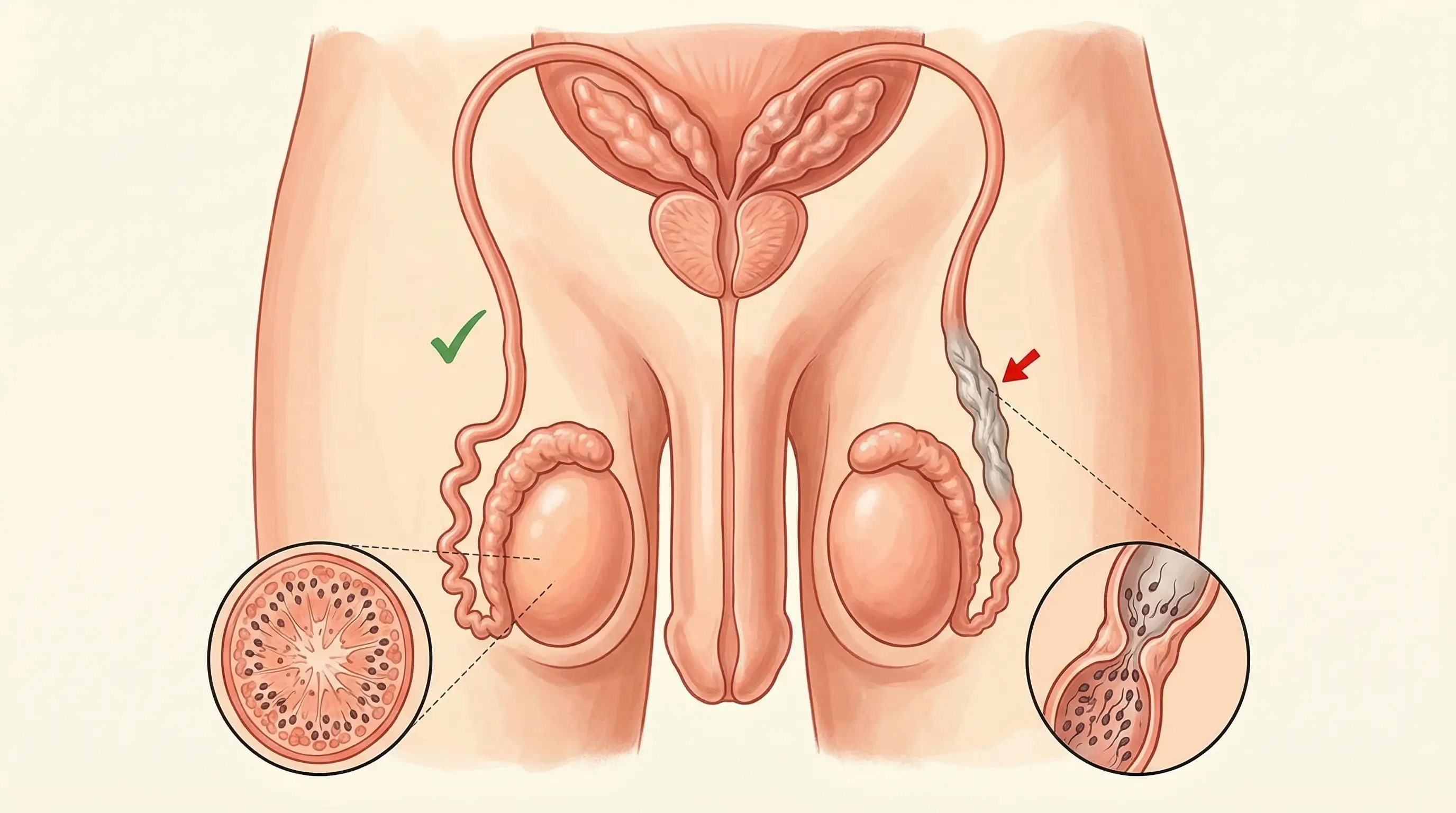
Steroids impair fertility by shutting down the hormonal feedback loop that controls sperm production (spermatogenesis) — a system called the hypothalamic–pituitary–gonadal (HPG) axis.[^7] Here’s how the HPG axis works under normal conditions:
The hypothalamus (a region in the brain) releases gonadotropin‑releasing hormone (GnRH).
GnRH signals the pituitary gland to produce two key hormones: luteinizing hormone (LH) and follicle‑stimulating hormone (FSH).
LH tells the Leydig cells in the testes to produce testosterone.
FSH, together with high local testosterone levels, drives Sertoli cells to support sperm production.
When you take exogenous steroids, your brain detects the surge of external hormones and shuts down its own signaling. GnRH drops, LH and FSH plummet, and as a result, intratesticular testosterone — which needs to be 20–100 times higher than levels in the bloodstream for normal sperm production — collapses.[^8] Without adequate intratesticular testosterone, sperm production grinds to a halt.[^7]
This suppression of the HPG axis also leads to secondary effects: oxidative stress in the testes, DNA damage within sperm cells, and sexual dysfunction, including decreased libido and erectile difficulties.[^8]
Important:
The HPG axis works like a thermostat: when external hormones flood the system, the brain turns off its own production. This mechanism applies to any exogenous testosterone — illicit AAS and medically prescribed TRT alike.
What Do Steroids Actually Do to Sperm and Testes?
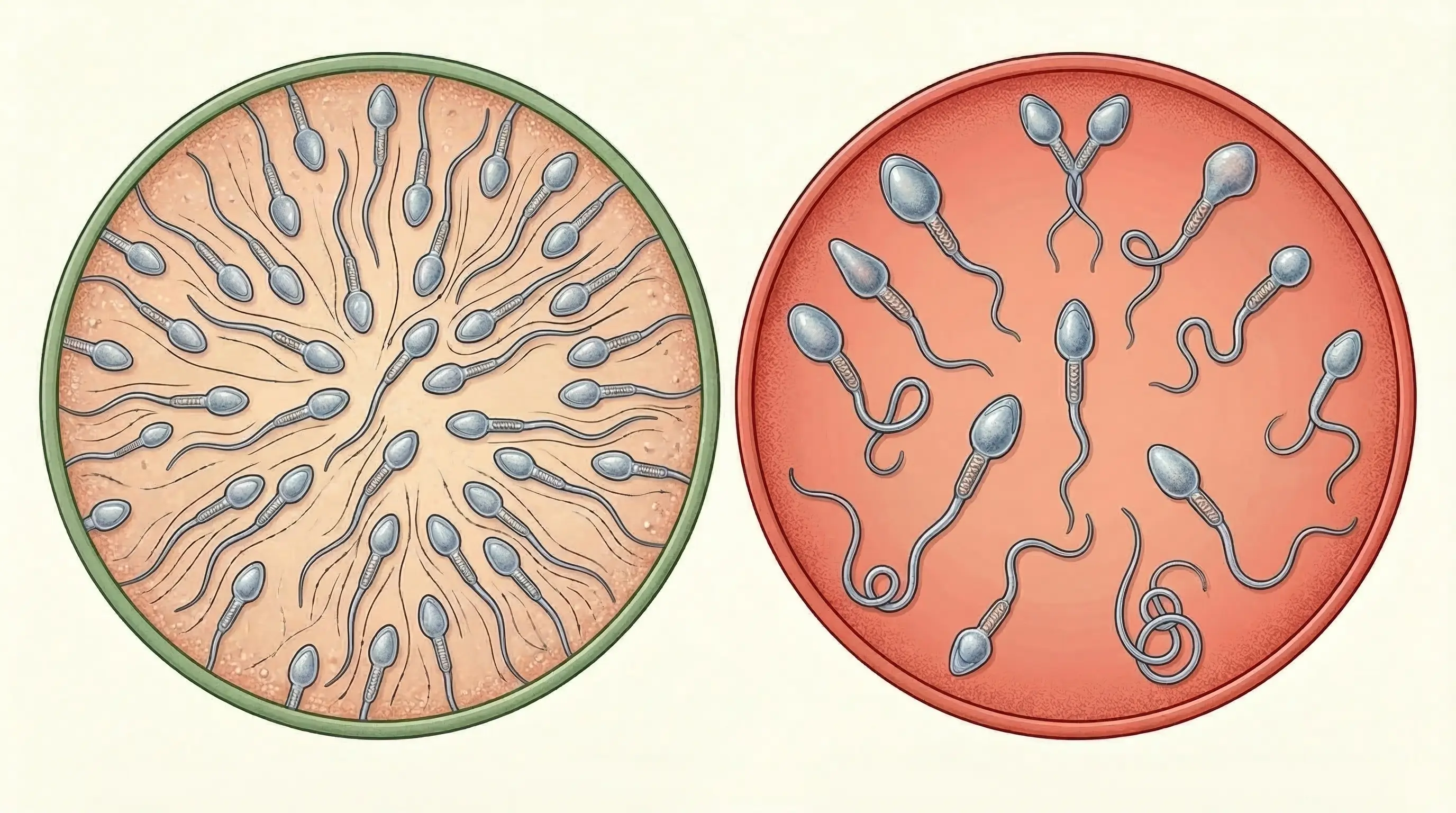
AAS use significantly reduces sperm concentration, motility, and morphology compared to non‑users,[^6] and the damage isn’t subtle. A retrospective study of 45 men with prior AAS use found that 51% presented with complete azoospermia (zero sperm), and the median initial sperm concentration was 0 million/mL.[^9]
A separate study tracking 94 men with AAS‑related infertility found that one‑third (33%) restarted steroids within eight months of stopping — often before their sperm had recovered — erasing whatever progress had been made.[^11]
What Happens at the Tissue Level?
At the tissue level, AAS appears to cause visible damage. A 2024 study examined the effects of Sustanon (a popular injectable testosterone blend) in an animal model and found:[^10]
Testicular shrinkage — significant reductions in testicular length, diameter, and weight.
Reduced sperm count and increased sperm DNA fragmentation.
Decreased LH and FSH concentrations, confirming HPG axis suppression.
Increased cell death (apoptosis) in the testes, with lower expression of the survival gene BCL2.
These findings come from an animal model and can’t be read as clinical evidence on their own — but they’re consistent with the clinical picture: AAS use does not just lower numbers on a semen analysis. It may lead to structural and functional changes in the testicular tissue responsible for making sperm.[^10]
What Does the Recovery Timeline Look Like After Stopping Steroids?
Recovery timelines vary dramatically across populations studied, and many men do regain spermatogenesis after stopping. A landmark pooled analysis of hormonal contraception studies — carried out in healthy young volunteers on short‑term testosterone — found that roughly two‑thirds of men recovered sperm production within six months, about 90% within a year, and recovery approached 100% within two years in those controlled study populations.[^12]
Those numbers belong to a specific research setting, not to real life. Recovery among long‑term AAS users in clinical practice is often slower and less complete — and may take longer, with a subset of men failing to recover normal sperm parameters even after treatment.[^12]
What Factors Predict Slower or Incomplete Recovery?
Longer duration and higher doses of AAS use increase recovery time.
Older age at the time of stopping.
Smaller baseline testicular volume before steroid use began.
Pre‑existing subfertility — men who already had borderline parameters before AAS.
Sources: Desai A, et al. Ther Adv Urol (2022);[^7] Kohn TP, et al. Fertil Steril (2017)[^13]
A study by Kohn et al. found that about 70% of men achieved a total motile sperm count above 5 million within 12 months of stopping testosterone replacement therapy (TRT) and starting hCG therapy. However, older age and longer TRT duration both significantly reduced the likelihood of recovery.[^13]
In contrast, a real‑world study of men with prior AAS abuse showed that only about 17% achieved normozoospermia (>15 million/mL) after six months of standard treatment with clomiphene and hCG, and approximately 28% of initially azoospermic men remained at zero sperm.[^9]
Can Recovery Be Accelerated?
Yes. Rather than waiting for spontaneous recovery (which may take one to two years), fertility specialists can prescribe medical therapy to restart the HPG axis.[^15]
What Are the Standard Treatment Options?
Four classes of medication are used, each working at a different point in the HPG axis:
Medication | How It Works |
|---|---|
hCG (human chorionic gonadotropin) | Mimics LH and stimulates the testes to produce testosterone internally, restoring the intratesticular testosterone needed for sperm production. |
Clomiphene citrate (CC) | A selective estrogen receptor modulator (SERM) that blocks estrogen feedback in the brain, causing the pituitary to release more LH and FSH. |
Anastrozole | An aromatase inhibitor (AI) that prevents testosterone from converting to estrogen, used when estradiol levels are elevated. |
rFSH (recombinant FSH) | Added when hCG alone is not enough. Directly stimulates Sertoli cells, which support sperm maturation. |
Sources: Tatem AJ, et al. Expert Rev Endocrinol Metab (2021);[^15] Kumar N, et al. Arab J Urol (2025)[^8]
Note: These treatments should only be used under specialist supervision with regular hormonal and semen monitoring.
Treatment protocols vary but commonly include hCG (for example, around 1,500–3,000 IU, administered several times per week) combined with a SERM such as clomiphene citrate, and are maintained for at least three to six months before reassessment.[^15] One multi‑institutional study using this approach achieved spermatogenesis recovery in 98% of patients in a selected cohort under specialist care, with a mean first sperm density of 22.6 million/mL at an average of 4.6 months.[^15]
In a 2024 study, Stocks et al. found that 74% of men showed improved sperm concentrations on hCG plus FSH therapy. Here’s the twist: men who stayed on testosterone concurrently during the hCG/FSH treatment recovered at a similar rate to those who stopped — a counterintuitive finding suggesting that hCG may help protect spermatogenesis even during ongoing testosterone therapy.[^14]
An important caveat: this finding applies to men on medically supervised TRT at therapeutic doses, not to recreational AAS users. Supraphysiological AAS regimens can’t be assumed to behave the same way.[^15]
Bottom Line:
Recovery is common but not guaranteed. Medical therapy with hCG, SERMs, and sometimes FSH can shorten the timeline, but outcomes depend on age, duration of use, and baseline testicular function — and a meaningful minority of long‑term users never fully recover normal sperm parameters.
What About TRT and Legitimate Hypogonadism?
Not all testosterone use is AAS abuse. Hypogonadism is a recognized medical condition in which the body doesn’t produce enough testosterone. Symptoms include fatigue, low libido, depressed mood, and reduced muscle mass.[^16] TRT is the standard treatment, and a large evidence synthesis found that TRT has been shown to improve sexual function and quality of life in many men, though monitoring for cardiovascular and metabolic risks is still recommended.[^18]
Standard TRT carries the same fertility risk as AAS, though: exogenous testosterone suppresses the HPG axis and shuts down sperm production.[^7] Both the AUA/ASRM (2024) and EAU (2025) guidelines recommend against TRT in men planning current or future fatherhood.[^8]
How Can You Preserve Fertility While Treating Hypogonadism?
For men with hypogonadism who still want children, several options exist:[^17]
hCG concurrent with TRT — low‑dose hCG (500 IU every other day) alongside TRT may help preserve spermatogenesis in some men.[^15]
SERMs as alternatives — clomiphene citrate can raise testosterone while preserving or improving sperm counts.[^15]
Switching protocols — transitioning from TRT to hCG‑based therapy before attempting conception.[^17]
→ Learn more: Testosterone Replacement Therapy and Fertility
→ Learn more: Male Hormonal Disorders
What Should You Do Before Considering Steroids? — Sperm Freezing
If you’re planning to use AAS or start TRT and there’s even a possibility you may want children in the future, the single most important step you can take is sperm freezing (cryopreservation) before you begin.[^15][^19]
Sperm cryopreservation is a safe, well‑established, and widely available procedure. Frozen sperm has been used successfully in assisted reproduction for decades, and studies show that long‑term storage (up to 15 years and beyond) generally does not significantly affect clinical outcomes.[^20] The process is straightforward: after standard infectious‑disease screening (the full panel is country‑specific, but typically includes HIV‑1 & 2, syphilis TPHA and RPR, hepatitis B and C), you provide a semen sample at a licensed sperm bank, and it’s frozen in liquid nitrogen for future use in intrauterine insemination (IUI), in vitro fertilization (IVF), or intracytoplasmic sperm injection (ICSI).[^19][^20]
Think of it as an insurance policy for your fertility. The cost is modest compared to the expense and emotional toll of infertility treatment later. Patient education about this option remains critically low — one study found that men who regretted AAS use were significantly more likely to have never been warned about the fertility consequences.[^15] And for some men, stopping AAS isn’t a simple personal decision — AAS dependence develops in roughly a third of users,[^11] and working with a specialist on dependence is part of managing fertility recovery, not separate from it.[^5]
→ Learn more: Male Infertility
So, What Should You Do Now?
Whether you’re currently using steroids, have used them in the past, or are considering starting, here’s a clear path forward:
Step 1: Stop AAS Use (Or Plan Ahead)
If you’re actively trying to conceive, the first and most important step is to discontinue steroid use. If you’re not yet ready to stop but want children in the future, freeze your sperm now — before the damage is done.
Step 2: Get a Semen Analysis
A semen analysis (spermiogram) is the quickest way to know where you stand. It measures sperm count, motility, and morphology. This test is simple, non‑invasive, and inexpensive.
→ Diagnostic test: Semen Analysis (Spermiogram)
Step 3: See a Fertility Specialist
A reproductive urologist can assess your hormonal profile (testosterone, LH, FSH, estradiol) and recommend medical therapy such as hCG, clomiphene, or rFSH to accelerate recovery.
→ Diagnostic test: Hormonal Panel
Step 4: Be Patient — But Proactive
Recovery takes time — often 3 to 12 months with treatment, though some men require longer (up to 1–2 years). Follow up with repeat semen analyses and hormone checks every three months. If sperm return but counts remain low, discuss assisted reproduction (IUI or IVF/ICSI) early in the process.
Step 5: Choose the Right Clinic
If assisted reproduction is needed, choosing the right fertility clinic is essential. Look for clinics with experience in male factor infertility and AAS‑related cases.
→ Compare fertility clinics worldwide: MedicalNavigator.com/fertility-clinics
Too Long, Didn’t Read
Anabolic steroids suppress the HPG axis and can cut sperm production by 90–95%; up to 40–50% of men presenting for fertility care are azoospermic.
The global prevalence of AAS use among males is estimated at 6.4%, and most users are recreational gym‑goers, not competitive athletes.
In controlled contraception trials, roughly 67% recovered within 6 months — but real‑world recovery after long‑term AAS use is often slower and sometimes incomplete.
Medical therapy with hCG, clomiphene, and FSH can speed recovery; in one selected specialist cohort, 98% regained sperm production within about 5 months.
Sperm freezing before starting steroids is the best insurance policy for future fertility.
Both the AUA/ASRM and EAU guidelines recommend against testosterone therapy in men seeking current or future fertility.
References
[^1]: Sagoe D, Molde H, Andreassen CS, et al. The global epidemiology of anabolic–androgenic steroid use: a meta‑analysis and meta‑regression analysis. Ann Epidemiol. 2014;24(5):383–398.
[^2]: Kanayama G, Pope HG. History and epidemiology of anabolic androgens in athletes and non‑athletes. Mol Cell Endocrinol. 2018;464:4–13.
[^3]: Bond P, Smit DL, de Ronde W. Anabolic–androgenic steroids: How do they work and what are the risks? Front Endocrinol. 2022;13:1059473.
[^4]: Leslie SW, Rahman S, Ganesan K. Anabolic Steroids. StatPearls [Internet]. 2025/2026.
[^5]: Scarth M, Havnes IA, Bjørnebekk A. Anabolic–androgenic steroid use disorder: case for recognition as a substance use disorder with specific diagnostic criteria. Br J Psychiatry. 2026;228(1):68–72.
[^6]: Mulawkar PM, Shah SR, Chaudhari AS. Use of anabolic–androgenic steroids and male fertility: A systematic review and meta‑analysis. J Hum Reprod Sci. 2023;16(4):268–285.
[^7]: Desai A, Yassin M, Cayetano A, et al. Understanding and managing the suppression of spermatogenesis caused by TRT and AAS. Ther Adv Urol. 2022;14:17562872221105017.
[^8]: Kumar N, Kakoti S, Chung E. Pandemic of testosterone abuse: Considerations for male fertility. Arab J Urol. 2025;23(3):183–189.
[^9]: Ledesma BR, Weber A, Venigalla G, et al. Fertility outcomes in men with prior history of anabolic steroid use. Fertil Steril. 2023;120(6):1203–1209.
[^10]: Kamali Hosseinzadeh F, Khayatzadeh J, Forghanifard MM, Attaranzadeh A. Sustanon suppresses spermatogenesis and increases cell death. Transl Androl Urol. 2024;13(12):2801–2811.
[^11]: White J, Muthigi A, Venigalla G, et al. Factors associated with restarting androgenic anabolic steroids after cessation in men with infertility. Cureus. 2023;15(7):e42428.
[^12]: McBride JA, Coward RM. Recovery of spermatogenesis following testosterone replacement therapy or anabolic–androgenic steroid use. Asian J Androl. 2016;18(3):373–380.
[^13]: Kohn TP, Louis MR, Pickett SM, et al. Age and duration of testosterone therapy predict time to return of sperm count after human chorionic gonadotropin therapy. Fertil Steril. 2017;107(2):351–357.e1.
[^14]: Stocks BT, Oppenheimer AG, Campbell KJ, et al. Optimal restoration of spermatogenesis after testosterone therapy using human chorionic gonadotropin and follicle‑stimulating hormone. Fertil Steril. 2024;123:607–615.
[^15]: Tatem AJ, Beilan J, Kovac JR, Lipshultz LI. Anabolic steroid misuse and male infertility: Management and strategies to improve patient awareness. Expert Rev Endocrinol Metab. 2021;16(3):155–163.
[^16]: Sizar O, Leslie SW, Schwartz J. Male Hypogonadism. StatPearls [Internet]. 2024/2026.
[^17]: Al‑Zoubi RM, Yassin AA, Alwani M, et al. Management of male fertility in hypogonadal patients on testosterone replacement therapy. Clinics. 2024;79:100320.
[^18]: Cruickshank M, Hudson J, Hernández R, et al. The effects and safety of testosterone replacement therapy for men with hypogonadism: the TestES evidence synthesis. Health Technol Assess. 2024;28(43):1–210.
[^19]: Borate GM, Meshram A. Cryopreservation of sperm: A review. Cureus. 2022;14(11):e31402.
[^20]: Tamburrino L, Traini G, Marcellini A, et al. Cryopreservation of human spermatozoa: Functional, molecular and clinical aspects. Int J Mol Sci. 2023;24(5):4656.
This guide is for informational purposes only. Always consult qualified healthcare providers for personalized recommendations. For full details, read our Medical Disclaimer.

Author of the article
Date of publication