



What Is Recurrent Miscarriage?
Recurrent miscarriage (RM) — also called recurrent pregnancy loss (RPL) — is the repeated loss of pregnancy before the fetus reaches viability, typically before 24 weeks of gestation (the period during which a baby develops in the womb before birth).[^1][^2] That much, most guidelines agree on. However, definitions are inconsistent regarding how many losses are required for diagnosis.
The World Health Organization (WHO) and the Royal College of Obstetricians and Gynecologists (RCOG) define recurrent miscarriage as three or more consecutive pregnancy losses.[^1][^5] The American Society for Reproductive Medicine (ASRM) and the European Society of Human Reproduction and Embryology (ESHRE) lower that threshold to two or more losses.[^2][^3]
This isn’t just academic. Using two losses instead of three roughly doubles the number of women who qualify for evaluation — from about 0.7% to 1.9% of the population.[^1] Whether losses need to be consecutive is also debated. The RCOG 2023 guideline notes that the incidence of certain diagnoses doesn’t appear to differ between women with consecutive versus non-consecutive losses, so it no longer restricts its definition to consecutive miscarriages only.[^1]
Parameter | RCOG (2023) | ASRM (2012) | ESHRE (2022) |
|---|---|---|---|
Number of losses | 3 or more | 2 or more | 2 or more |
Must be consecutive? | No | Yes | No |
Includes biochemical? | Yes | No (clinical only) | Yes (serum/urinary hCG) |
Gestational limit | Up to 24 weeks | Before 20 weeks | Up to 24 weeks |
Sources: Regan et al. 2023;[^1] ASRM 2012;[^3] ESHRE 2022 Update[^2]
If you’ve had two or more pregnancy losses, it’s reasonable to seek evaluation — regardless of which guideline your doctor follows. Most clinicians today will consider a workup after two losses, especially if you’re over 35, have had a second-trimester loss, have a known medical condition, or if either partner has a family history of genetic conditions.[^1][^2][^5]
How Common Is Recurrent Miscarriage?
Recurrent miscarriage affects approximately 1–3% of couples of reproductive age.[^1][^5][^6] If the ASRM definition of two or more losses is used, that figure rises to about 5%.[^5]
To put that in context: sporadic miscarriage (a single, isolated loss) is far more common, affecting roughly 1 in 4 recognized pregnancies.[^6] Most sporadic losses in the first trimester are caused by random chromosomal errors in the embryo and don’t indicate an underlying problem.[^1][^4] Recurrent miscarriage is different. Several features suggest it’s a distinct clinical condition, not just a string of unrelated sporadic events: a woman’s risk of miscarriage is directly related to the outcomes of previous pregnancies, the observed incidence is higher than what random chance alone would predict, and unlike sporadic loss, recurrent miscarriage can also occur in cases where chromosomal abnormalities are not identified, suggesting additional underlying mechanisms.[^1]
The two biggest determinants are maternal age and the number of previous losses. A woman aged 20–24 has an 11% risk of miscarriage per clinically recognized pregnancy. By ages 40–44, that risk climbs to 51%.[^6] And after each loss, the risk of another one increases: about 12–20% after a single miscarriage, 29% after two, and 36% after three.[^6] These are per-pregnancy risks, not cumulative ones — even after several losses, a woman’s chance of not miscarrying in any given pregnancy stays high, which is why most women eventually go on to have a live birth.
What Causes Recurrent Miscarriage?
Recurrent miscarriage is a multi-factorial condition — meaning several different factors can contribute, and in many cases, more than one may be at play.[^4][^6] The main recognized categories include chromosomal abnormalities, uterine anomalies, immunological disorders (particularly antiphospholipid syndrome), endocrine problems, thrombophilias, and lifestyle factors.[^3][^4][^7] In approximately 50–75% of cases, however, the cause remains unexplained after a full evaluation. Unexplained doesn’t mean there’s no cause — only that current testing can’t identify it yet.[^6][^7]
Think of it this way: recurrent miscarriage is less like a single broken part and more like a system under stress from multiple directions. Sometimes one clear issue is found. Often, it’s a combination — or something current testing simply can’t detect yet.
Do Chromosomal Abnormalities Cause Recurrent Miscarriage?
Chromosomal abnormalities are the single most common finding in miscarried tissue, present in about 60% of all miscarried pregnancies, particularly in first-trimester miscarriages.[^4] Autosomal trisomy (an extra copy of a non-sex chromosome) is the most frequent type, accounting for more than 50% of chromosomally abnormal miscarriages.[^3]
These embryonic chromosomal errors are mostly random events related to maternal age — specifically, errors during the first meiotic division of the oocyte.[^4][^8] But in about 2–8% of couples with recurrent miscarriage, one partner carries a balanced chromosomal rearrangement (such as a reciprocal translocation or Robertsonian translocation).[^3][^6] The carrier is healthy, but when their chromosomes are passed to an embryo, the resulting combination may be unbalanced and non-viable.
A strong family history of recurrent miscarriage or genetic anomalies warrants chromosomal analysis of both partners.[^3] Genetic evaluation of the miscarriage tissue itself can explain at least 50% of individual losses, which can spare couples from unnecessary additional testing.[^7]
→ Learn more: Pre-implantation Genetic Testing (PGT)
Can Uterine Abnormalities Lead to Recurrent Miscarriage?
Structural abnormalities of the uterus are found in approximately 10–15% of women with recurrent miscarriage.[^6] These include both congenital malformations (present from birth) and acquired conditions.
Among congenital anomalies, the septate uterus is the most common type associated with pregnancy loss.[^8] A septum is a wall of tissue that partially or fully divides the uterine cavity, potentially interfering with implantation and placental development. Other congenital forms include the bicornuate uterus and unicornuate uterus.[^3][^8]
Acquired conditions that can affect the uterine cavity include intrauterine adhesions (Asherman’s syndrome), submucous fibroids, and endometrial polyps.[^8] These can disrupt implantation through several mechanisms: increased uterine contractility, endometrial inflammation, and abnormal blood supply to the lining.[^8]
Assessment of the uterine cavity is a standard part of the recurrent miscarriage workup. Options include 3D ultrasound, saline-infused sonography, MRI, or hysteroscopy.[^3][^8]
→ Learn more: Female Infertility
What Is Antiphospholipid Syndrome and How Does It Affect Pregnancy?
Antiphospholipid syndrome (APS) is the only acquired thrombophilia with strong, consistent evidence linking it to recurrent miscarriage and other adverse pregnancy outcomes, and it remains one of the few treatable causes of recurrent pregnancy loss.[^3][^5] About 5–15% of women with recurrent miscarriage have clinically significant antiphospholipid antibody levels, compared to 2–5% in the general obstetric population.[^3]
APS is an autoimmune condition in which the body produces antibodies against its own phospholipid-binding proteins. These antibodies interfere with coagulation and can damage the placenta, impairing blood supply to the developing fetus.[^3][^4] The standard diagnostic criteria require the presence of specific antibodies (lupus anticoagulant, anticardiolipin antibodies, or anti-β2 glycoprotein I antibodies) confirmed on two separate occasions at least 12 weeks apart.[^3]
Key Insight:
APS is one of the most important findings to test for because it’s treatable. The standard treatment — low-dose aspirin combined with heparin — has been shown to achieve a live birth rate of approximately 74%, compared to about 43% with aspirin alone.[^3]
Do Endocrine Disorders Contribute to Recurrent Miscarriage?
Several endocrine conditions are associated with recurrent miscarriage, including uncontrolled diabetes mellitus, thyroid disorders, and polycystic ovary syndrome (PCOS).[^5][^7] The keyword is “uncontrolled.” When these conditions are well-managed before and during pregnancy, the risk decreases significantly.
Thyroid function deserves particular attention. Women with elevated thyroid peroxidase (TPO) antibodies are at higher risk for recurrent miscarriage, even if their thyroid hormone levels appear normal.[^7] Current recommendations typically target a thyroid-stimulating hormone (TSH) level below 2.5–4.0 mIU/L, depending on the guideline and clinical context, with specialist input recommended for women who have both thyroid disease and recurrent pregnancy loss.[^11]
Progesterone has also received attention. A 2020 meta-analysis found that progesterone supplementation may increase the live birth rate from 71% to 75% in women with recurrent miscarriage — a modest but statistically significant increase (about 4% absolute improvement).[^11] The effect appeared more pronounced in women with a greater number of previous losses.
→ Learn more: Unexplained Infertility
Does the Male Partner Play a Role?
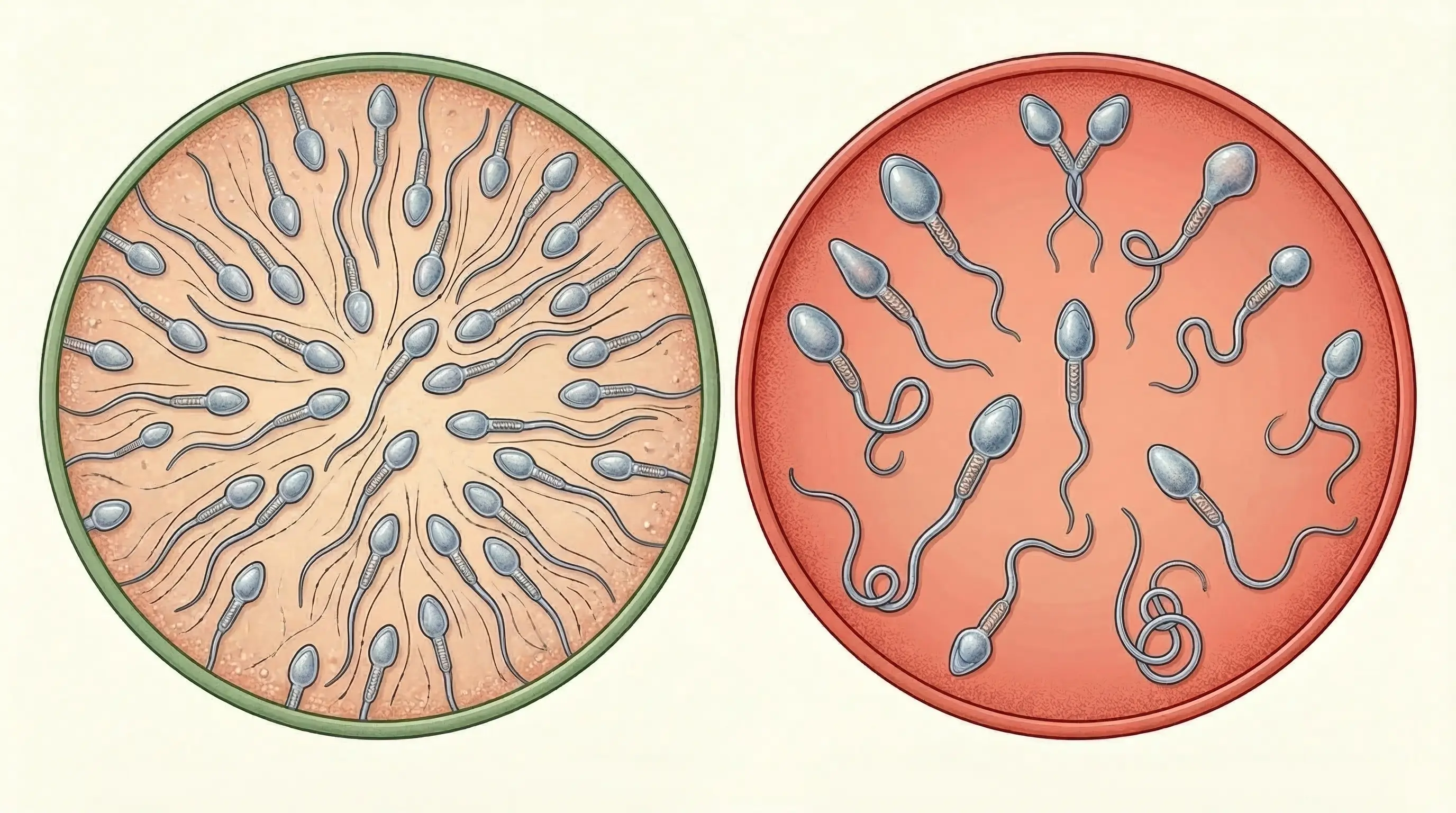
This is an area where emerging evidence is not yet fully reflected in clinical guidelines. Standard semen parameters (count, motility, morphology) don’t appear to predict recurrent pregnancy loss on their own — because these parameters say nothing about the genetic quality of the sperm, only whether it can reach and fertilize the egg.[^3] But sperm DNA fragmentation tells a different story.
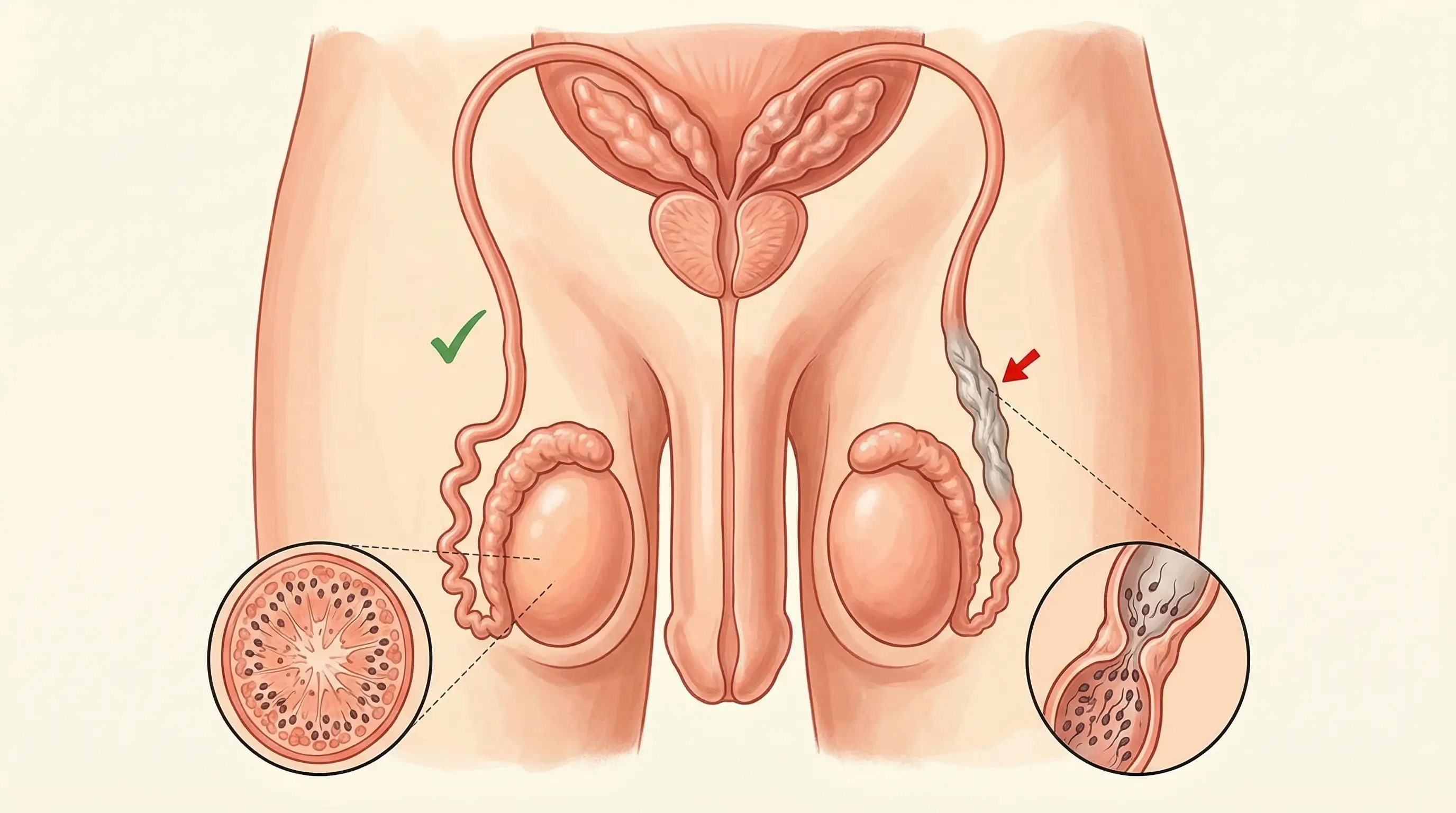
A systematic review and meta-analysis found a significant increase in miscarriage in couples where the male partner had high sperm DNA damage compared to those with low damage.[^9][^10] Sperm DNA fragmentation is associated with advanced paternal age, oxidative stress, varicocele, toxic exposures, and certain lifestyle factors — many of which are potentially correctable.[^3][^10]
Here’s the catch. Despite growing evidence, the ESHRE guideline currently limits its recommendations to lifestyle advice for the male partner: maintaining a healthy weight, stopping smoking, and exercising regularly.[^2][^10] Routine testing for sperm DNA fragmentation or sperm aneuploidy is not yet recommended in routine clinical practice according to current major guidelines.[^2][^3] That may change as research progresses, particularly in couples with otherwise unexplained losses.
Important:
Recurrent miscarriage shouldn’t be considered an exclusively maternal condition. The male factor may be underappreciated, and when losses remain unexplained, advanced diagnostics on the male partner — including DNA fragmentation testing — may offer additional clarity.[^9][^10]
What About Lifestyle and Other Risk Factors?
Several lifestyle and environmental factors have been linked to increased miscarriage risk, though their specific role in recurrent miscarriage is harder to pin down.[^4][^5] The most-studied factors include:
Obesity — associated with higher rates of pregnancy loss and may affect the immune environment of the endometrium.[^4][^5]
Smoking — impairs trophoblast function (the cells that form the early placenta) and is linked to increased risk of sporadic pregnancy loss.[^5]
Alcohol and high caffeine intake — both associated with increased miscarriage risk in some studies, though the data on caffeine’s role in recurrent loss specifically is less clear.[^4][^5]
The psychological toll of recurrent miscarriage is significant and shouldn’t be underestimated. Affected couples commonly experience heightened anger, depression, anxiety, and feelings of grief and guilt.[^3] One non-randomized study found that women who received structured psychological support (“tender loving care” — weekly monitoring, counseling, and reassurance) had an 85% live birth rate in their next pregnancy, compared with 36% in the standard care group.[^3] Those results require cautious interpretation — the groups weren’t randomized, and the effect sizes in studies like these are likely amplified by selection bias — but they underscore something real: emotional support matters, and it may genuinely influence outcomes.
What Happens When No Cause Is Found?
After a complete evaluation, no identifiable cause is found in approximately 50–75% of couples with recurrent miscarriage.[^6][^7] That’s a difficult statistic to receive. Without a clear explanation, treatment decisions become harder, and the uncertainty can feel unbearable.
But “unexplained” isn’t the same as “hopeless.” Even without treatment, couples with unexplained recurrent miscarriage have a 60–80% chance of a successful pregnancy with supportive care alone.[^3] The prognosis improves with younger maternal age and fewer previous losses.[^2] Close monitoring, early pregnancy reassurance scans, and dedicated care at a recurrent miscarriage clinic have been shown to improve outcomes in non-randomized studies.[^3]
How Is Recurrent Miscarriage Diagnosed?
Diagnosis involves a systematic evaluation to identify any treatable cause. Most guidelines recommend initiating this workup after two or three consecutive losses, depending on the guideline and the clinical picture.[^1][^2][^5] In practice, many specialists will initiate testing after two losses, particularly in women over 35 or when there are other concerning features.[^5]
The standard evaluation typically includes:
Category | Tests and Assessments |
|---|---|
Parental karyotyping | Chromosomal analysis of both partners to detect balanced translocations or other structural rearrangements. |
Uterine assessment | 3D ultrasound, saline-infused sonography, MRI, or hysteroscopy to evaluate uterine anatomy. |
Antiphospholipid antibodies | Lupus anticoagulant, anticardiolipin antibodies (IgG, IgM), and anti-β2 glycoprotein I antibodies. Must be positive on two tests at least 12 weeks apart. |
Thyroid function | TSH, free T4, and thyroid peroxidase antibodies (TPO-Ab). |
Blood glucose / HbA1c | To screen for uncontrolled diabetes mellitus. |
Genetic analysis of products of conception | 24-chromosome microarray of miscarried tissue to determine if the loss was chromosomally normal or abnormal. |
Sources: Adapted from ASRM 2012;[^3] ESHRE 2022;[^2] RCOG 2023;[^1] Boedeker et al. 2023[^7]
The genetic analysis of miscarriage tissue is particularly valuable. Combined with the standard RPL assessment, it can identify a probable or definitive cause in over 90% of individual miscarriages.[^7] An aneuploid (chromosomally abnormal) result can actually be reassuring in one sense: it suggests the loss was a random event rather than a sign of an ongoing maternal condition.
→ Learn more: Infertility
What Are the Treatment Options?
Treatment for recurrent miscarriage should be directed at the specific cause identified during evaluation.[^7] When a clear diagnosis is made, targeted treatment can significantly improve outcomes. When no cause is found, supportive care and close monitoring remain the most evidence-based approach.
Antiphospholipid syndrome: The combination of low-dose aspirin and heparin is the standard treatment and has been shown to improve live birth rates to approximately 74%.[^3] Aspirin alone is less effective (about 43% live birth rate).[^3]
Uterine anomalies: Surgical correction may be recommended, depending on the type and severity. Options include hysteroscopic septum resection, lysis of intrauterine adhesions, and myomectomy for submucous fibroids.[^7]
Chromosomal factors: When one partner carries a balanced translocation, genetic counseling is the first step. Couples may consider pre-implantation genetic testing (PGT) in combination with IVF to select chromosomally normal embryos for transfer.[^7] This doesn’t guarantee success, but it can reduce the risk of transferring embryos with unbalanced chromosomal arrangements.
Endocrine disorders: Gaining good control of thyroid disease or diabetes before conception is strongly recommended.[^7][^11] For women with unexplained recurrent miscarriage, progesterone supplementation may be offered — the evidence shows a modest but real benefit, especially in women with a higher number of previous losses.[^11]
Male factor: No specific evidence-based treatment exists yet for male-factor recurrent miscarriage. Lifestyle changes — quitting smoking, maintaining a healthy weight, reducing environmental exposures — are recommended to improve sperm DNA quality.[^2][^11] In some cases, varicocele treatment may improve DNA fragmentation, though further research is needed on its direct impact on miscarriage rates.[^10]
Unexplained recurrent miscarriage: Supportive care remains the cornerstone. This includes regular early pregnancy monitoring, reassurance scans, and emotional support.[^3] Even without specific treatment, the expected live birth rate is 60–80% in the next pregnancy.[^3]
→ Treatment option: In Vitro Fertilization (IVF)
Bottom Line:
A targeted evaluation can uncover a treatable cause in many cases. And even when no cause is identified, most couples with recurrent miscarriage will eventually have a successful pregnancy — particularly with close monitoring and dedicated support.
What Is the Prognosis for Future Pregnancies?
The chance of a live birth after recurrent miscarriage depends on two main factors: maternal age and the number of previous losses. A Danish registry study provides some of the most widely cited estimates.[^5]
Previous Losses | Age 25–29 | Age 30–34 | Age 35–39 | Age 40–44 |
|---|---|---|---|---|
1 miscarriage | About 85% | About 80% | About 70% | About 52% |
2 miscarriages | About 80% | About 78% | About 62% | About 45% |
3 miscarriages | About 75% | About 70% | About 55% | About 32% |
≥4 miscarriages | < 65% | < 60% | < 45% | > 25% |
Source: Kolte et al., cited in Toth et al. 2022[^5]
These numbers matter for two reasons. First, they’re more hopeful than many people expect — even after three miscarriages, a woman in her late twenties still has roughly a 75% chance of a live birth in her next pregnancy. Second, they show clearly that age is the most powerful variable. For women over 40, the prognosis is more guarded, and earlier, more intensive evaluation may be particularly important.
Key Insight:
Even after three consecutive miscarriages, the overall chance of having a live birth in the next pregnancy remains above 50% for most age groups. Recurrent miscarriage is not a sentence — it’s a condition that warrants investigation, not resignation.
So, What Should You Do Now?
If you’ve experienced two or more pregnancy losses, here are the practical next steps to consider.
Step 1: Talk to Your Doctor About Evaluation
Ask whether a structured recurrent miscarriage workup is appropriate for you. Most specialists will consider evaluation after two losses, especially if you’re over 35.
Step 2: Request Key Investigations
At minimum, this should include antiphospholipid antibody testing, thyroid function tests, uterine imaging, and karyotyping of both partners. If miscarriage tissue is available, genetic analysis can be very informative.
Step 3: Consider the Male Partner
Discuss whether sperm DNA fragmentation testing is appropriate, especially if the cause of the loss remains unexplained. Lifestyle modifications for the male partner — weight management, quitting smoking, reduced alcohol intake — can improve sperm quality.
Step 4: Address Modifiable Risk Factors
If applicable, work on achieving a healthy weight, reducing caffeine and alcohol intake, stopping smoking, and optimizing control of any chronic conditions such as diabetes or thyroid disease.
Step 5: Don’t Underestimate Emotional Support
Recurrent miscarriage takes an enormous emotional toll. Ask about counseling, support groups, or dedicated miscarriage clinics that offer ongoing psychological care. Evidence suggests this isn’t just comfort — it may actually improve pregnancy outcomes.
Step 6: Choose the Right Specialist and Clinic
A fertility specialist or reproductive endocrinologist with experience in recurrent pregnancy loss can coordinate your evaluation and treatment. Compare clinics that offer dedicated RPL programs and have access to genetic counseling, immunological testing, and advanced reproductive technologies.
→ Compare fertility clinics worldwide: MedicalNavigator.com/fertility-clinics
Too Long, Didn’t Read
Recurrent miscarriage affects about 1–3% of couples and is defined as two or three or more pregnancy losses.
In 50–75% of cases, no single identifiable cause is found after a full evaluation.
Antiphospholipid syndrome is the most important treatable cause, found in 5–15% of affected women.
Key tests include karyotyping, uterine imaging, thyroid function, and antiphospholipid antibody screening.
Even after three losses, most women under 35 have a 70–75% chance of live birth in the next pregnancy.
Emotional support and dedicated clinic care may genuinely improve outcomes, not just comfort.
References
[^1]: Regan L, Rai R, Saravelos S, Li TC, Royal College of Obstetricians and Gynaecologists. Recurrent Miscarriage: Green-top Guideline No. 17. BJOG. 2023;130(12):e9–e39.
[^2]: ESHRE Guideline Group on RPL. ESHRE guideline: Recurrent pregnancy loss: An update in 2022. Hum Reprod Open. 2023;2023:hoad002.
[^3]: Practice Committee of the ASRM. Evaluation and treatment of recurrent pregnancy loss: A committee opinion. Fertil Steril. 2012;98:1103–1111.
[^4]: Dimitriadis E, Menkhorst E, Saito S, Kutteh WH, Brosens JJ. Recurrent pregnancy loss. Nat Rev Dis Primers. 2020;6:98.
[^5]: Toth B, Bohlmann M, Hancke K, et al. Recurrent Miscarriage: Diagnostic and Therapeutic Procedures. Geburtshilfe Frauenheilkd. 2022;83(1):49–78.
[^6]: Turesheva A, Aimagambetova G, Ukybassova T, et al. Recurrent Pregnancy Loss Etiology, Risk Factors, Diagnosis, and Management. J Clin Med. 2023;12(12):4074.
[^7]: Boedeker D, Hunkler K, Mahdy H. Recurrent Pregnancy Loss. [Updated 2023 Aug 28]. In: StatPearls [Internet]. Treasure Island (FL): StatPearls Publishing; 2026 Jan-.
[^8]: Bosire A, Kosgei R, Gathara D, Madadi M, Osati A. Burden, causes, and treatment approaches of recurrent pregnancy loss: a scoping review. Pan Afr Med J. 2025;52:109.
[^9]: Inversetti A, Bossi A, Cristodoro M, et al. Recurrent pregnancy loss: a male crucial factor — A systematic review and meta-analysis. Andrology. 2025;13(1):131–148.
[^10]: Gkeka K, Symeonidis EN, Tsampoukas G, et al. Recurrent miscarriage and male factor infertility: diagnostic and therapeutic implications. Cent European J Urol. 2023;76(4):336–346.
[^11]: Sherwood K, Weimer ET. Management of recurrent pregnancy loss. The Obstetrician & Gynaecologist. 2022;24:260–271.
This guide is for informational purposes only. Always consult qualified healthcare providers for personalized recommendations. For full details, read our Medical Disclaimer.

Author of the article
Date of publication