



What Is Semen Quality and How Is It Measured?
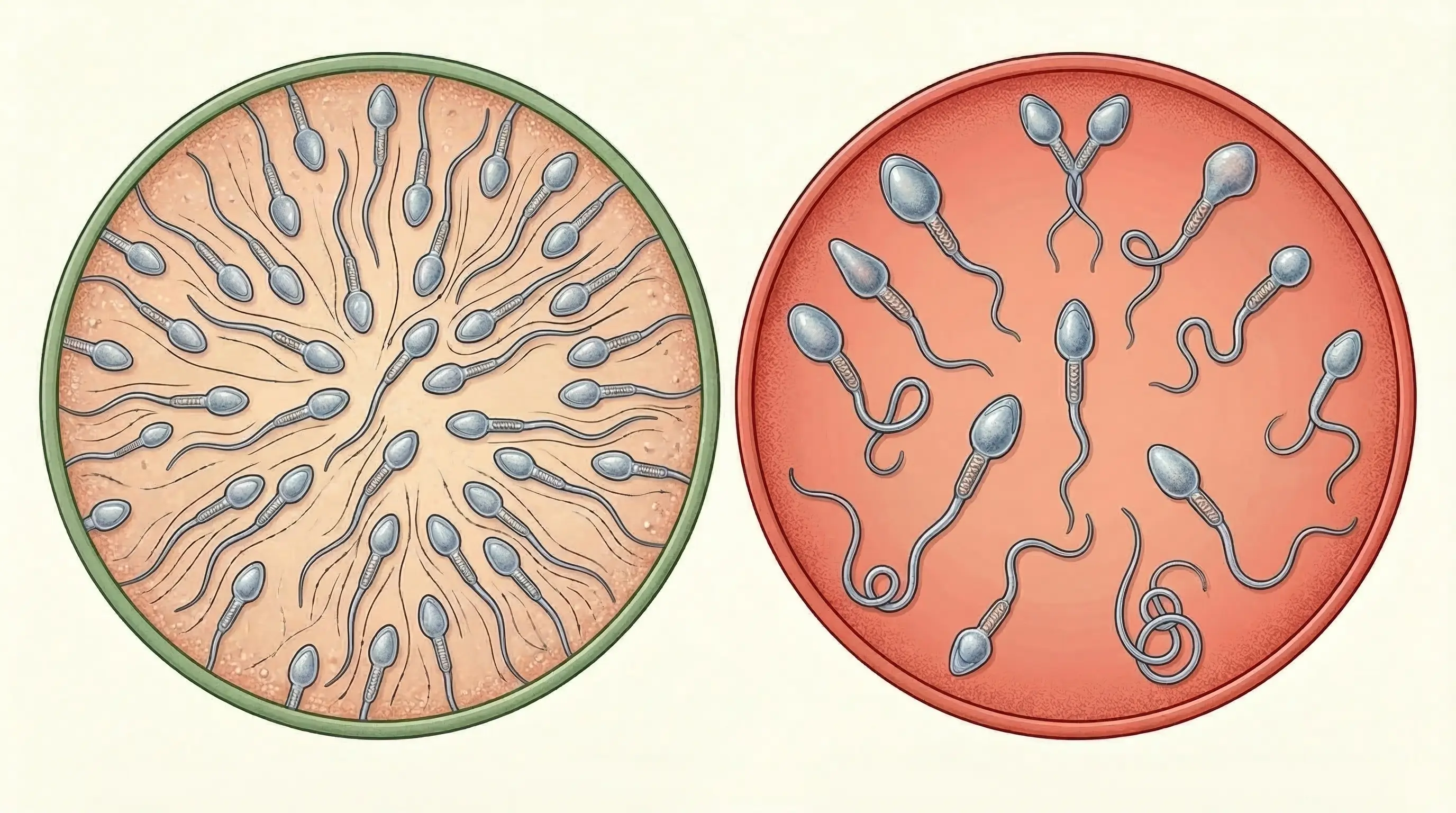
Semen quality refers to a set of measurable characteristics of a man’s ejaculate that indicate his potential to fertilize an egg (oocyte), although normal values do not guarantee fertility and abnormal values do not preclude it. The standard tool for evaluating semen quality is a semen analysis (spermiogram) — a laboratory test that examines a sample under a microscope and reports several key parameters.[^1][^2]
The World Health Organization (WHO) publishes the globally accepted reference manual for semen analysis. The most current version is the 6th edition, released in 2021, which updated reference values based on data from men whose partners conceived within 12 months.[^1][^4]
Parameter | WHO 6th Ed. Lower Reference Limit | What It Means |
Sperm Concentration | ≥16 million/mL | Number of sperm per milliliter of semen. |
Total Sperm Count | ≥39 million per ejaculate | Total number of sperm in the entire sample. |
Progressive Motility | ≥30% | The percentage of sperm swimming forward effectively. |
Total Motility | ≥42% | Percentage of all moving sperm (any direction). |
Normal Morphology | ≥4% | Percentage of sperm with a normal shape. |
Semen Volume | ≥1.4 mL | Total volume of ejaculated fluid. |
Sources: WHO Laboratory Manual for Human Semen, 6th ed. (2021);[^1] Boitrelle F, et al. Life (2021)[^4]
Important:
These are lower reference limits, not “ideal” values — meaning they represent the lower end of the normal range among fertile men, not targets to aim for. They represent roughly the 5th percentile among fertile men — meaning 95% of men who successfully fathered a child had values above these numbers.[^3][^4] Falling below a threshold does not mean pregnancy is impossible, but it may reduce the probability and warrants further evaluation.
When all parameters fall within normal ranges, the result is described as normozoospermia. When abnormalities are found, standardized terms apply: oligozoospermia (low sperm count), asthenozoospermia (poor motility), and teratozoospermia (abnormal morphology). These may occur alone or in combination. At the other end of the spectrum, azoospermia means no sperm are present in the ejaculate at all.[^1][^5]
→ Learn more: Male Infertility
Why Are Sperm Counts Dropping Worldwide?
One of the most striking findings in reproductive medicine over the past decade is the accelerating global decline in sperm counts. A landmark 2023 meta-analysis of over 57,000 men found that mean sperm concentration fell from approximately 104 million/mL in 1973 to 49 million/mL by 2018 — a drop of more than 50% in under five decades.[^6] Crucially, this updated study confirmed the trend is no longer limited to Western countries; it is now global.[^6]
A 20-year analysis of subfertile men at a single clinic (which may not represent the general population) showed significant declines in total sperm count (from 443 to 300 million), motility (from 64% to 49%), and normal morphology (from 67% to 26% — though these values reflect older assessment criteria; under current WHO strict criteria, 2–5% normal morphology is typical in clinical practice).[^7] A parallel narrative review highlighted that coincident with the decline in sperm counts, there has been an increase in testicular cancer and cryptorchidism, suggesting shared environmental causes — particularly endocrine-disrupting chemicals.[^8]
Some researchers have called this a silent public health crisis. As one editorial put it, male infertility has been “forgotten” in the broader fertility conversation. Routine semen analyses — even in young men without immediate fertility plans — have been proposed as a proactive screening tool to catch abnormalities early.[^9] And here’s the good news — a semen analysis can be done at any age, costs relatively little, and provides valuable information about your reproductive health.
How Does Age Affect Sperm Quality?
Unlike egg production, which ends at menopause, sperm production continues throughout a man’s life. However, “continuous” does not mean “unchanged.” A growing body of research shows that paternal age has a measurable impact on several semen parameters.
A systematic review found that most studies confirm an increase in sperm DNA fragmentation with advancing age. DNA fragmentation is damage to the genetic material inside sperm, which is associated with reduced fertilization rates and may be linked to increased miscarriage risk.[^10]
A French study further established that men over 40 have significantly higher DNA fragmentation and lower global DNA methylation levels in their sperm — changes that may also affect embryo development.[^11]
A large Chinese study of over 6,800 semen samples confirmed that semen volume, progressive motility, and total motility all decline significantly with age, while DNA fragmentation index increases.[^12] Similarly, a retrospective analysis of more than 2,500 men found that the age group above 40 years was associated with a significant decrease in total and progressive motility.[^13]
Key Insight:
While men do not face the sharp fertility cliff that women experience after 35, paternal age above 40 years is associated with reduced motility, increased DNA damage, and potentially altered epigenetic markers in sperm.[^10][^11][^12][^13] Men planning a family later in life should consider earlier evaluation.
→ Learn more: Fertility and Age
What Lifestyle Factors Affect Sperm Quality?
Lifestyle factors are among the most modifiable influences on semen quality. The encouraging news: changes in these areas can begin improving sperm parameters within one spermatogenesis cycle — approximately 74 days.
Does Diet Matter for Sperm Health?
Yes — and the evidence is increasingly consistent. A 2024 systematic review of 10 studies found that 6 out of 10 reported a positive association between adherence to the Mediterranean diet and improved semen quality, particularly sperm motility and concentration.[^14] A 2025 meta-analysis of 8 studies (1,835 men) went further, showing that adherence to the Mediterranean diet was significantly associated with higher sperm counts, total motility, progressive motility, and normal morphology.[^15]
The mechanism is thought to involve dietary antioxidants — fruits, vegetables, nuts, olive oil, and fish provide vitamins C and E, selenium, zinc, and omega-3 fatty acids, all of which help counteract oxidative stress in the testes.[^20] Conversely, diets rich in processed foods, sugar, and red meat (the “Western diet”) have been associated with poorer semen parameters.[^16]
How Does Body Weight Affect Sperm?
Obesity is linked to hormonal imbalances that impair sperm production. Excess adipose tissue increases estrogen levels and lowers testosterone, disrupting the hormonal axis that drives spermatogenesis.[^16][^19] Research shows that both overweight and obese men have a higher risk of reduced sperm concentration, while obesity is also associated with lower sperm motility.[^19]
Does Smoking Damage Sperm?
Cigarette smoking generates high levels of reactive oxygen species (ROS) that overwhelm the sperm’s antioxidant defenses.[^8][^16] Smokers show significantly greater DNA fragmentation and chromatin decondensation than non-smokers.[^8] Smoking also damages mitochondrial activity in sperm and can increase testosterone metabolism in the liver, further impairing spermatogenesis.[^8][^16]
Can Heat Exposure Harm Sperm?
Sperm production (spermatogenesis) requires a temperature about 2–4°C below core body temperature — which is precisely why the testes sit outside the body. A 2022 meta-analysis of 9 studies confirmed that high ambient temperature significantly decreases semen volume, sperm count, sperm concentration, motility, and normal morphology.[^18] Practical sources of scrotal heat include prolonged laptop use on the lap, tight clothing, hot baths, saunas, and occupational heat exposure.[^19][^21]
Do Mobile Phones Affect Sperm Quality?
A large Swiss study of nearly 2,900 young men found that using a mobile phone more than 20 times per day was associated with a 30% increased risk of sperm concentration falling below WHO reference values and a 21% increased risk of total sperm count falling below WHO reference values.[^17] The association was stronger in the earlier study period (2005–2007) and decreased over time, which the authors attribute to the transition from 2G/3G to 4G technologies with lower output power.[^17] Keeping a mobile phone in the pants pocket was not found to be associated with lower semen parameters in this study.
How Do Environmental Exposures Affect Sperm Quality?
Beyond personal lifestyle choices, environmental pollutants are increasingly recognized as contributors to declining semen quality worldwide. These exposures are often involuntary, making awareness and avoidance strategies especially important.
Does Air Pollution Harm Sperm?
An Italian cross-sectional study of over 1,150 infertile men found that particulate matter — PM10 (particles 10 micrometers or smaller, such as dust and pollen) and PM2.5 (particles 2.5 micrometers or smaller, typically from car exhaust and industrial emissions) — and nitrogen dioxide (NO₂) were all negatively associated with sperm morphology.[^22] A large Chinese cohort study of 5,503 men showed that air pollutants adversely affected semen quality throughout the entire spermatogenesis period. Notably, ozone (O₃) exposure in the highest quartile was associated with significant reductions in semen volume, sperm concentration, sperm count, total motility, and progressive motility.[^23]
What About Endocrine Disruptors?
Endocrine-disrupting chemicals (EDCs) — including pesticides, herbicides, bisphenol A, phthalates, and heavy metals — can interfere with the hormonal signals that regulate sperm production. Exposure begins as early as prenatal life and continues into adulthood.[^8] Combined with a sedentary lifestyle, higher BMI, and frequent device use, these environmental exposures create what researchers describe as a “compound unfavorable reproductive environment.”[^21]
While you cannot fully eliminate exposure to air pollution or EDCs, you can reduce risk by choosing organic produce when possible, avoiding plastic food containers (especially when heated), minimizing exposure to known occupational chemicals, and using air purifiers in high-pollution areas.
Can Supplements and Antioxidants Improve Sperm Quality?
Oxidative stress — an imbalance between harmful reactive oxygen species (ROS) and the body’s antioxidant defenses — is recognized as one of the most common contributors to male subfertility.[^26] This has made antioxidant supplementation one of the most researched interventions for men with abnormal semen parameters.
A Cochrane-linked systematic review of 29 studies found generally positive effects of antioxidant supplementation on semen parameters and assisted reproduction outcomes.[^24] However, a comprehensive 2025 review emphasized that the key question remains: which supplement, at which dose, for which men?[^25]
The most informative head-to-head comparison comes from a 2022 network meta-analysis of 18 randomized controlled trials (1,790 subfertile men), which ranked the following antioxidants:[^26]
Antioxidant | Best Evidence For | Key Finding vs. Placebo | Ranking (SUCRA) |
CoQ10 | Sperm concentration | Significant increase (MD = 5.95 million/mL). | 79.4% (highest for concentration). |
Carnitine | Sperm motility | Significant increase (MD = 12.43%). | 88.7% (highest for motility). |
Vitamin C | Sperm morphology | Trend toward improvement (not statistically significant). | 93.6% (highest for morphology). |
Source: Su L, et al. Adv Nutr (2022)[^26]
One recent expert-proposed regimen combines CoQ10, vitamin E, and vitamin C — targeting three distinct mechanisms: mitochondrial oxidative stress, lipid peroxidation, and protection of DNA integrity.[^25] This combination may be considered for men with a DNA fragmentation index greater than 30%, idiopathic poor semen parameters, recurrent IVF failure, smokers, and obese men.[^25]
Important:
The minimum recommended duration for antioxidant therapy is three months, corresponding to the complete spermatogenesis cycle.[^25] Not all supplements are equal — poorly selected combinations may paradoxically decrease sperm quality by increasing chromatin decondensation (the “antioxidant paradox”).[^25] Always discuss supplementation with a specialist before starting.
→ Learn more: Supplements for Men
What Medical and Surgical Treatments Can Help?
When lifestyle changes and supplements are not enough, medical and surgical interventions can offer significant improvement in semen parameters — and, in some cases, enable natural conception.
Does Varicocele Treatment Improve Sperm Quality?
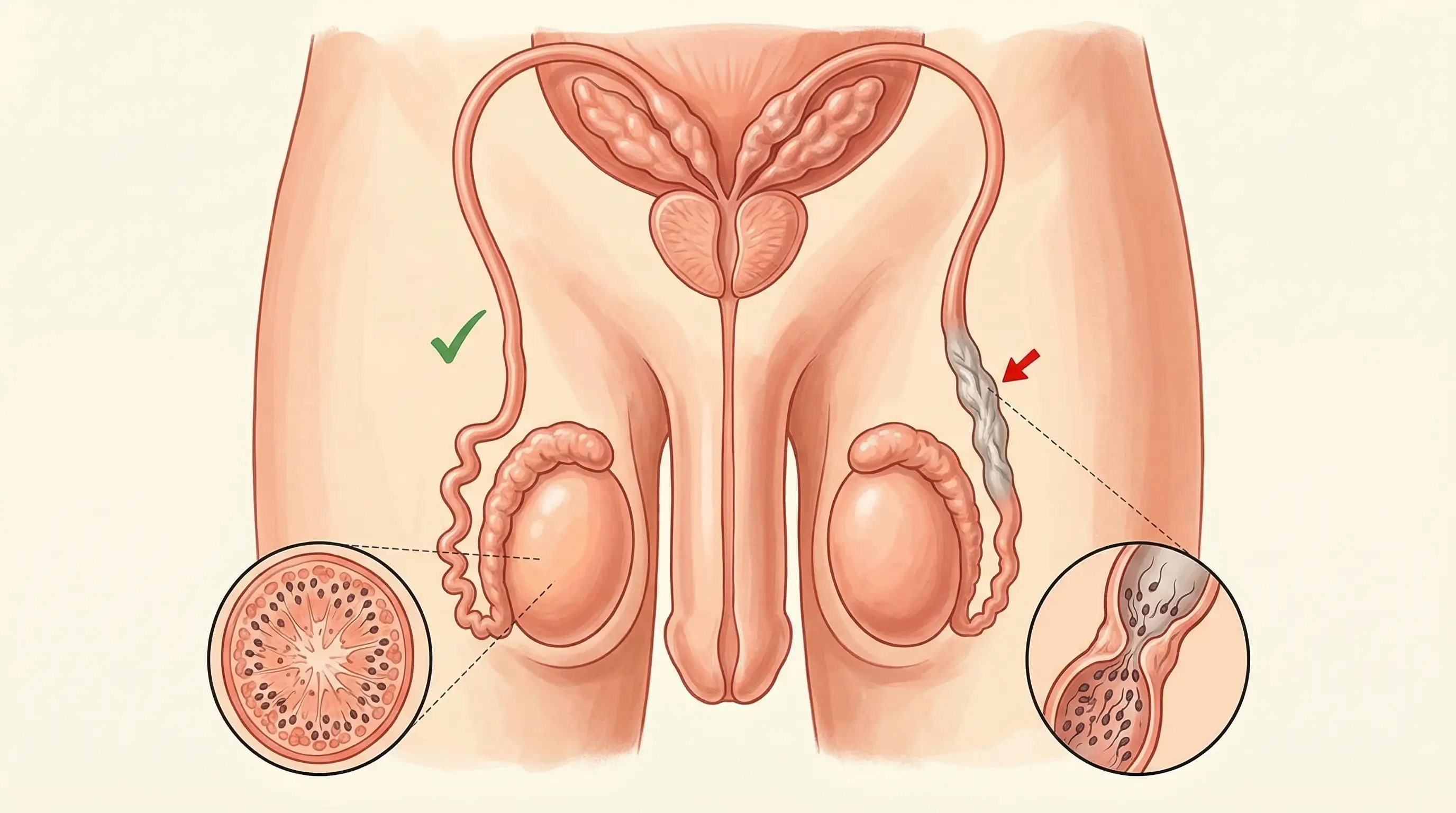
A varicocele — enlarged veins in the scrotum — is one of the most common and surgically correctable causes of male infertility. The most recent and largest meta-analysis to date, comparing treated patients (n = 1,426) to untreated controls (n = 996), found that varicocele treatment significantly improved sperm concentration, total sperm count, progressive motility, total motility, and normal morphology.[^27][^28]
A paired before-and-after meta-analysis confirmed these findings: almost all conventional semen parameters improved significantly following varicocele treatment in infertile men.[^28] A 2024 review concluded that the procedure not only improves semen parameters but also increases the likelihood of spontaneous pregnancy.[^29]
The gold-standard procedure is microsurgical subinguinal varicocelectomy. Combining varicocele treatment with antioxidant supplementation may yield superior results compared to either approach alone.[^25]
→ Treatment option: Varicocele
Can Hormonal Treatments Help?
In men with idiopathic infertility and normal-to-low Follicle-Stimulating Hormone (FSH) levels, FSH therapy can improve sperm count, motility, and pregnancy rates.[^31] However, identifying the right candidates is critical — not all men respond, and predictive markers are still being refined.[^30][^31]
A 2024 systematic review and network meta-analysis of non-hormonal pharmacological treatments (such as pentoxifylline, kallikrein, and others) concluded that there is currently insufficient evidence to recommend routine use of any of these drugs for idiopathic male infertility.[^32]
Can Testosterone Therapy Cause Infertility?
Yes — and this is one of the most important warnings in male reproductive medicine. Exogenous testosterone — widely used for low testosterone (“Low T”), bodybuilding, and performance enhancement — is a major suppressor of spermatogenesis.[^33] Testosterone replacement therapy (TRT) suppresses the pituitary hormones (LH and FSH) that signal the testes to produce sperm. The result can be severe oligozoospermia or even azoospermia (complete absence of sperm).[^33]
For men on TRT who wish to father children, there are alternatives. Options include transitioning to selective estrogen receptor modulators (SERMs) like clomiphene citrate, human chorionic gonadotropin (hCG), or aromatase inhibitors — all of which can support testosterone levels while preserving or restoring spermatogenesis.[^34] Recovery of sperm production after stopping testosterone may take months to years, and in some cases may be incomplete.[^33]
→ Learn more: Testosterone Replacement Therapy and Fertility
So, What Should You Do Now?
Improving semen quality is rarely about a single intervention — it’s about a combination of smart choices. Here is a practical path forward:
Step 1: Get a Baseline Semen Analysis
A semen analysis (spermiogram) is the starting point. It is simple, non-invasive, and inexpensive — yet it provides critical data on sperm count, motility, and morphology. If the first result is abnormal, repeat in 2–4 weeks; if it remains abnormal, repeat in about 3 months to complete a spermatogenesis cycle.[^1][^3]
Step 2: Optimize Your Lifestyle
Diet: Shift toward a Mediterranean-style pattern — more vegetables, fruits, nuts, fish, and olive oil; less processed food, sugar, and red meat.[^14][^15]
Weight: Achieve and maintain a healthy BMI.
Smoking: Quit — both tobacco and e-cigarettes.
Heat: Avoid prolonged hot baths, saunas, and laptop-on-lap use.
Alcohol: Limit intake.
Step 3: Consider Targeted Supplements
Discuss with your doctor whether supplementation with CoQ10, carnitine, vitamin C, and vitamin E is appropriate for your specific situation. Plan for at least 3 months of consistent use before evaluating results.[^24][^25][^26]
Step 4: Rule Out Treatable Medical Conditions
A physical examination and hormonal panel can identify conditions like varicocele, hormonal imbalances, or infections. If you are taking exogenous testosterone or anabolic steroids, inform your fertility specialist immediately.[^27][^33]
Step 5: Choose the Right Clinic
If you need advanced evaluation or assisted reproduction, choosing the right clinic is essential. Consider reported success rates, available treatments, laboratory quality, and clinician experience.
→ Compare fertility clinics worldwide: MedicalNavigator.com/fertility-clinics
Too Long, Didn’t Read
Global sperm counts have declined by more than 50% since 1973, with some evidence that the rate of decline may be accelerating.
Semen quality is measured by concentration, motility, morphology, and volume — all defined by the WHO 6th edition (2021).
Paternal age above 40 years is associated with increased sperm DNA fragmentation and reduced motility.
A Mediterranean diet, healthy weight, quitting smoking, and avoiding heat exposure are the lifestyle changes with the strongest evidence.
CoQ10 ranks highest in improving sperm concentration, and carnitine ranks highest in improving motility.
Varicocele treatment significantly improves nearly all semen parameters and increases the chance of natural pregnancy.
Exogenous testosterone suppresses sperm production — men trying to conceive must avoid TRT and discuss alternatives with a specialist[^c0].
References
[^1]: World Health Organization. WHO laboratory manual for the examination and processing of human semen, 6th ed. 2021.
[^2]: European Association of Urology. Male Infertility Guidelines. EAU Guidelines.
[^3]: American Urological Association. Male Infertility – Medical Students Curriculum. AUA.
[^4]: Boitrelle F, Shah R, Saleh R, et al. The sixth edition of the WHO manual for human semen analysis: A critical review and SWOT analysis. Life. 2021;11(12):1368.
[^5]: Agarwal A, et al. Sixth edition of the World Health Organization laboratory manual of semen analysis: Updates and essential take away for busy clinicians. Arab J Urol. 2024;22(2):71-74.
[^6]: Levine H, Jorgensen N, Martino-Andrade A, et al. Temporal trends in sperm count: A systematic review and meta-regression analysis of samples collected globally in the 20th and 21st centuries. Hum Reprod Update. 2023;29(2):157-176.
[^7]: Punjani N, Al-Hussein Alawamlh O, Kim SJ, et al. Changes in semen analysis over time: A temporal trend analysis of 20 years of subfertile non-azoospermic men. World J Men’s Health. 2023;41(2):382-389.
[^8]: Sciorio R, Tramontano L, Adel M, Fleming S. Decrease in sperm parameters in the 21st century: Obesity, lifestyle, or environmental factors? An updated narrative review. J Pers Med. 2024;14(2):198.
[^9]: Ravitsky V, Kimmins S. The forgotten men: Rising rates of male infertility urgently require new approaches for its prevention, diagnosis and treatment. Biol Reprod. 2019;101(5):872-874.
[^10]: Gonzalez DC, Ory J, Blachman-Braun R, et al. Advanced paternal age and sperm DNA fragmentation: A systematic review. World J Men’s Health. 2022;40(1):104-115.
[^11]: Thiébaut C, Methorst C, Brisset S, Selva J, Grabia A. Paternal age matters: Association with sperm criteria — spermatozoa DNA integrity and methylation profile. Genes. 2023;14(8):1624.
[^12]: Li X, et al. Increasing age in men is negatively associated with sperm quality and DNA integrity but not pregnancy outcomes in assisted reproductive technology. Front Endocrinol. 2025;16:1548822.
[^13]: Castellini C, Cordeschi G, Tienforti D, Barbonetti A. Relationship between male aging and semen quality: A retrospective study on over 2500 men. Arch Gynecol Obstet. 2024;309(6):2843-2852.
[^14]: Piera-Jordan CA, Prieto Huecas L, Serrano De La Cruz Delgado V, et al. Influence of the Mediterranean diet on seminal quality — a systematic review. Front Nutr. 2024;11:1287864.
[^15]: Salmeron-Febres LM, et al. Mediterranean diet, semen quality, and medically assisted reproductive outcomes in the male population: A systematic review and meta-analysis. Adv Nutr. 2025.
[^16]: Rotimi SO, et al. Implications of lifestyle factors on male reproductive health. J Reprod Infertil. 2024;25(2):79-91.
[^17]: Rahban R, Senn A, Nef S, Roosli M. Association between self-reported mobile phone use and the semen quality of young men.01875-7/fulltext) Fertil Steril. 2023;120(6):1181-1192.
[^18]: Hoang-Thi AP, Dang-Thi AT, Phan-Van S, et al. The impact of high ambient temperature on human sperm parameters: A meta-analysis. Iran J Public Health. 2022;51(4):710-723.
[^19]: Melinawati, Eriana, Prakosa, Teguh, et al. The impact of heat exposure, obesity, and physical activity on sperm quality: An observational study. Andrologia. 2023;2023:9142450.
[^20]: Garolla A, Grande G, Petre GC, et al. Observational cross-sectional study on Mediterranean diet and sperm parameters. Nutrients. 2023;15(24):5017.
[^21]: Bieniek JM, Kashanian JA, Deibert CM, et al. The impact of selected modifiable lifestyle factors on male fertility in the modern world. Syst Biol Reprod Med. 2021;67(1):2-9.
[^22]: Belladelli F, Corsini C, Pozzi E, et al. Does air pollution impact on semen parameters? Findings from a real-life, cross-sectional study in Italian infertile men. World J Men’s Health. 2023;41(2):403-412.
[^23]: Gong Y, Huang G, Wang XY, et al. The impact of exposure to different ambient air pollutants on sperm quality: A retrospective cohort study. Ecotoxicol Environ Saf. 2025;306:119354.
[^24]: Smits RM, Mackenzie-Proctor R, Yazdani A, et al. Antioxidant supplementation on male fertility — a systematic review. Antioxidants. 2023;12(4):836.
[^25]: Bouhadana D, Godin Pagé MH, Montjean D, et al. The role of antioxidants in male fertility: A comprehensive review of mechanisms and clinical applications. Antioxidants. 2025;14(8):1013.
[^26]: Su L, Qu H, Cao Y, et al. Effect of antioxidants on sperm quality parameters in subfertile men: A systematic review and network meta-analysis of randomized controlled trials. Adv Nutr. 2022;13(2):586-594.
[^27]: Agarwal A, Cannarella R, Saleh R, et al. Impact of varicocele repair on semen parameters in infertile men: A systematic review and meta-analysis. World J Men’s Health. 2023;41(2):289-310.
[^28]: Cannarella R, Shah R, Hamoda TAAA, et al. Does varicocele repair improve conventional semen parameters? A meta-analytic study of before-after data. World J Men’s Health. 2024;42(1):92-132.
[^29]: Shah R, et al. Impact of varicocele repair on semen parameters and spontaneous pregnancy: An endless debate put to rest. Arab J Urol. 2024;22(3):191-194.
[^30]: Singla B. Role of follicle-stimulating hormone (FSH) and testosterone in abnormal sperm parameters: A review article. Med Res Arch. 2025;13(11).
[^31]: Santi D, et al. FSH therapy in male factor infertility: Evidence and factors which might predict the response. Biomedicines. 2024;12(9):1940.
[^32]: Tiryaki JJ, Mullen SC, Osei-Mensah OF, Arbour HC. Pharmacological non-hormonal treatment options for male infertility: A systematic review and network meta-analysis. BMC Urol. 2024;24(1):162.
[^33]: Crosnoe LE, Grober E, Ohl D, Kim ED. Exogenous testosterone: A preventable cause of male infertility. Transl Androl Urol. 2016;5(2):211-221.
[^34]: Al-Zoubi RM, et al. Management of male fertility in hypogonadal patients on testosterone replacement therapy. Clinics. 2024;79:100320.
This guide is for informational purposes only. Always consult qualified healthcare providers for personalized recommendations. For full details, read our Medical Disclaimer.

Author of the article
Date of publication