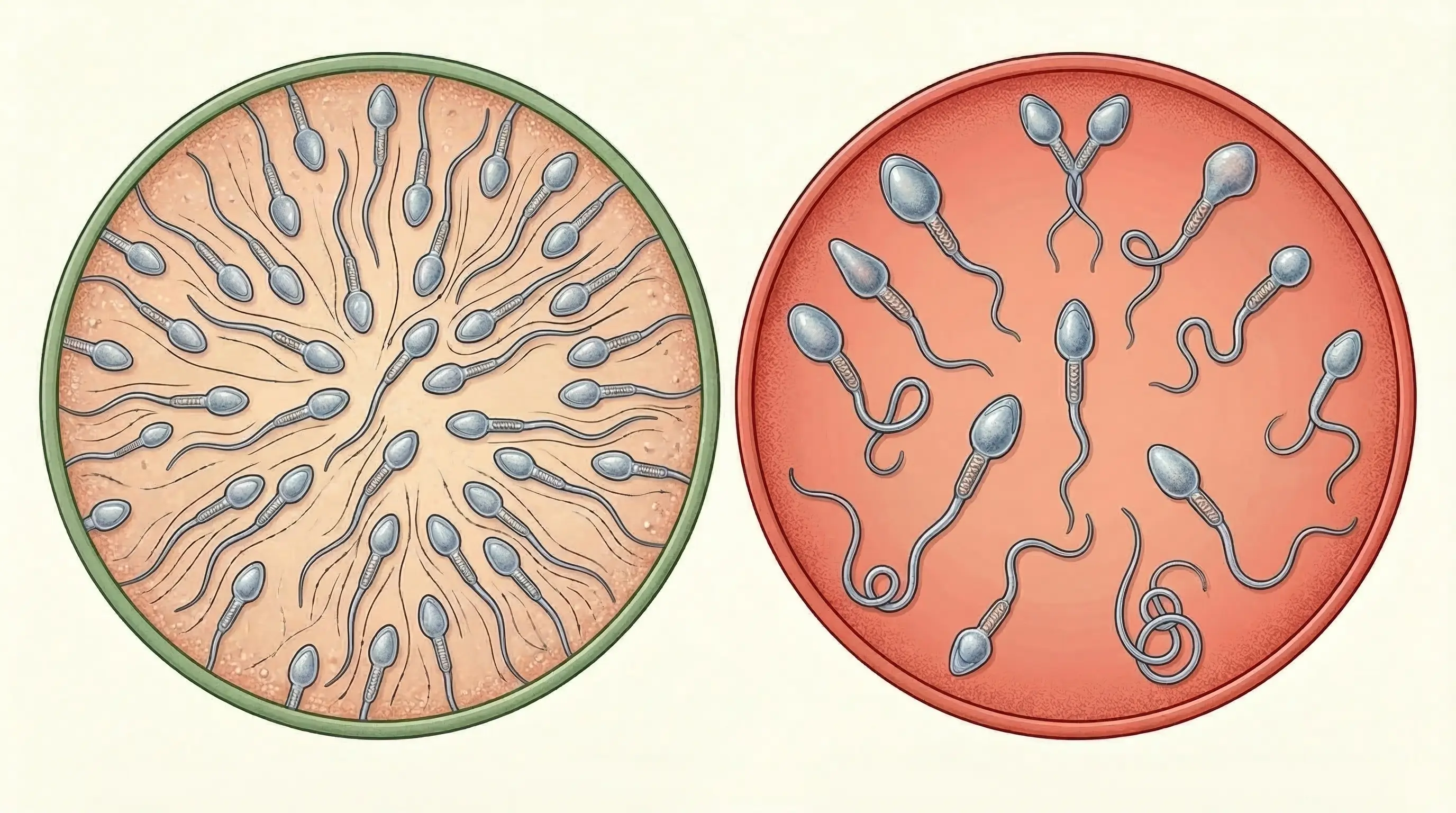




What Is Egg Quality and Why Does It Matter?
Egg quality refers to whether an egg has the correct number of chromosomes, enough energy to divide properly after fertilization, and intact DNA.[^1][^4] When an egg is “high quality,” one important feature is euploidy, meaning it contains the correct number of chromosomes (23), enabling proper pairing with sperm chromosomes after fertilization. When quality is poor, the chromosomes may not separate correctly during cell division — a process called meiosis — leading to an embryo with too many or too few chromosomes. This is called aneuploidy, and it is one of the most common reasons embryos fail to implant, miscarry, or result in genetic conditions such as Down syndrome.[^6][^7]
In clinical practice, egg quality is most often assessed indirectly through morphological scoring — an embryologist examines the egg under a microscope and evaluates its maturation stage, shape, the appearance of its outer shell (zona pellucida), and internal structures.[^1][^2] This approach is quick and non-invasive, but it is also subjective and operator-dependent.[^1] More advanced methods, such as genetic testing or analysis of the fluid surrounding the egg (follicular fluid), exist in research settings but are too invasive or not yet validated for routine clinical use.[^1]
Important:
Ovarian reserve tests — such as Anti-Müllerian Hormone (AMH) levels or Antral Follicle Count (AFC) — estimate egg quantity, not quality.[^10] A woman can have a reassuring AMH level and still produce chromosomally abnormal eggs, and vice versa. This is why poor egg quality often explains cases of “unexplained” infertility — everything looks normal on paper, but the eggs themselves are compromised at a level that no standard test can detect.[^3]
How Does Age Affect Egg Quality?
Age is the single most powerful predictor of egg quality.[^6][^7][^9][^10]
Female fertility begins to decline around the late twenties to early thirties and accelerates significantly after age 35.[^10] By the age of 40, nearly half of all women are subfertile (reduced probability of conception per cycle).[^10] This decline is not simply about having fewer eggs; it is about what happens inside the eggs that remain.
What Goes Wrong Inside an Aging Egg?
Several molecular mechanisms contribute to the age-related decline in egg quality:
Cohesin deterioration: Cohesins are protein “glue” that hold paired chromosomes together during meiosis. These proteins are loaded onto chromosomes before a woman is even born and are never replaced in human oocytes under normal physiological conditions. Over decades, they gradually degrade, increasing the chance that chromosomes will separate unevenly and lead to aneuploidy.[^6][^9]
Mitochondrial dysfunction: Each egg contains tens to hundreds of thousands of mitochondria — more than any other human cell — because the energy demands of early embryo development are enormous. As eggs age, mitochondrial DNA accumulates mutations, energy production declines, and the egg may lack the capacity to complete cell division properly.[^9][^10]
Telomere shortening: Telomeres — protective caps at the ends of chromosomes — shorten with age, making chromosomes more vulnerable to damage.[^9]
Oxidative stress: Reactive oxygen species (free radicals) accumulate over time, damaging DNA, proteins, and lipid membranes within the egg.[^9][^10]
Follicular metabolic changes: It is not only the egg itself that ages — the follicular environment surrounding it also deteriorates. Research has shown that metabolic dysfunction within the follicle contributes to chromosomal errors in the developing egg.[^8]
Can Lifestyle Changes Improve Egg Quality?
Understanding the biological mechanisms behind age-related decline in egg quality is the first step — the next is knowing which factors you can actually influence.[^19] While you can’t stop the biological clock, several modifiable lifestyle factors have been linked to better egg quality, improved ovarian response, and higher pregnancy rates in clinical studies.[^14][^18]
What Should You Eat?
The dietary pattern with the most consistent supportive evidence so far is the Mediterranean diet — rich in vegetables, fruits, whole grains, legumes, fish, olive oil, and nuts, with limited red meat and processed food.[^11][^14] One study found that women who closely followed a Mediterranean-style diet had a lower risk of poor ovarian response during IVF stimulation, suggesting the diet may be associated with not just general health but how the ovaries respond to fertility treatment.[^12]
Conversely, high-glycaemic diets, processed foods, and excess red meat have been associated with worse fertility outcomes and ovulatory disorders.[^13] A 2024 evidence-based review concluded that while the Mediterranean diet is promising, the overall evidence is “positive but not yet definitive” — meaning it’s a sensible choice, but not a guaranteed fix.[^11][^14]
Does Body Weight Affect Egg Quality?
Yes. A 2024 systematic review found that women with a Body Mass Index (BMI) of 25 or higher were significantly less likely to achieve a clinical pregnancy — with approximately 24% lower odds compared to women with a healthy BMI (odds ratio [OR] of 0.76) — and women with a BMI of 30 or higher had even lower odds (OR of 0.61).[^15] Overweight women also retrieved fewer eggs and required longer stimulation during IVF.[^15]
At the cellular level, obesity has been linked to increased chromosomal aneuploidy rates in eggs, elevated reactive oxygen species, and compromised embryo development.[^16] The American Society for Reproductive Medicine (ASRM) officially recognizes obesity as a risk factor for impaired reproduction.[^17]
What Other Lifestyle Factors Matter?
A comprehensive review of lifestyle factors and IVF outcomes identified additional modifiable risks:[^18]
Factor | Impact on Egg Quality / Fertility |
|---|---|
Smoking | Damages eggs, accelerates ovarian aging, and reduces IVF success rates. |
Alcohol | Even moderate intake has been associated with reduced fertility in some studies. |
Cannabis | May disrupt ovulation and hormonal balance. |
Chronic stress | Linked to hormonal disruption, although the direct effect on egg quality needs further study. |
Regular exercise | Moderate exercise is associated with better outcomes; extreme exercise may be harmful. |
Source: Schneider et al. (2023)[^18]
Can Supplements Improve Egg Quality?
Nutritional supplements are among the most searched fertility topics online. The evidence is growing, but it’s important to set expectations: supplements may support egg quality, but they are not a replacement for medical treatment.[^14] A 2025 meta-analysis found that taking oral supplements (including CoQ10, DHEA, and vitamins) for more than 2 months produced significantly better results than shorter courses — improving FSH levels, AMH levels, antral follicle counts, oocyte numbers, and clinical pregnancy rates.[^29]
What Does CoQ10 (Coenzyme Q10) Do?
Coenzyme Q10 (CoQ10) is a molecule that sits in the mitochondrial membrane and plays a key role in cellular energy production. The egg’s demand for energy peaks at the moment of fertilization, when it must complete its final cell division for the embryo to begin developing. As eggs age, their mitochondria produce less of that energy — and CoQ10 supplementation aims to bridge the gap. That’s why the strongest evidence for CoQ10 comes from studies of older women or those with poor ovarian response.[^21][^22]
In a network meta-analysis (indirect comparison across studies) comparing CoQ10, DHEA, growth hormone, and acupuncture in women with poor ovarian response, CoQ10 ranked highest for improving live birth rates (OR 2.36, 95% CI: 1.07–5.38) and significantly improved clinical pregnancy rates.[^22] However, a separate systematic review noted that while the trend toward higher live birth rates was positive, it did not reach statistical significance in all analyses.[^20] Animal studies are consistently positive, but human trial results remain mixed.[^21]
What About DHEA?
Dehydroepiandrosterone (DHEA) is a mild androgen (male-type hormone) that the body converts into sex steroids locally within the ovary. It is thought to sensitize follicles to gonadotropin stimulation, thereby helping the ovary respond more effectively to hormonal signals.[^25]
Unlike CoQ10 and melatonin, DHEA is an androgenic hormone, not a simple supplement. It requires specialist assessment and hormonal monitoring before use, and in some regions it may be available only by prescription.
A meta-analysis of randomized controlled trials found that DHEA supplementation before IVF significantly increased the number of retrieved eggs, improved clinical pregnancy rates, and reduced miscarriage rates.[^24] The benefit was strongest in women who still had some baseline ovarian reserve.[^23][^24] In the network comparison, DHEA ranked first for embryo implantation rate and high-quality embryo rate.[^22]
Can Melatonin Help?
Melatonin is best known as the sleep hormone, but it also acts as a powerful antioxidant in the ovary. Women with poor egg quality tend to have high oxidative damage markers and low melatonin levels in their follicular fluid.[^26]
A 2025 meta-analysis of 11 randomized controlled trials involving 1,481 women found that melatonin supplementation significantly improved clinical pregnancy rates (OR 1.59), increased the number of mature (MII) eggs, improved fertilization rates, and produced more high-quality embryos.[^27] In subgroup analyses of the included studies, melatonin doses of 3 mg/day or less appeared most effective — though this has not yet been established as an optimal clinical dose.[^26][^27]
Are Other Supplements Worth Considering?
A 2025 mini-review and a comprehensive IVF-focused review found that vitamin D, omega-3 fatty acids, and folic acid are commonly studied alongside CoQ10, DHEA, and melatonin.[^14][^28] However, the standalone evidence for these supplements improving egg quality specifically is less robust. The overall conclusion from the best available reviews is that a Mediterranean diet combined with targeted supplementation represents the most evidence-based nutritional approach.[^14]
Supplement | What It Targets | Key Evidence | Strength of Evidence |
|---|---|---|---|
CoQ10 | Mitochondrial energy | Highest ranking for live birth rate in network meta-analysis.[^22] | Moderate (animal data strong, human RCTs mixed) |
DHEA | Follicle sensitivity to hormones | Increased retrieved oocytes, improved pregnancy rate, reduced miscarriage.[^24] | Moderate-to-strong (multiple meta-analyses) |
Melatonin | Oxidative stress, egg maturation | Improved clinical pregnancy rate, MII oocytes, fertilization rate.[^27] | Moderate (11 RCTs, 1,481 women) |
Vitamin D | Steroidogenesis, follicle development | Associations reported, but evidence from standalone RCTs is limited.[^14] | Weak-to-moderate |
Omega-3 | Anti-inflammatory support | Observational links; no strong standalone IVF trial data.[^14] | Weak |
Sources: Xu et al. (2023);[^22] Nagels et al. (2019);[^24] Habibi et al. (2025);[^27] Hart (2024)[^14]
Evidence strength reflects consistency and quantity of available studies, not formal guideline grading.
What Medical Strategies Can Help Improve Egg Quality?
When lifestyle changes and supplements aren’t enough — particularly for women with diminished ovarian reserve (DOR) or poor ovarian response (POR) — reproductive specialists may consider medical add-on therapies. These are typically offered as part of an IVF cycle, not as standalone treatments.
Does Growth Hormone Work?
Growth hormone (GH) supplementation during IVF has been studied extensively in women who respond poorly to standard stimulation. A 2024 meta-analysis found that GH helped improve embryo quality in women with DOR.[^30] An umbrella review confirmed improved live birth rates and clinical pregnancy rates in poor responders.[^31]
Important:
A landmark 2025 randomized controlled trial — the largest of its kind (288 patients) — found that growth hormone offered no benefit in the general IVF population (expected normal responders).[^32] There was no improvement in oocytes retrieved, embryo quality, clinical pregnancy rate, or live birth rate when GH was given to expected normal responders.[^32] This means GH appears to benefit selected poor responders but not the general IVF population. Patients should not expect benefit unless they have been identified as poor responders.
What About Transdermal Testosterone?
Transdermal testosterone (applied as a gel or patch to the skin before starting IVF) aims to prime the ovary’s small follicles so they respond better to stimulation drugs. A 2022 meta-analysis of eight randomized controlled trials (797 women) found that testosterone pretreatment was associated with significantly higher live birth rates (risk ratio 2.07) and clinical pregnancy rates (risk ratio 2.25) in poor responders.[^34] Additional meta-analyses confirmed these findings.[^33][^35]
In published studies, testosterone gel was applied at doses of 10–12.5 mg per day for 2–8 weeks before starting ovarian stimulation — though protocols vary and should be individualized by a specialist.[^34]
Is PRP (Platelet-Rich Plasma) a Real Option?
Platelet-Rich Plasma (PRP) is an experimental approach where a concentrated sample of a patient’s own blood platelets is injected directly into the ovary. The platelets release growth factors and that is hypothesized to stimulate dormant follicles, promote new blood vessel formation, and reduce local inflammation.[^37]
A 2025 meta-analysis found that PRP injection significantly increased oocyte numbers, mature MII oocytes, AFC, and AMH levels in women with DOR and premature ovarian insufficiency (POI).[^36] Some case series have even reported spontaneous pregnancies in women who were previously unresponsive to treatment.[^37]
Important:
Despite promising early results, PRP remains experimental. There are no standardized protocols, limited long-term safety data, and significant variation between studies in how PRP is prepared and administered.[^37][^38] A 2025 systematic review concluded that PRP may activate dormant follicles in a selected subset of patients but should not be offered routinely.[^38] If your doctor suggests PRP, ask about the specific protocol, the clinic’s experience, and whether you’d be a good candidate based on your diagnosis.
So, What Should You Do Now?
Improving egg quality is not about a single magic pill — it’s about combining the strategies that match your situation. Here is a practical starting point.
Step 1: Start with Lifestyle Changes Today
Adopt a Mediterranean-style diet, maintain a healthy BMI, quit smoking, limit alcohol, and incorporate moderate exercise. These changes cost nothing, carry no risk, and have the broadest evidence base.[^11][^14][^15][^18]
Step 2: Talk to Your Doctor About Supplements
Ask about CoQ10 and melatonin — particularly if you’ve been diagnosed with diminished ovarian reserve or are over 35. DHEA is an androgenic hormone rather than a standard supplement — discuss it with your specialist, who can assess whether it’s appropriate and monitor your hormone levels. Remember: in studies, supplements were typically used for at least 2 months to show meaningful effects.[^22][^29]
Step 3: Get Your Ovarian Reserve Tested
Request a hormonal panel (AMH, FSH) and an antral follicle count (AFC) via ultrasound. These tests estimate egg quantity and help your doctor decide whether medical add-ons may be appropriate.
Step 4: Explore Medical Add-Ons If Needed
If you are a poor responder to IVF stimulation, evidence-based options include growth hormone and transdermal testosterone pretreatment.[^30][^34] PRP may be offered at select clinics but remains experimental.[^38]
Step 5: Choose the Right Clinic
Not all clinics offer the same add-on protocols. Compare clinics by reported success rates, available treatments, and clinician experience with poor-responder strategies.
→ Compare fertility clinics worldwide: MedicalNavigator.com/fertility-clinics
Too Long, Didn’t Read
Egg quality — not just quantity — determines whether an egg can become a healthy baby, and no routine test can measure it.
Age is the strongest predictor: cohesin degradation, mitochondrial dysfunction, and oxidative stress accumulate over decades inside every egg.
The Mediterranean diet is the most consistently supported dietary pattern for women trying to conceive, and a BMI above 25 is associated with reduced odds of pregnancy.
CoQ10 showed promising results for live birth rates in poor responders; DHEA improved egg retrieval and pregnancy rates; melatonin boosted mature egg counts and fertilization.
Growth hormone and transdermal testosterone can improve outcomes in poor responders, but GH does not benefit the general IVF population.
PRP (Platelet-Rich Plasma) is a promising but still experimental approach — do not expect it as a routine offering.
References
[^1]: Lemseffer Y, Terret ME, Campillo C, Labrune E. Methods for assessing oocyte quality: A review of literature. Biomedicines. 2022;10(9):2184.
[^2]: Vitale SG, et al. Morphological assessment of oocyte quality during assisted reproductive technology cycle. J Assist Reprod Genet. 2024;41(7):1921–1933.
[^3]: Homer HA. The role of oocyte quality in explaining ‘unexplained’ infertility. Semin Reprod Med. 2020;38(1):21–28.
[^4]: Waters M, Tadi P. Genetics, Female Gametogenesis. In: StatPearls. Updated 2022 Nov 4.
[^5]: Krajnik K, Mietkiewska K, Skowronska A, Kordowitzki P, Skowronski MT. Oogenesis in Women: From Molecular Regulatory Pathways and Maternal Age to Stem Cells. Int J Mol Sci. 2023;24(7):6837.
[^6]: Charalambous C, Webster A, Schuh M. Aneuploidy in mammalian oocytes and the impact of maternal ageing. Nat Rev Mol Cell Biol. 2023;24(1):27–44.
[^7]: Huang W, Li X, Yang H, Huang H. The impact of maternal age on aneuploidy in oocytes: Reproductive consequences, molecular mechanisms, and future directions. Ageing Res Rev. 2024;97:102292.
[^8]: Chen Z, et al. Follicular metabolic dysfunction, oocyte aneuploidy and ovarian aging: a review. Reprod Biol Endocrinol. 2025;23:32.
[^9]: Moghadam ARE, Moghadam MT, Hemadi M, Saki G. Oocyte quality and aging. JBRA Assist Reprod. 2022;26(1):105–122.
[^10]: Zhu Z, Xu W, Liu L. Ovarian aging: mechanisms and intervention strategies. Med Rev (2021). 2022;2(6):590–610.
[^11]: Baroutis D, Kalampokas T, Katsianou E, et al. The role of the Mediterranean diet in assisted reproduction: A literature review. Nutrients. 2024;16(16):2807.
[^12]: Noli SA, Ferrari S, Ricci E, et al. Adherence to the Mediterranean diet and the risk of unexpected poor response to ovarian stimulation in IVF cycles. Reprod Biomed Online. 2023;47(1):77–83.
[^13]: Cristodoro M, Zambella E, Fietta I, Inversetti A, Di Simone N. Dietary Patterns and Fertility. Biology (Basel). 2024;13(2):131.
[^14]: Hart RJ. Nutritional supplements and IVF: an evidence-based approach. Reprod Biomed Online. 2024;48(3):103770.
[^15]: Turner F, Powell SG, Al-Lamee H, et al. Impact of BMI on fertility in an otherwise healthy population: a systematic review and meta-analysis. BMJ Open. 2024;14(10):e082123.
[^16]: Muhammad T, Wan Y, Lv Y, et al. Maternal obesity: A potential disruptor of female fertility and current interventions to reduce associated risks. Obes Rev. 2023;24(10):e13603.
[^17]: American Society for Reproductive Medicine (ASRM). Obesity and reproduction: A committee opinion. Fertil Steril. 2021;116(5):1266–1285.
[^18]: Schneider E, Hamer O, Smith C, Hill J. Beyond body mass index: a synthesis of lifestyle factors that may influence in vitro fertilisation outcomes. Br J Midwifery. 2023;31(8):436–444.
[^19]: Coticchio G, Dal Canto M, Mignini Renzini M, et al. Causes of oocyte aneuploidy and infertility in advanced maternal age and emerging therapeutic approaches. Front Cell Dev Biol. 2021;8:613328.
[^20]: Giannubilo SR, et al. Does coenzyme Q10 supplementation improve fertility outcomes in women undergoing assisted reproductive technology procedures? Hum Reprod Open. 2021;2021(3):hoab016.
[^21]: Hernandez-Marin A, Hernandez-Marin DI, Bañuelos-Ávila JG. Does coenzyme Q10 supplementation improve human oocyte quality? Int J Mol Sci. 2021;22(17):9541.
[^22]: Xu C, Gu Y, Liu C, Yao Y. TEAS, DHEA, CoQ10, and GH for poor ovarian response undergoing IVF-ET: a systematic review and network meta-analysis. Reprod Biol Endocrinol. 2023;21:73.
[^23]: Zhang J, Jia H, Diao F, Ma X, Liu J, Cui Y. Efficacy of dehydroepiandrosterone priming in women with poor ovarian response undergoing IVF/ICSI: a meta-analysis. Front Endocrinol. 2023;14:1156280.
[^24]: Nagels HE, Rishworth JR, Siristatidis CS, Kroon B. The effect of dehydroepiandrosterone (DHEA) supplementation on IVF or ICSI: a meta-analysis of randomized controlled trials. Front Endocrinol. 2019;10:434.
[^25]: Yuan WS, Abu MA, Ahmad MF, et al. Effects of dehydroepiandrosterone (DHEA) supplementation on ovarian cumulus cells following IVF/ICSI treatment — a systematic review. Life. 2023;13(6):1237.
[^26]: Russo M, Forte G, Montanino Oliva M, Laganà AS, Unfer V. Melatonin and myo-inositol: supporting reproduction from the oocyte to birth. Int J Mol Sci. 2021;22(16):8433.
[^27]: Habibi F, et al. Melatonin improved the outcomes of women with ART: a systematic review and meta-analysis of randomized trials. Front Reprod Health. 2025;7:1680984.
[^28]: El-Haieg DO, et al. Oocyte and dietary supplements: a mini review. Front Endocrinol. 2025;16:1553022.
[^29]: Wang X, et al. The auxiliary effect of oral nutritional supplements on fertility in women with diminished ovarian reserve: a systematic review and meta-analysis. BMC Women’s Health. 2025;25:311.
[^30]: Zhao Y, et al. Clinical evidence of growth hormone for infertile women with diminished ovarian reserve undergoing IVF: a systematic review and meta-analysis. Front Endocrinol. 2024;14:1305060.
[^31]: Mu L, Li Y, Sun Z, Li C, Chen Y. Growth hormone improves the pregnancy outcomes in poor ovarian responders undergoing in vitro fertilization: an umbrella review. J Assist Reprod Genet. 2025;42:721–736.
[^32]: Montoya-Botero P, et al. Empirical use of growth hormone in IVF is useless: the largest randomized controlled trial. Hum Reprod. 2025;40(1):77–87.
[^33]: Noventa M, et al. Testosterone therapy for women with poor ovarian response undergoing IVF: a meta-analysis of randomized controlled trials. J Clin Med. 2019;8(12):2047.
[^34]: Bosdou JK, Venetis CA, Dafopoulos K, et al. Higher live birth rate following transdermal testosterone pretreatment in poor responders: a systematic review and meta-analysis. Reprod Biomed Online. 2022;46(2):291–308.
[^35]: Polyzos NP, et al. Therapeutic management in women with a diminished ovarian reserve: a systematic review and meta-analysis of randomized controlled trials. Fertil Steril. 2024;123(1):26–40.
[^36]: Eliash M, et al. Evaluation of intraovarian injection of platelet-rich plasma for enhanced ovarian function and reproductive success in women with POI and POR: a systematic review and meta-analysis. Eur J Med Res. 2025;30:456.
[^37]: Petrova M, et al. Platelet-rich plasma (PRP) in reproductive medicine: A critical review of PRP therapy in low-reserve and premature ovarian insufficiency. J Ovarian Res. 2025;18:78.
[^38]: Atkinson L, et al. Unlocking ovarian rejuvenation with platelet-rich plasma: systematic review and proposed clinical framework for controlled use in poor prognosis patients undergoing in vitro fertilisation. Arch Gynecol Obstet. 2025.
This guide is for informational purposes only. Always consult qualified healthcare providers for personalized recommendations. For full details, read our Medical Disclaimer.

Author of the article
Date of publication