



What Does a Semen Analysis Actually Measure?
A semen analysis (also called a spermiogram) is the single most informative first-line test for evaluating male fertility.[^1] It measures macroscopic and microscopic properties of the ejaculate — from the volume and pH of the fluid itself to the concentration, motility, and morphology of the sperm within it.
The current global standard is the WHO Laboratory Manual for the Examination and Processing of Human Semen, 6th Edition (2021).[^2] This manual doesn’t just list “normal” values. It provides a statistical distribution of semen parameters from approximately 3,500 men across 12 countries who conceived naturally within 12 months.[^3] The lower reference limits you see on your report represent the 5th percentile of that distribution — not a pass/fail line.
Key Insight:
The WHO reference limits are not a fertility cut-off. Being above them doesn’t guarantee pregnancy; being below them doesn’t mean you can’t conceive. They’re a statistical benchmark, not a diagnosis.
Think of it like blood pressure. A reading of 125/82 doesn’t mean you have hypertension, but it tells your doctor something worth watching. Semen analysis works the same way — it’s a screening tool, not a verdict.
→ Learn more: Semen Analysis (Spermiogram)
What Are the WHO 2021 Reference Values?
The table below shows the lower reference limits from the WHO 6th Edition (2021) — the numbers most clinics use when flagging results as “abnormal.”[^2][^4] Each value represents the 5th percentile of men who fathered a child naturally within 12 months.
Parameter | Lower Reference Limit (5th Percentile) | 95% Confidence Interval |
Semen volume | 1.4 mL | 1.3–1.5 |
Total sperm number | 39 million per ejaculate | 35–40 |
Sperm concentration | 16 million/mL | 15–18 |
Total motility (PR + NP) | 42% | 40–43 |
Progressive motility (PR) | 30% | 29–31 |
Vitality (live sperm) | 54% | 50–56 |
Morphology (normal forms) | 4% | 3.9–4.0 |
pH | > 7.2 | — |
Leukocytes | < 1.0 million/mL | — |
Sources: WHO Laboratory Manual, 6th Edition (2021);[^2] EAU Guidelines on Sexual and Reproductive Health (2026)[^10]
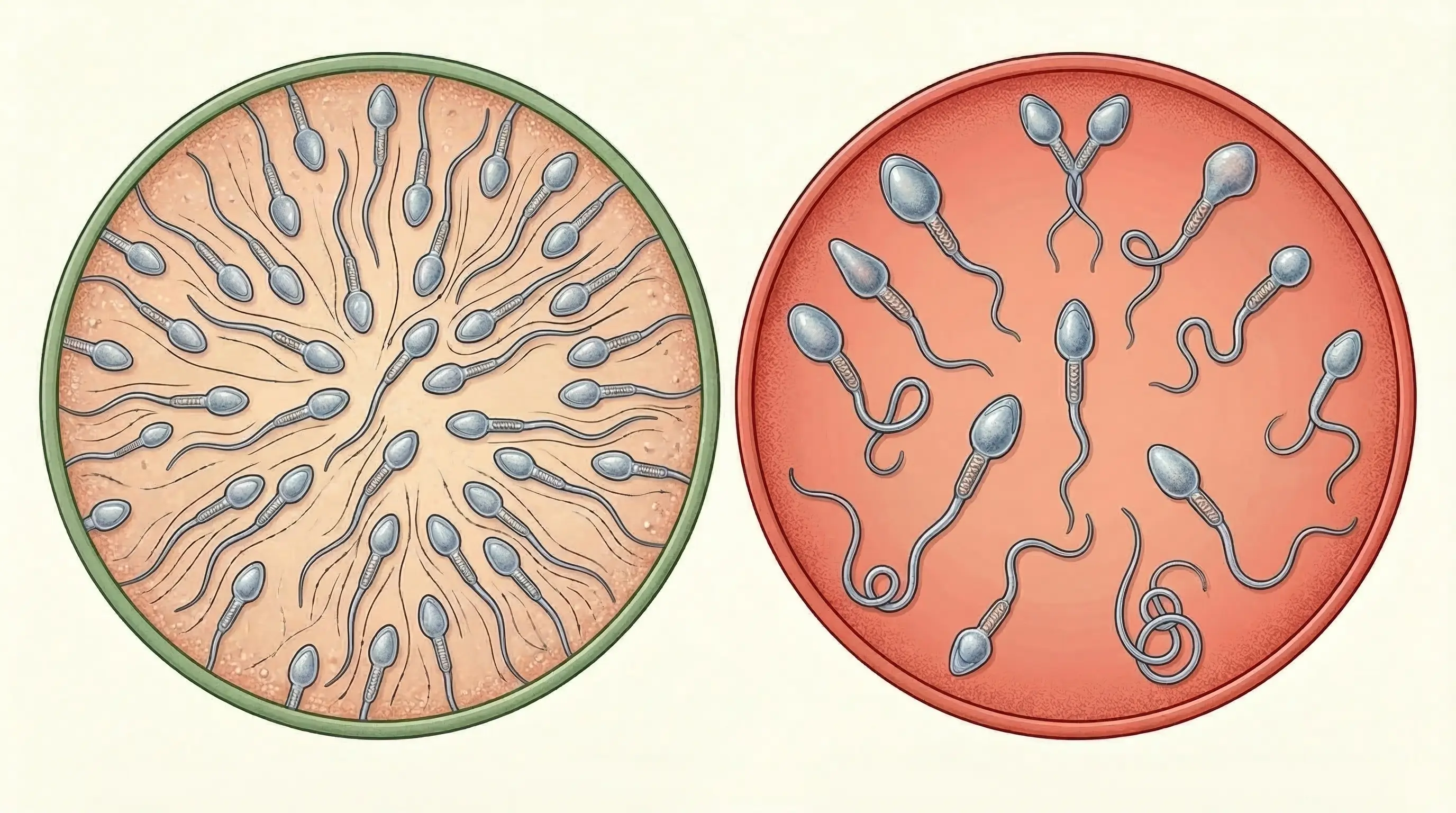
A few things stand out. First, the morphology threshold is just 4% — which means 96% of sperm in a “normal” sample don’t meet strict criteria for ideal shape. That number surprises most men. But it’s based on Tygerberg's strict criteria, which are assessed by sperm-adapted Papanicolaou staining and are intentionally demanding.[^2][^5] The criteria judge the head, midpiece, and tail all at once, so a single flaw in any one of them classifies the entire sperm as abnormal, which is why even fertile men score low. That small percentage reflects how exacting the assessment is, not poor sperm quality.
Second, the WHO 6th Edition reintroduced motility grading as fast-progressive (grade A), slow-progressive (grade B), non-progressive (grade C), and immotile (grade D), because the presence or absence of rapidly progressive sperm is clinically significant.[^2]
What Does Each Parameter on Your Report Mean?
Each line on your semen analysis describes a different aspect of the ejaculate. Some measure the fluid itself; others measure the sperm within it. Here’s what your doctor is looking at.
Semen Volume
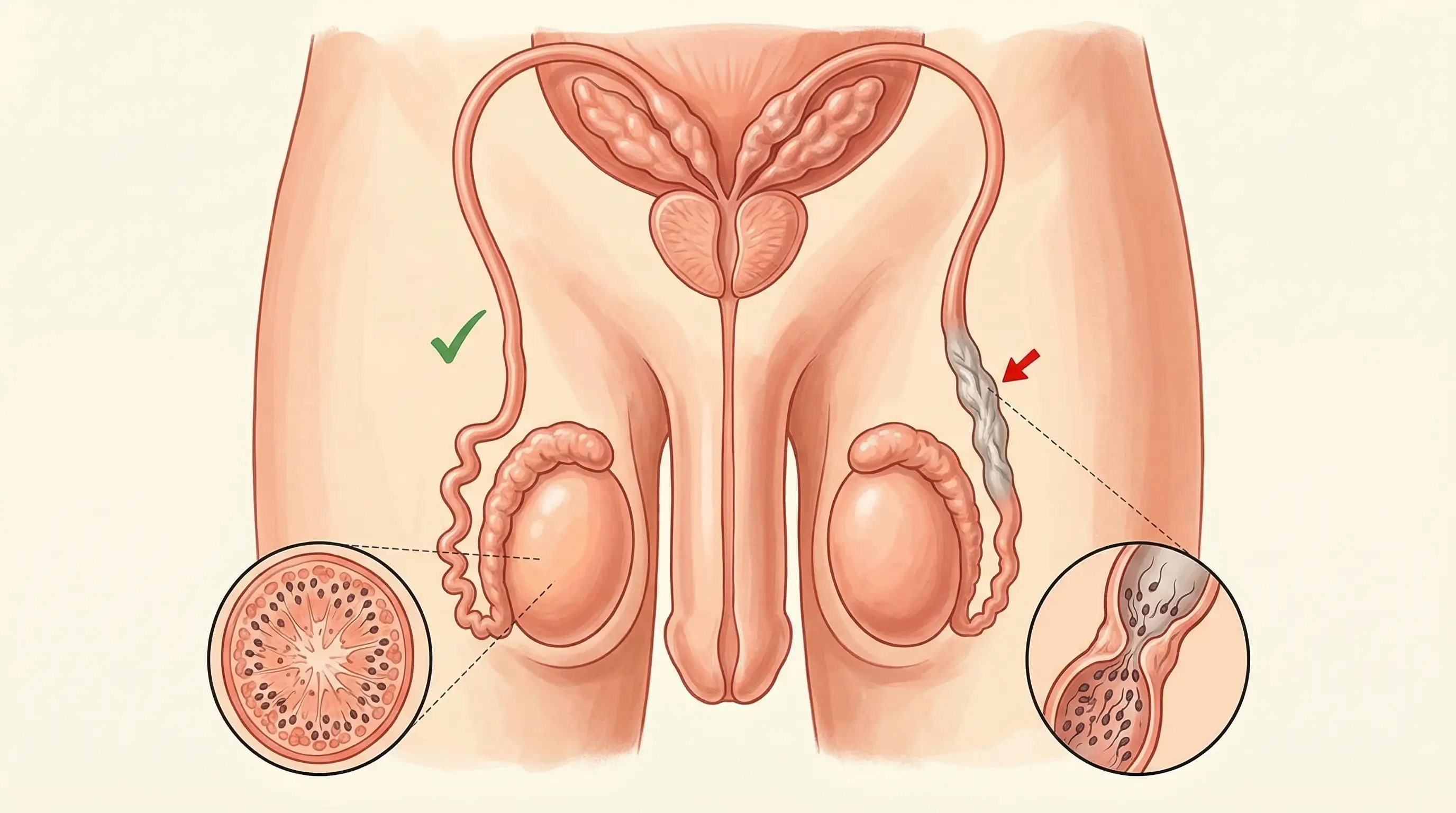
Semen volume is the total amount of fluid in one ejaculate, measured in milliliters.[^2] The lower reference limit is 1.4 mL. Low volume (hypospermia) can point to incomplete collection, short abstinence, retrograde ejaculation, or obstruction of the seminal vesicles or ejaculatory ducts.[^1][^6] A very high volume can also dilute the sperm concentration, but overall fertility depends on the total sperm count, not volume alone.[^2]
Sperm Concentration and Total Sperm Count
Sperm concentration is the number of sperm per milliliter of semen. Total sperm count multiplies that by the volume.[^2] The WHO 2021 lower limits are 16 million/mL for concentration and 39 million per ejaculate for total count, which is calculated by multiplying the total semen volume by the measured concentration.
A sperm count below 16 million/mL is classified as oligozoospermia. A complete absence of sperm is azoospermia.[^1] The 6th Edition notes that total sperm count has greater diagnostic power than concentration alone, because concentration can be misleadingly high or low depending on semen volume.[^3]
→ Learn more: Azoospermia
Motility: Total and Progressive
Motility tells you what percentage of sperm are moving. Total motility (lower limit: 42%) includes any movement at all (grade A + B + C). Progressive motility (lower limit: 30%) counts only sperm swimming forward in a straight line or large circle (grade A + B) — the ones that can actually reach an egg.[^2]
Low motility is called asthenozoospermia.[^1] It’s one of the most common findings, and it can be caused by anything from varicocele to prolonged heat exposure to oxidative stress.[^7]
→ Learn more: Asthenozoospermia, Oligozoospermia, and Teratozoospermia
Morphology
Morphology measures the percentage of sperm with a normal shape — correct head, midpiece, and tail proportions under Tygerberg strict criteria simultaneously.[^2] The lower reference limit is 4% normal forms.
This is the parameter that causes the most unnecessary panic. A 2024 review in Reproductive Medicine and Biology concluded that isolated teratozoospermia (low morphology with otherwise normal parameters) has limited predictive value for IVF outcomes and is not, by itself, an indication for ICSI.[^8][^9]
Bottom Line:
A morphology score of 3–4% sounds alarming, but it is clinically very common. What matters is the combination of all parameters, not any single number in isolation.
Vitality
Vitality measures the percentage of live sperm, assessed when fewer than 40% of sperm are motile (moving in any manner).[^2] The lower reference limit is 54% live spermatozoa. If a high proportion of immotile sperm are actually alive, the problem is likely structural (the tail) rather than lethal. If they’re dead, the concern shifts to necrozoospermia — and causes like infection or epididymal dysfunction need investigation.[^6]
pH, Liquefaction, and Appearance
Normal semen pH is in the range of 7.2 to 8.0.[^2] An abnormally low pH combined with low volume may suggest ejaculatory duct obstruction or congenital absence of the vas deferens. A markedly alkaline result above this range is often just a sample-handling artifact, but alongside a high white-blood-cell count, it can point to infection or inflammation of the genital tract.[^2][^6] The sample should liquefy within 15–30 minutes at room temperature; delayed liquefaction or high viscosity can interfere with motility assessment and may indicate prostatic dysfunction.[^6]
What Do Borderline Results Actually Mean?
A result just below — or just above — a WHO reference limit is not the same as a clear-cut abnormality. The WHO manual itself states that its reference values do not represent a limit between fertile and infertile males.[^2][^10]
Here’s the catch. A 2022 critical reappraisal in Human Reproduction found that the 10 studies pooled for the WHO reference population were not statistically compatible — none of the populations were accurately described by the reference centiles.[^3] The 5th percentile of sperm concentration, for example, ranged from 11 to 36 million/mL across individual studies. The pooled cut-off of 16 million/mL is a compromise, not a universal truth.
A 2022 study by Boeri et al. compared the WHO 5th Edition thresholds to the updated 6th Edition values in a large clinical cohort. The conclusion: changing the reference criteria reclassified a meaningful proportion of men from “abnormal” to “normal” — without changing their actual fertility.[^11]
Important:
No single parameter predicts fertility on its own. A multiparametric interpretation of the entire male’s and partner’s reproductive potential is needed for a reliable prediction of live birth.
An article in Reproductive BioMedicine Online put it provocatively: “Who cares about oligozoospermia when we have ICSI?” The answer — everyone should.[^12] Low sperm count still warrants investigation because it may signal an underlying, treatable condition, and because abnormal semen parameters are associated with broader male health risks, including higher rates of cardiovascular disease and diabetes.[^13]
→ Learn more: Male Infertility
Why Isn’t One Semen Analysis Enough?
Because semen quality fluctuates — sometimes dramatically. Sperm production (spermatogenesis) takes approximately 74 days.[^2] That means anything that affected your body two to three months ago — a fever, a round of antibiotics, a stressful period, a change in sleep patterns — can show up in today’s results.
A 2022 study of 513 men using at-home sperm testing kits found that only 51.2% of second analyses confirmed the classification from the first test.[^14] Nearly half of the men would have been categorized differently based on a single sample. One caveat: this study relied on at-home testing kits, which have different quality control and precision than a laboratory analysis, so its exact figures should be read with some caution — lab-based semen analysis remains the gold standard.[^14]
Even more striking: a 2023 study by Boeri et al. examined 1,358 infertile men whose first semen analysis was above WHO reference limits. On repeat testing, approximately 41% had abnormal parameters.[^15] That’s four in ten men who looked “normal” on their first test.
Both the WHO and the AUA/ASRM guidelines recommend at least two semen analyses before drawing clinical conclusions.[^16][^17] The repeat test should be performed 2–4 weeks after the first, although some guidelines suggest a gap of at least 4 weeks.[^18]
Bottom Line:
A single semen analysis is a snapshot, not a photograph. Lifestyle, illness, abstinence duration, and even seasonal variation can shift your numbers. Always confirm abnormal results before making treatment decisions.
What Are Advanced Semen Tests and When Are They Needed?
Standard semen analysis covers the basics, but it doesn’t tell you everything about sperm function. When results are borderline, when unexplained infertility persists, or when assisted reproductive technology (ART) has failed, your doctor may recommend advanced sperm testing.[^19]
What Is Sperm DNA Fragmentation (SDF)?
SDF test measures the integrity of the genetic material inside the sperm head.[^20] Elevated DNA fragmentation is associated with reduced pregnancy rates in both natural conception and ART, and with a higher risk of recurrent pregnancy loss.[^21]
A 2021 consensus by Esteves et al. recommended SDF testing in couples with unexplained infertility, idiopathic male infertility, recurrent pregnancy loss, and after failed IUI or IVF/ICSI.[^21] Different tests (TUNEL, SCSA, Comet assay, SCD) measure different types of DNA damage and produce non-interchangeable results — so the specific method and its reference threshold matter.[^22]
What Are Antisperm Antibodies (ASA)?
Antisperm antibodies are immune proteins that attach to sperm and impair motility, fertilization, or both.[^23] The WHO 6th Edition no longer provides evidence-based reference values for ASA tests (MAR test and immunobead test), noting that each laboratory should define its own normal ranges by testing fertile men.[^2]
What About Oxidative Stress Testing?
Elevated reactive oxygen species (ROS) can damage sperm membranes, DNA, and motility.[^19] Oxidative stress testing is not yet part of the standard semen analysis, but it can help explain abnormal results when no other cause is identified and may guide antioxidant therapy decisions.
Key Insight:
Advanced tests are not a routine add-on. They’re indicated when standard results don’t explain the clinical picture or when treatment has unexpectedly failed.
What Factors Can Affect Your Semen Analysis Results?
Semen parameters don’t exist in a vacuum. They respond to what’s happening in your body and environment right now — and what happened over the past approximately 74 days of sperm development.
A 2024 study in the Journal of Assisted Reproduction and Genetics examined semen variability across repeat tests and found that lifestyle and biological factors — not just random fluctuation — drove meaningful differences between samples.[^24]
Factor | Effect on Semen Parameters |
Abstinence duration | Too short (<2 days) reduces volume and cell count; too long (>7 days) reduces motility and increases DNA damage. |
Heat exposure | High ambient temperature, hot baths, saunas, and laptop use are associated with decreased concentration, motility, and morphology. |
BMI and obesity | Higher BMI is associated with lower sperm concentration and motility. |
Smoking | Associated with reduced concentration, motility, and morphology. |
Alcohol | Heavy consumption is associated with impaired semen parameters. |
Diet | Adherence to the Mediterranean diet (rich in vegetables, fruits, whole grains, olive oil, and fish, with limited red meat and processed foods) is associated with higher sperm count, motility, and morphology. |
Mobile phone use | Higher use is associated with lower sperm concentration and total count, though the effect may be decreasing with newer phone technologies. |
Sources: Lyons et al. (2024);[^24] Hoang-Thi et al. (2022);[^29] Rotimi et al. (2024);[^7] Piera-Jordan et al. (2024);[^30] Agarwal et al. (2025);[^31] Rahban et al. (2023);[^32] Melinawati et al. (2023)[^33]
This is exactly why sample collection matters. Abstinence should be 2–7 days. It’s usually produced by masturbation at the clinic, which is the preferred setting, though home collection is also possible as long as the sample reaches the lab in time.[^6] The sample must be collected completely, kept at body temperature, and delivered to the lab within 30–60 minutes.[^2] Collecting the whole ejaculate matters because the first portion is the richest in sperm: it carries the concentrated spermatozoa released from the epididymis along with the early prostatic fluid, while the later fractions are mostly seminal vesicle fluid. Losing that first part skews the results far more than missing any other portion.[^2] If any of these steps were off, your results might not reflect your actual fertility potential.
→ Learn more: Varicocele
What Do the Diagnostic Terms on Your Report Mean?
If your results fall outside the reference limits, your report may include medical terminology to classify the type of abnormality. Here are the terms you’re most likely to encounter.
Term | Meaning |
Normozoospermia | All measured parameters within WHO reference limits. |
Oligozoospermia | Sperm concentration below 16 million/mL. |
Asthenozoospermia | Total motility below 42% or progressive motility below 30%. |
Teratozoospermia | Normal morphology below 4%. |
Oligoasthenoteratozoospermia (OAT) | All three parameters — concentration, motility, and morphology — are below reference limits. |
Azoospermia | No sperm detected in the ejaculate. |
Leukocytospermia | White blood cells above 1.0 million/mL, suggesting possible infection or inflammation. |
Necrozoospermia | High percentage of dead sperm with low or absent motility. |
Sources: WHO Laboratory Manual, 6th Edition (2021);[^2] Sunder & Leslie, StatPearls (2022)[^6]
Many men receive a report with multiple terms — “oligoasthenozoospermia,” for instance. That’s not two separate conditions; it’s one pattern that often shares a common underlying cause, such as varicocele — the most common correctable cause of male infertility.[^1]
Is It Normal to Feel Overwhelmed by Abnormal Results?
Yes. A 2024 systematic analysis in the Asian Journal of Andrology found that a diagnosis of male infertility is associated with anxiety, depression, reduced self-esteem, and perceived loss of masculinity.[^25]
This can sound alarming. It usually isn’t a permanent state — but it is something to take seriously. The ESHRE guidelines on psychosocial care in infertility recommend that fertility clinics provide access to psychological support as part of routine care.[^26]
Receiving information about what the results actually mean — and learning that many abnormalities are treatable or manageable — can itself reduce stress. A randomized controlled trial showed that men who received an information leaflet before their first fertility evaluation reported lower infertility-related stress at the clinic.[^27]
When Should You See a Reproductive Specialist?
Not every abnormal semen analysis requires a visit to a specialist — but certain patterns should prompt a referral. The 2024 AUA/ASRM guidelines and a 2019 referral guide for gynecologists and reproductive endocrinologists recommend seeing a reproductive specialist in the following scenarios.[^16][^28]
Azoospermia (no sperm found) or severe oligozoospermia (< 5 million/mL)
Consistently abnormal results on two or more analyses
Known or suspected varicocele
Recurrent IUI or IVF failure
Recurrent pregnancy loss
History of cryptorchidism (the most common genital birth defect in boys, where one or both testicles fail to descend into the scrotum), testicular trauma, genital infections, or cancer treatment
Even when the only planned treatment is IVF or ICSI, investigating the male factor is important. Abnormal semen parameters are associated with a higher risk of overall morbidity, including cardiovascular disease and diabetes.[^13][^16]
So, What Should You Do Now?
If you’re looking at your semen analysis report and wondering what comes next, here’s a clear path forward.
Step 1: Understand what your numbers mean
Use the WHO 2021 reference table in this article to compare your results. Focus on the overall pattern — not any single parameter.
Step 2: Don’t panic over one test
If results are abnormal, schedule a repeat analysis in 2–4 weeks. Nearly half of the results change classification on the second test.
Step 3: Review collection conditions
Was abstinence between 2–7 days? Was the sample complete? Was it delivered to the lab within the required time? Any deviation can skew results.
Step 4: Consider lifestyle adjustments
Address modifiable factors: reduce heat exposure, maintain a healthy BMI, follow a Mediterranean-style diet, and limit alcohol and tobacco. These changes take approximately 74 days to affect semen quality.
Step 5: Compare clinics and choose the right specialist
If your confirmed results indicate a male factor, compare fertility clinics based on their experience with your specific condition, available diagnostic tests, treatment protocols, and success rates.
→ Compare fertility clinics worldwide: MedicalNavigator.com/fertility-clinics
Too Long, Didn’t Read
The WHO 2021 lower reference limits are 5th-percentile values from fertile men, not fertility pass/fail thresholds.
Key thresholds: sperm concentration ≥16 million/mL, total motility ≥42%, morphology ≥4% normal forms.
A single abnormal result is unreliable — nearly 50% of repeat tests change the classification.
No single parameter predicts fertility alone; your doctor evaluates the overall pattern alongside your partner’s status.
Advanced tests like DNA fragmentation are indicated after unexplained infertility, recurrent loss, or failed ART.
Abnormal semen results are linked to broader health risks — always complete a full male evaluation.
References
[^1]: Brannigan RE, Hermanson L, Kaczmarek J, et al. Updates to Male Infertility: AUA/ASRM Guideline (2024). Journal of Urology. 2024;212(6):789–799.
[^2]: World Health Organization. WHO Laboratory Manual for the Examination and Processing of Human Semen, 6th Edition. WHO, Geneva, 2021.
[^3]: Paffoni A, Somigliana E, Boeri L, Viganò P. The statistical foundation of the reference population for semen analysis included in the sixth edition of the WHO manual: a critical reappraisal of the evidence. Human Reproduction. 2022;37(10):2237–2245.
[^4]: Boitrelle F, Shah R, Saleh R, et al. The Sixth Edition of the WHO Manual for Human Semen Analysis: A Critical Review and SWOT Analysis. Life. 2021;11(12):1368.
[^5]: Chung E, Atmoko W, Saleh R, Shah R, Agarwal A. Sixth edition of the World Health Organization laboratory manual of semen analysis: Updates and essential take away for busy clinicians. Arab Journal of Urology. 2023;22(2):71–74.
[^6]: Sunder M, Leslie SW. Semen Analysis. In: StatPearls [Internet]. Treasure Island (FL): StatPearls Publishing; 2022.
[^7]: Rotimi SO, et al. Implications of lifestyle factors on male reproductive health. Journal of Reproduction and Infertility. 2024;25(2):79–91.
[^8]: Pelzman DL, Sandlow JI. Sperm morphology: Evaluating its clinical relevance in contemporary fertility practice. Reproductive Medicine and Biology. 2024;23(1):e12594.
[^9]: Atmoko W, Savira M, Shah R, Chung E, Agarwal A. Isolated teratozoospermia: revisiting its relevance in male infertility: a narrative review. Translational Andrology and Urology. 2024;13(2):260–273.
[^10]: EAU Guidelines Panel. EAU Guidelines on Sexual and Reproductive Health — Male Infertility. EAU Guidelines. 2026 Edition.
[^11]: Boeri L, Fallara G, Pozzi E, et al. The impact of different WHO reference criteria for semen analysis in clinical practice. Andrology. 2022;10(6):1134–1142.
[^12]: Esteves SC, Humaidan P, Ubaldi FM, et al. Who cares about oligozoospermia when we have ICSI? Reproductive BioMedicine Online. 2022;44(3):397–409.
[^13]: Sciorio R, Tramontano L, Adel M, Fleming S. Decrease in Sperm Parameters in the 21st Century: Obesity, Lifestyle, or Environmental Factors? Journal of Personalized Medicine. 2024;14(2):198.
[^14]: Aznavour Y, Navarrete F, Badreddine J, et al. Semen parameter variability among users of at-home sperm testing kits. BMC Urology. 2022;22(1):184.
[^15]: Boeri L, Pozzi E, Capogrosso P, et al. Infertile men with semen parameters above WHO reference limits at first assessment may deserve a second semen analysis. PLoS ONE. 2023;18(1):e0280519.
[^16]: Practice Committee of the ASRM. Diagnosis and treatment of infertility in men: AUA/ASRM guideline part I. Fertility and Sterility. 2021;115(1):54–61.
[^17]: Blickenstorfer K, Voelkle M, Xie M, et al. Are WHO Recommendations to Perform 2 Consecutive Semen Analyses for Reliable Diagnosis of Male Infertility Still Valid? The Journal of Urology. 2019;201(4):783–791.
[^18]: Punjani N, Wald G, Al-Hussein Alwamlh O, et al. Optimal timing for repeat semen analysis during male infertility evaluation. F&S Reports. 2021;2(2):172–175.
[^19]: Softness KA, Trussler JT, Carrasquillo RJ. Advanced sperm testing. Current Opinion in Urology. 2020;30(3):290–295.
[^20]: Conti D, Calamai C, Muratori M. Sperm DNA Fragmentation in Male Infertility: Tests, Mechanisms, Meaning and Sperm Population to Be Tested. Journal of Clinical Medicine. 2024;13(17):5309.
[^21]: Esteves SC, Zini A, Coward RM, et al. Sperm DNA fragmentation testing: Summary evidence and clinical practice recommendations. Andrologia. 2021;53(2):e13874.
[^22]: Barbaróșie C, Agarwal A, Henkel R. Diagnostic value of advanced semen analysis in evaluation of male infertility. Andrologia. 2021;53:e13625.
[^23]: Gupta S, Sharma R, Agarwal A, et al. Antisperm Antibody Testing: A Comprehensive Review of Its Role in the Management of Immunological Male Infertility. The World Journal of Men’s Health. 2022;40(3):380–398.
[^24]: Lyons HE, Gyawali P, Mathews N, et al. The influence of lifestyle and biological factors on semen variability. Journal of Assisted Reproduction and Genetics. 2024;41(4):1097–1109.
[^25]: Biggs SN, Halliday J, Hammarberg K. Psychological consequences of a diagnosis of infertility in men: a systematic analysis. Asian Journal of Andrology. 2024;26(1):10–19.
[^26]: European Society of Human Reproduction and Embryology. Routine psychosocial care in infertility and medically assisted reproduction — a guide for fertility staff. ESHRE Guidelines. 2023.
[^27]: Pook M, Krause W. The impact of treatment experiences on the course of infertility distress in male patients. Human Reproduction. 2005;20(3):825–828.
[^28]: Farber NJ, Madhusoodanan VK, Gerkowicz SA, et al. Reasons that should prompt a referral to a reproductive urologist. Gynecology and Pelvic Medicine. 2019;2:20.
[^29]: Hoang-Thi AP, Dang-Thi AT, Phan-Van S, et al. The Impact of High Ambient Temperature on Human Sperm Parameters: A Meta-Analysis. Iranian Journal of Public Health. 2022;51(4):710–723.
[^30]: Piera-Jordan CA, Prieto Huecas L, Serrano De La Cruz Delgado V, et al. Influence of the Mediterranean diet on seminal quality — a systematic review. Frontiers in Nutrition. 2024;11:1287864.
[^31]: Agarwal R, Salas-Salvadó J, Davila-Cordova E, et al. Mediterranean Diet, Semen Quality, and Medically Assisted Reproductive Outcomes in the Male Population: A Systematic Review and Meta-Analysis. Advances in Nutrition. 2025;16(8):100454.
[^32]: Rahban R, Senn A, Nef S, Röösli M. Association between self-reported mobile phone use and the semen quality of young men. Fertility and Sterility. 2023;120(6):1181–1192.
[^33]: Melinawati E, Prakosa T, Budihastuti UR, et al. The Impact of Heat Exposure, Obesity, and Physical Activity on Sperm Quality: An Observational Study. Andrologia. 2023;2023:9142450.
This guide is for informational purposes only. Always consult qualified healthcare providers for personalized recommendations. For full details, read our Medical Disclaimer.

Author of the article
Date of publication