


What Is Infertility?
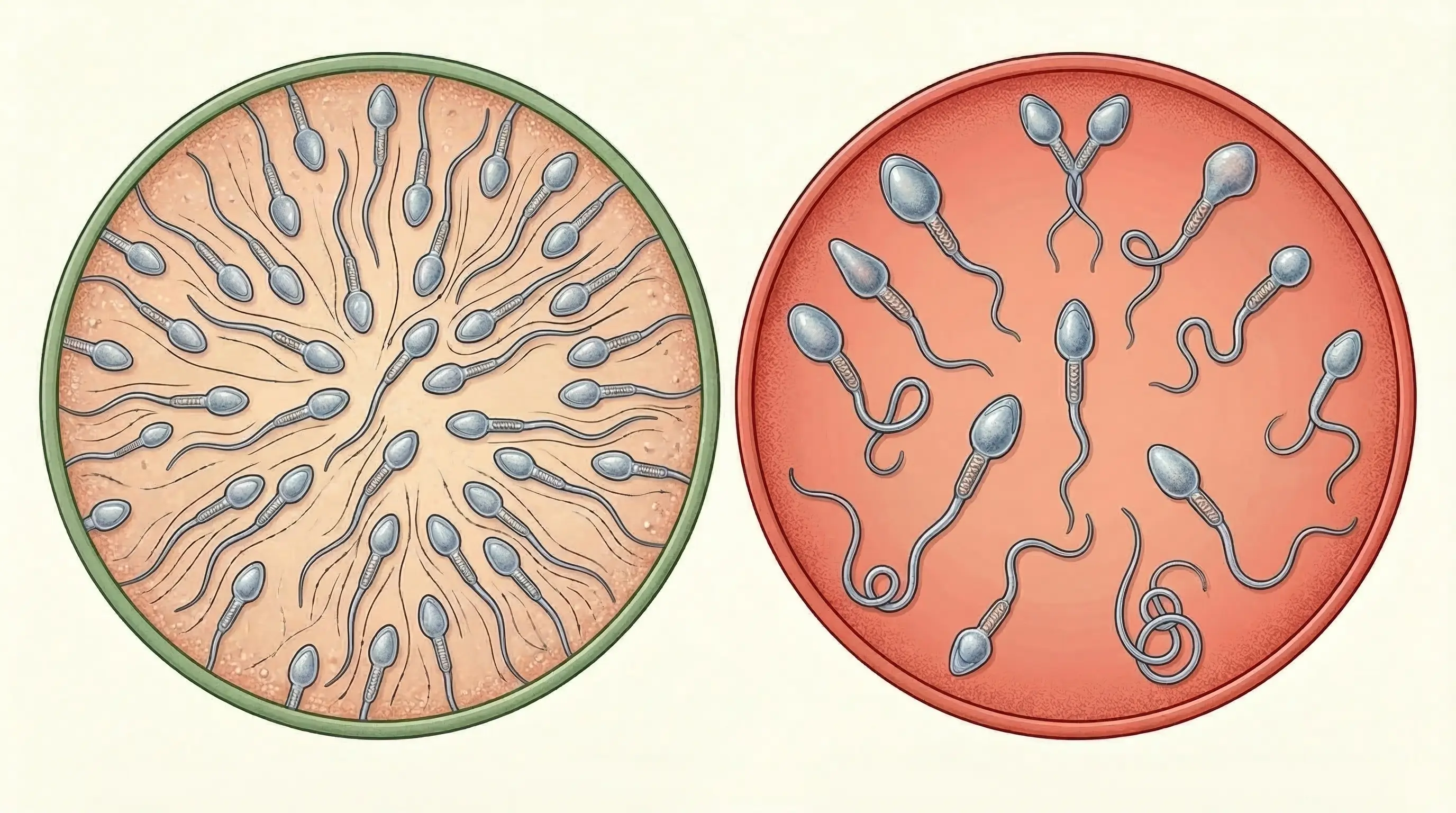
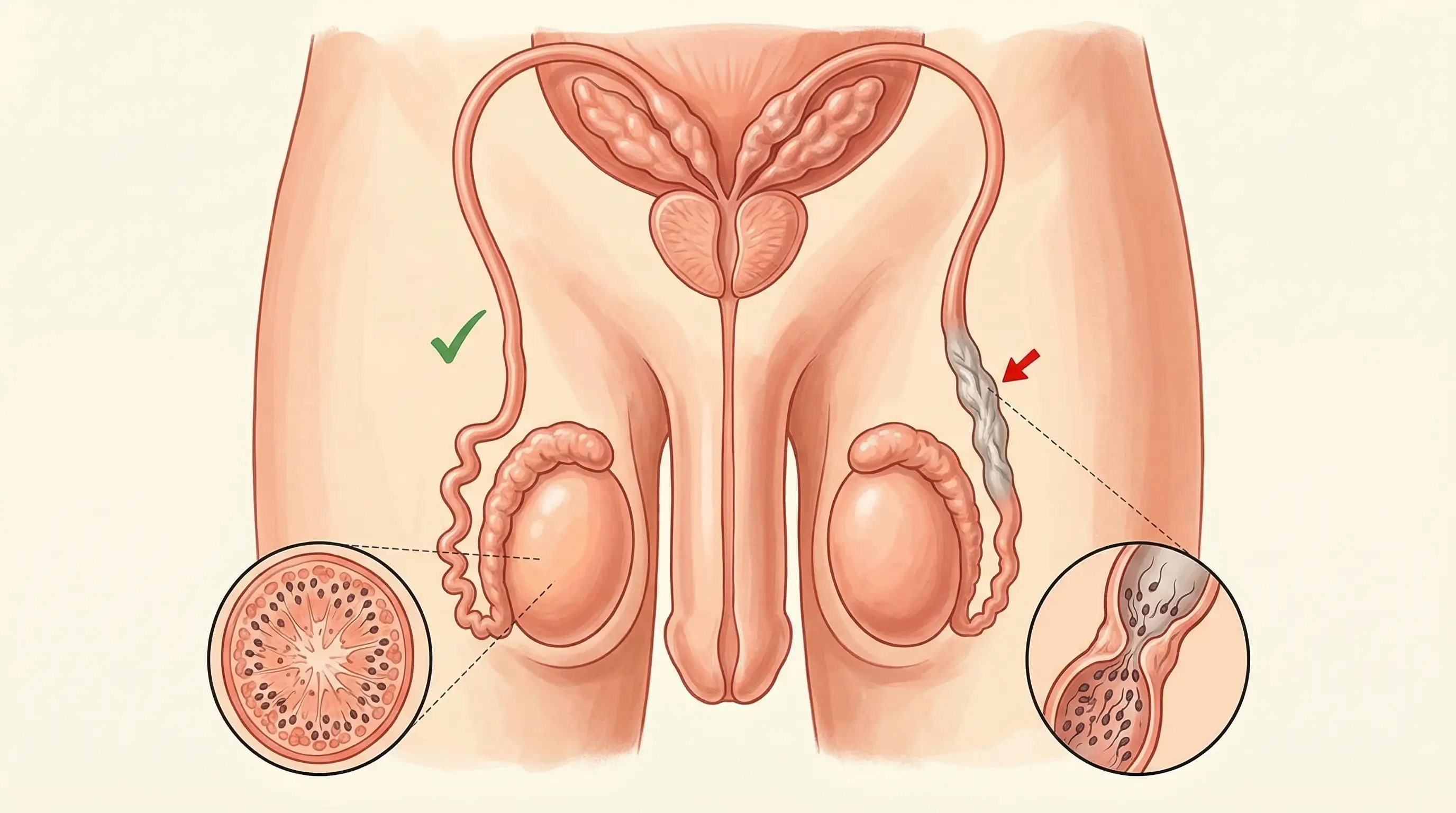
Infertility is classified as a disease of the reproductive system by the World Health Organization (WHO), defined as the failure to achieve a clinical pregnancy after 12 months of regular, unprotected sexual intercourse, or after 6 months in women aged 35 years or older.[^1][^2] It affects approximately 1 in 6 people at some point in their reproductive lives worldwide.[^2]
Infertility may be caused by female factors, male factors, a combination of both, or may remain unexplained. Both stress and infertility reinforce each other in a reciprocal relationship — the question is whether stress is a cause of infertility, a consequence of it, or both.[^6]
→ Learn more: Infertility
How Does Stress Affect Your Reproductive Hormones?
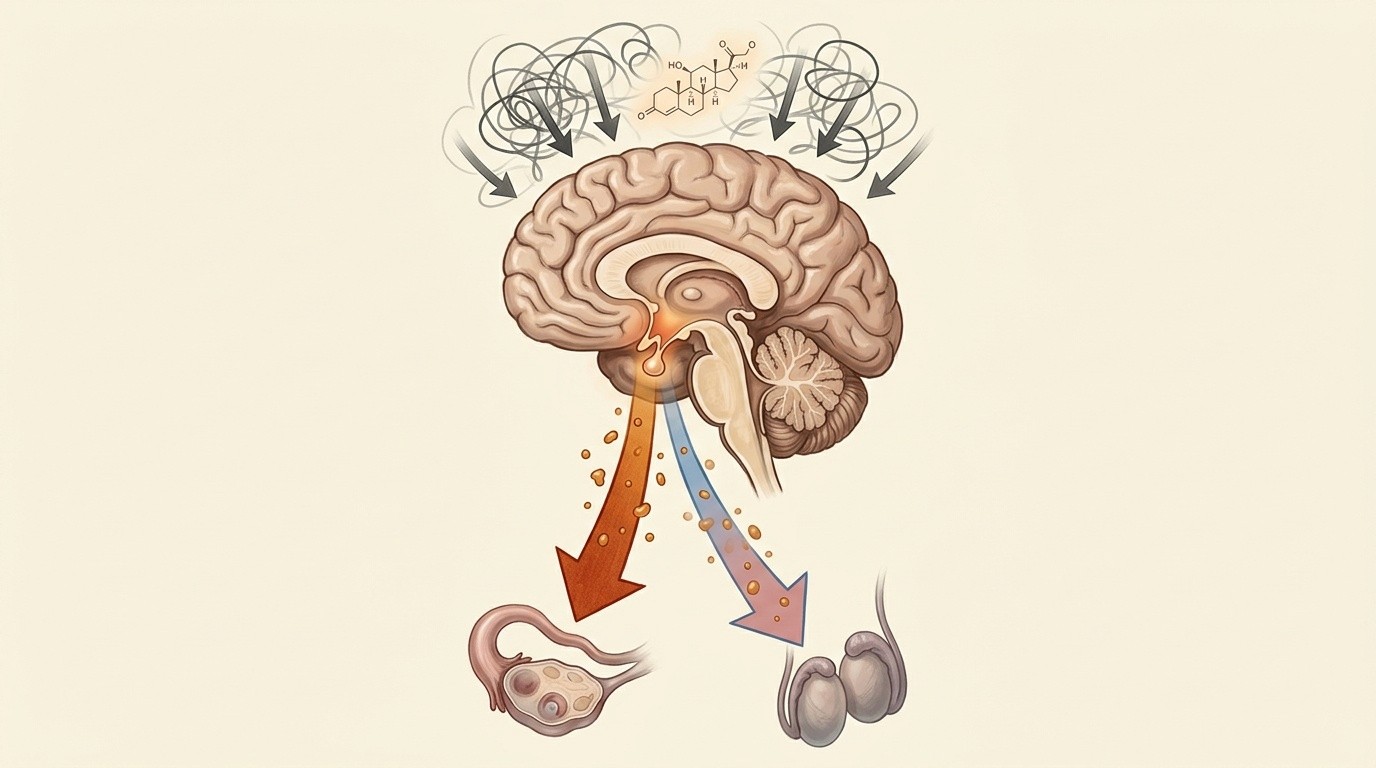
When your brain perceives a threat — whether it is a job crisis, a relationship conflict, or months of negative pregnancy tests — it activates two major stress systems. First, the sympathetic-adrenal-medullary (SAM) pathway releases adrenaline for the immediate “fight or flight” response. Second, the hypothalamic-pituitary-adrenal (HPA) axis triggers the release of cortisol, the body’s primary stress hormone.[^4]
Here is where fertility enters the picture. The stress and reproductive systems share the same control centre — the hypothalamus. When the HPA axis is chronically activated, elevated cortisol and corticotropin-releasing hormone (CRH) can suppress gonadotropin-releasing hormone (GnRH), which is the master signal that drives the entire reproductive cascade.[^4][^6] Without adequate GnRH pulses, the pituitary gland reduces its output of luteinizing hormone (LH) and follicle-stimulating hormone (FSH) — the hormones directly responsible for ovulation in women and sperm production in men.[^4][^11]
Recent evidence also points to kisspeptin neurons in the hypothalamus as a critical link. These neurons secrete kisspeptin, a protein that directly stimulates GnRH release. Both CRH and cortisol receptors have been identified on kisspeptin neurons, suggesting that chronic stress may inhibit their function — effectively placing a “brake” on reproduction.[^12] That said, much of this evidence comes from animal models or extreme clinical scenarios. Whether the everyday psychological stress most people experience is powerful enough to meaningfully disrupt this pathway remains an open question.
Important:
This biological mechanism is well established in animal models and in extreme human cases. However, whether everyday psychological stress is intense enough to trigger this cascade in most people remains one of the most debated questions in reproductive medicine.[^4][^5]
Does Stress Affect Female Fertility?
What Do the Largest Population Studies Show?
The most frequently cited evidence comes from the LIFE Study (Longitudinal Investigation of Fertility and the Environment), a prospective U.S. cohort of 501 couples followed for up to 12 months as they tried to conceive. The researchers measured two salivary stress biomarkers — cortisol (HPA axis) and alpha-amylase (SAM pathway) — at two time points before pregnancy. Women in the highest tertile of alpha-amylase had a 29% decrease in the chance of pregnancy each cycle (technically measured as odds in statistical analysis), which was associated with a greater than 2-fold increased risk of meeting the definition of clinical infertility (relative risk = 2.07; 95% CI: 1.04–4.11). No association was found with salivary cortisol.[^7]
However, the picture is far from unanimous. A North American preconception cohort study found that perceived stress scores at enrollment were not associated with reduced fecundability (the probability of conceiving in a single cycle) in either women or men.[^8] Similarly, a prospective study of women with proven fertility found that daily perceived stress was not adversely associated with time to pregnancy.[^9] A 2023 systematic review of cortisol and infertility concluded that the findings are mixed and the relationship appears bidirectional — infertility itself causes stress and raises cortisol, making it very difficult to establish whether stress came first.[^10]
When Stress Does Shut Down Your Cycle: Functional Hypothalamic Amenorrhea
There is one scenario in which the connection between stress and infertility is not controversial at all. Functional hypothalamic amenorrhea (FHA) occurs when psychosocial stress, disordered eating, and/or excessive exercise disrupt GnRH pulsatility severely enough to stop ovulation and menstruation entirely.[^11][^12] It is responsible for approximately one-third of all cases of secondary amenorrhea and is estimated to affect approximately 17 million women worldwide.[^12]
FHA is a diagnosis of exclusion — meaning it is confirmed only after organic causes of amenorrhea (such as PCOS, thyroid dysfunction, and premature ovarian insufficiency) have been ruled out.[^11] The Endocrine Society’s clinical practice guideline recognises three main triggers: weight loss, excessive exercise, and psychological stress — often in combination.[^11]
The encouraging news: FHA is generally reversible with appropriate treatment. Addressing the underlying stressor — whether through improved nutrition, reduced exercise, or psychological support such as cognitive behavioural therapy (CBT) — typically restores GnRH pulsatility, and with it, ovulation and fertility.[^11][^12]
Does Stress Affect Male Fertility?
The evidence on stress and sperm quality is, if anything, even more contradictory than in women.
A study of 644 men from two preconception cohorts (PRESTO and SnartForaeldre.dk) used the Perceived Stress Scale (PSS) and in-home semen testing. The result: perceived stress was not meaningfully associated with semen volume, sperm concentration, or total sperm count. Comparing the highest to the lowest stress groups, the adjusted differences were small and statistically non-significant.[^13]
On the other hand, a study of men attending a fertility centre found that higher PSS scores were linked to lower total sperm count and lower normal morphology, but crucially, no associations were found with reproductive hormone levels or DNA damage markers.[^14]
Perhaps the most surprising result comes from the MOXI Trial (Males, Antioxidants, and Infertility), which enrolled 112 men with confirmed male-factor infertility. When researchers measured salivary cortisol and alpha-amylase, they found that higher cortisol was actually associated with higher total sperm count — for every 1 ng/mL increase in salivary cortisol, total sperm count increased by 13.9 million (95% CI: 2.5–25.3). Neither stress biomarker was associated with worse pregnancy or live birth rates in the couples.[^15]
A 2026 narrative review synthesised both animal and human evidence and concluded that while chronic stress can promote oxidative stress in the male reproductive tract through cortisol-mediated and inflammatory pathways — potentially harming sperm DNA, motility, and viability — most human studies only show connections (not cause), look at one point in time, and may be affected by reverse cause-and-effect (where the outcome actually influences the cause).[^16]
Does Stress Affect IVF Outcomes?
Many patients undergoing in vitro fertilisation (IVF) wonder whether their stress levels during treatment could sabotage the outcome. The research here is nuanced.
A 2024 randomised controlled trial from Hungary tested the Mind/Body Program for Infertility (MBPI) — a 10-week group intervention combining CBT techniques, relaxation, and psychoeducation — against a support group of women with elevated distress. Both groups showed significant improvements in depression, infertility-specific stress, and quality of life. However, the MBPI group achieved a significantly greater reduction in trait anxiety compared with the support group. Critically, there was no statistically significant difference in pregnancy outcomes between the two groups.[^17]
Conversely, a meta-analysis of 10 studies with 1,520 participants found that CBT significantly improved pregnancy rates in women undergoing IVF-embryo transfer (OR = 2.00; 95% CI: 1.35–2.96). Subgroup analysis showed that CBT delivered by professional psychologists was effective, whereas self-delivered interventions were not.[^18] Another meta-analysis of 12 studies similarly found a significant positive effect of psychosocial interventions on IVF pregnancy rates.[^19]
A pilot trial of an internet-based mind/body program found that women in the intervention group had significant reductions in anxiety, depression, and stress compared with the wait-list control group, with the odds of becoming pregnant 4.47 times higher in the intervention group (OR 95% CI: 1.56–12.85). However, the authors noted important limitations, including unmatched assessment timing, making replication with a more rigorous design essential.[^20]
Bottom Line:
Psychological support during IVF consistently improves emotional well-being. Whether it independently boosts your chances of conceiving remains an open scientific question — but reducing distress is valuable in its own right.
So, What Should You Do Now?
Regardless of where the science lands on causation, managing stress is something you can do that may support your fertility — and will almost certainly benefit your overall health.
Step 1: Stop Blaming Yourself
If you are struggling to conceive, stress is unlikely to be the primary reason. Most causes of infertility are biological — ovulatory disorders, tubal factors, sperm abnormalities, and age-related decline — and require medical evaluation. Never let anyone reduce your medical condition to “you just need to relax.”
Step 2: Get a Full Medical Evaluation
Both partners should be assessed. If you have been trying for 12 months (or 6 months if you are over 35), see a fertility specialist. If your periods have stopped or become very irregular, ask your doctor about FHA — especially if you are under significant stress, exercising heavily, or restricting your diet.11,12
Step 3: Address What You Can Control
Chronic, unrelenting stress is not good for any aspect of your health. Evidence-based strategies include: CBT or other structured psychological support,17 mindfulness and relaxation techniques, regular moderate physical activity (but not excessive exercise11), adequate sleep, and balanced nutrition. The Endocrine Society specifically recommends CBT for women with FHA.11
Step 4: Consider Professional Mental Health Support
Infertility-related distress is real and clinically significant. A significant number of women experiencing infertility may also face mental health challenges, with some studies suggesting this could be as many as 40%.17 Do not hesitate to seek psychological help — not because “stress causes infertility,” but because your emotional well-being matters in its own right.
Step 5: Choose the Right Fertility Clinic
A clinic that addresses not only the medical side of infertility but also offers psychological support and a compassionate team can make a meaningful difference to your experience and outcomes.
→ Compare fertility clinics worldwide: MedicalNavigator.com/fertility-clinics
Too Long, Didn’t Read
The LIFE Study found 29% lower pregnancy odds in high-stress women, but other large studies found no link.
FHA accounts for approximately one-third of secondary amenorrhea cases and is generally reversible with treatment.
The evidence on stress and sperm quality is contradictory — one study even found that higher cortisol levels were linked to higher sperm counts.
CBT delivered by a professional may improve IVF pregnancy rates, but the most rigorous trials have not confirmed this.
Psychological support consistently improves emotional well-being during fertility treatment, regardless of its effect on conception.
Stress is unlikely to be the primary cause — a full medical evaluation of both partners should come first.
References
[^1]: Zegers-Hochschild F, Adamson GD, Dyer S, et al. The International Glossary on Infertility and Fertility Care, 2017. Hum Reprod. 2017;32(9):1786–1801.
[^2]: World Health Organization. Infertility Fact Sheet. November 2023.
[^3]: Wymelenberg S; Institute of Medicine (US). Science and Babies: Private Decisions, Public Dilemmas. Washington (DC): National Academies Press (US); 1990.
[^4]: Joseph DN, Whirledge S. Stress and the HPA Axis: Balancing Homeostasis and Fertility. Int J Mol Sci. 2017;18(10):2224.
[^5]: Bian C, Cao J, Chen K. The Relationship Between Psychological Stress and Ovulatory Disorders and Its Molecular Mechanisms: A Narrative Review. J Psychosom Obstet Gynecol. 2024;45(1):2418110.
[^6]: Ramya S, Poornima P, Jananisri A, et al. Role of Hormones and the Potential Impact of Multiple Stresses on Infertility. Stresses. 2023;3(2):454–474.
[^7]: Lynch CD, Sundaram R, Maisog JM, Sweeney AM, Buck Louis GM. Preconception Stress Increases the Risk of Infertility: Results from a Couple-Based Prospective Cohort Study—the LIFE Study. Hum Reprod. 2014;29(5):1067–1075.
[^8]: Wesselink AK, Wise LA, Hatch EE, et al. Perceived Stress and Fecundability: A Preconception Cohort Study of North American Couples. Am J Epidemiol. 2018;187(12):2662–2671.
[^9]: Akhter S, Marcus M, Kerber RA, Kong M, Taylor KC. Daily Perceived Stress and Time to Pregnancy: A Prospective Cohort Study of Women Trying to Conceive. Soc Sci Med. 2020;255:112987.
[^10]: Karunyam BV, Abdul Karim AK, Naina Mohamed I, et al. Infertility and Cortisol: A Systematic Review. Front Endocrinol. 2023;14:1158867.
[^11]: Gordon CM, Ackerman KE, Berga SL, et al. Functional Hypothalamic Amenorrhea: An Endocrine Society Clinical Practice Guideline. J Clin Endocrinol Metab. 2017;102(5):1413–1439.
[^12]: Saadedine M, Kapoor E, Shufelt C. Functional Hypothalamic Amenorrhea: Recognition and Management of a Challenging Diagnosis. Mayo Clin Proc. 2023;98(9):1376–1385.
[^13]: Lund KH, Laursen ASD, Grønborg TK, et al. Perceived Stress and Semen Quality. Andrology. 2023;11(1):45–53.
[^14]: Reddy AG, Williams PL, Souter I, et al. Perceived Stress in Relation to Testicular Function Markers Among Men Attending a Fertility Center. Fertil Steril. 2025;124:62–70.
[^15]: Spitzer TL, Trussell JC, Coward RM, et al. Biomarkers of Stress and Male Fertility. Reprod Sci. 2022;29(4):1262–1270.
[^16]: Kaltsas A, Papaharitou S, Dimitriadis F, Chrisofos M, Sofikitis N. Psychological Stress and Male Infertility: Oxidative Stress as the Common Downstream Pathway. Biomedicines. 2026;14(2):259.
[^17]: Szigeti FJ, Kazinczi C, Szabó G, Sipos M, Ujma PP, Purebl G. Clinical Effectiveness of the Mind/Body Program for Infertility on Wellbeing and Assisted Reproduction Outcomes: A Randomized Controlled Trial. Hum Reprod. 2024;39(8):1735–1751.
[^18]: Li YQ, Shi Y, Xu C, Zhou H. Cognitive Behavioural Therapy Improves Pregnancy Outcomes of In Vitro Fertilization–Embryo Transfer Treatment: A Systematic Review and Meta-Analysis. J Int Med Res. 2021;49(11):1–12.
[^19]: Ha JY, Park HJ, Ban SH. Efficacy of Psychosocial Interventions for Pregnancy Rates of Infertile Women Undergoing In Vitro Fertilization: A Systematic Review and Meta-Analysis. J Psychosom Obstet Gynecol. 2023;44:2142777.
[^20]: Clifton J, Parent J, Seehuus M, Worrall G, Forehand R, Domar A. An Internet-Based Mind/Body Intervention to Mitigate Distress in Women Experiencing Infertility: A Randomized Pilot Trial. PLOS ONE. 2020;15(3):e0229379.
This guide is for informational purposes only. Always consult qualified healthcare providers for personalized recommendations. For full details, read our Medical Disclaimer.

Author of the article
Date of publication