


Why Does Preparation Before Stimulation Matter?
Preparation matters because ovarian stimulation is medication-driven, time-sensitive, and built around your individual ovarian response — small things you control before day 1 shape how the entire cycle runs.
Ovarian stimulation uses hormone injections — most commonly follicle-stimulating hormone (FSH) and luteinizing hormone (LH) — to mature multiple follicles in a single cycle, instead of the one a natural cycle produces.[^1][^2] That sounds mechanical. In practice, it's eight to fourteen days of daily injections, four to six monitoring visits, blood draws at dawn, and a calendar built around a trigger shot that has to happen at a specific minute. Most of the cycle is run by the clinic. The part you control happens before it starts.
Patients often arrive at day 1 anxious — and that's normal. A 2013 pilot study by Turner and colleagues tracked anxiety across IVF and found that it peaks in the early stimulation phase, stabilizes during monitoring, and rises again at retrieval.[^21] The good news, on the clinical side, is that pre-treatment psychological state isn't what determines your pregnancy outcome. A 142-patient prospective study by Maroufizadeh and colleagues (2019), controlling for known confounders, found no relationship between pre-treatment anxiety, depression, or stress and clinical pregnancy rate.[^20] That doesn't make the anxiety disappear. It does mean the antidote is operational, not emotional — knowing in detail what's about to happen.
TIP FROM THE EMBRYOLOGIST Ask enough questions to understand your individual protocol Patients often compare protocols with friends, online groups, or previous cycles and worry when their dose or medication type is different. It usually isn't a problem. Your protocol is calculated based on your AMH, your antral follicle count (AFC), your age, your BMI, and your response history, if you have one. There's no universal dose. Ask your clinic to explain your specific starting dose and why it was chosen — you should walk out of the injection lesson knowing the answer. |
What Is Your Stimulation Protocol?
A stimulation protocol is a sequenced regimen of hormone injections — typically over 8 to 14 days — designed to grow multiple follicles to maturity in a single cycle for egg retrieval.[^1][^2][^4] The choice of protocol determines how your clinic prevents your body from ovulating before the eggs are ready to be collected.
Two protocol families dominate clinical practice. The long GnRH agonist protocol uses prolonged daily administration of an agonist to desensitize the pituitary gland; the GnRH antagonist protocol achieves the same goal — preventing a premature LH surge — by introducing immediate pituitary blockade partway through stimulation.[^6] Both work. The difference is in logistics and risk profile.
The numbers, from a 2017 systematic review and meta-analysis in Human Reproduction Update covering 50 randomized controlled trials, indicate that a long agonist protocol requires approximately 25 daily subcutaneous injections. An antagonist protocol typically uses around 5 daily antagonist injections on top of the FSH stimulation.[^6] Fewer injections, shorter analog exposure, and — clinically important — a different OHSS profile.
In the general IVF population, the same meta-analysis found that antagonist protocols were associated with lower ongoing pregnancy rates than agonist protocols (RR 0.89, 95% CI 0.82–0.96) and significantly lower OHSS rates (RR 0.63, 95% CI 0.50–0.81).[^6] Put simply, the antagonist protocol lowers OHSS risk, though the review also found a small reduction in ongoing pregnancy rates.[^6] That trade-off shifts in specific groups.
In women with polycystic ovary syndrome (PCOS) and in poor responders, antagonist protocols showed no difference in pregnancy rates versus long agonist (RR 0.97, 95% CI 0.84–1.11 for PCOS; RR 0.87, 95% CI 0.65–1.17 for poor responders) — and in PCOS, antagonists prevented one case of OHSS in every 14 treatments (95% CI 7–50).[^6] That's why protocol choice isn't a default — it's a calculation.
Key Insight:
Protocol choice is not a brand preference. In PCOS, the antagonist protocol prevents one case of OHSS for every 14 patients treated, with no penalty to pregnancy rate.[^6] In normo-responders, the same antagonist protocol may reduce ongoing pregnancy slightly while still cutting OHSS risk. Your specialist is weighing both — ask which side of the trade-off your protocol favors.
Think of a stimulation protocol like a car tuned to a specific driver. The same engine — your ovaries — runs differently depending on starting fuel (FSH dose), gear ratio (agonist or antagonist), and how often the clinic checks the dashboard (monitoring frequency). Your protocol is the tune. It is not a generic recipe.
→ Learn more: In Vitro Fertilization (IVF)
How Do You Store and Handle Your Medications?
Medications are stored according to manufacturer instructions — most gonadotropins are kept refrigerated between 2–8°C, some are stable at room temperature for a defined number of days — and storage can change once a pen or vial is opened, so confirm the rules for each medication you've been given. All must be protected from light and prepared exactly the way the clinic demonstrated.[^10]
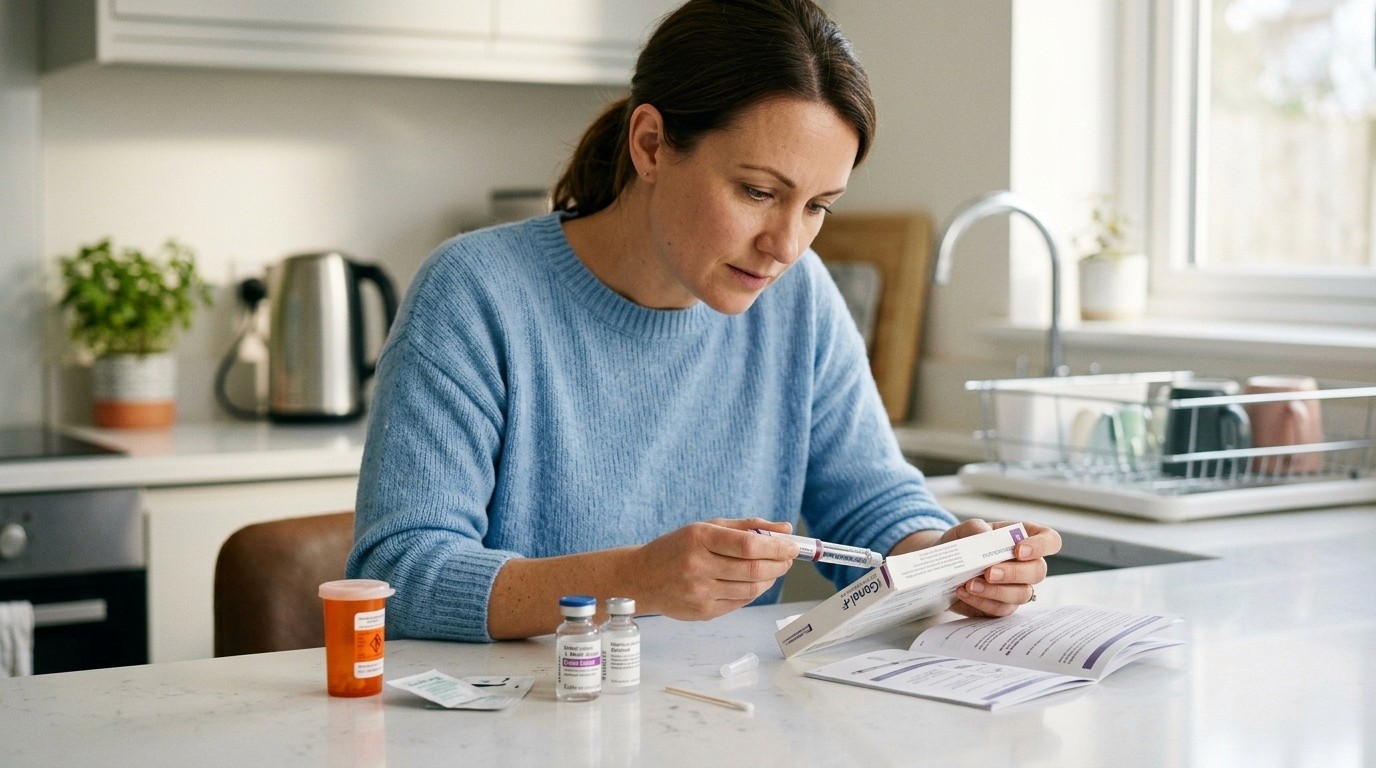
Most stimulation injections are subcutaneous (under the skin) — into the fatty tissue of the lower abdomen — using a short, fine needle. The Society for Assisted Reproductive Technology (SART) covers the practical steps in its patient guide: subcutaneous versus intramuscular (into the muscle) technique, needle gauge, site rotation to avoid bruising, and mixing powdered vials before injection.[^10] That sounds standard. It is—until you're holding the device at home, alone, at 8 PM.
A questionnaire-based survey of 663 women using a follitropin-alpha prefilled pen across 23 Japanese fertility clinics found that 83% rated the instructions easy to understand.[^11] But the more useful finding, described in the same study: patients consistently rated hands-on demonstration by a nurse or doctor as the top learning tool — above written instructions and above video.[^11] That ranking matters. It tells you where to invest your attention before day 1.
TIP FROM THE EMBRYOLOGIST Be an A student at your injection lesson Many clinics schedule the injection lesson on the day stimulation starts. Ideally, it happens at least a week before day 1, so you have time to get familiar with the device, ask questions, and feel confident before the first injection under pressure. Watching a video is not the same as doing it yourself — ask to practice with a saline-loaded device or practice pen during the lesson. Take notes. Bring your partner if they'll be helping. The first real injection is stressful enough without having to navigate an unfamiliar device. |
TIP FROM THE EMBRYOLOGIST Learn the storage and timing rules thoroughly Before the first injection, you need to know two things clearly: storage and timing. Ask your specialists directly — does this medication need to be kept in the fridge, or is it stable at room temperature, and for how long? Most daily stimulation injections allow some timing flexibility — small variations of an hour or two are often acceptable — but follow your clinic's specific instructions, not a forum post. These rules may feel small. They aren't. |
What Lifestyle Changes Should You Make in the Weeks Before?
In the weeks before stimulation, focus on what the evidence actually supports: stopping smoking, moderating alcohol, addressing BMI, finalizing supplements with your clinic, and — if you're already active — staying that way.[^12][^15]
A 2023 narrative synthesis by Schneider and colleagues in the British Journal of Midwifery walked through the lifestyle factors that influence IVF outcomes: BMI, smoking, alcohol, caffeine, diet, and exercise.[^12] The pattern is unsurprising. Smoking and excessive alcohol are consistently associated with poorer outcomes[^12]; the impact of caffeine is smaller and more debated[^12]; and BMI matters at the extremes, both high and low.[^12] None of these are new. What's new is the timing question — when in the run-up to a cycle do changes actually help?
A 2016 landmark review by Hornstein in Reproductive Sciences synthesizing decades of evidence reached the same conclusion: lifestyle factors — smoking, alcohol, caffeine, stress, exercise, and recreational drug use — are associated with IVF outcomes, and changes made in the weeks to months before a cycle are the ones with the strongest signal.[^15]
Supplements are the area where patients want the most concrete guidance and where the evidence is most uneven. A 2023 evidence-based review by Hart in Reproductive BioMedicine Online surveyed supplements used in IVF and what each one actually does — or fails to do — in controlled studies.[^13] One specific finding stands out: a 2024 study by Baldini and colleagues found that vitamin D supplementation improved embryo quality in IVF programs independently of the patient's baseline vitamin D status.[^14] That's the kind of detail to bring to your clinic — don't self-prescribe based on it, but ask whether it's relevant for you.
Exercise has a more recent and interesting finding. The PACE trial — Physical Activity during Fertility Care — was a randomized controlled trial presented in Fertility and Sterility that tested whether women already active at baseline could safely continue exercise during stimulation. The result: continued physical activity was associated with significantly lower stress levels post-retrieval and did not result in a clinically significant increase in the risk of ovarian torsion.[^16] The caveat is real: this applies to women already active, not to starting a new exercise program mid-stimulation. If you ran four times a week before the cycle, you can probably keep moving — though it's worth asking your clinic what level of activity is reasonable for your protocol, since individual risks like OHSS vary. If you didn't, this isn't the moment to start.
Bottom Line:
In the weeks before stimulation, the changes worth making are the ones with months of evidence behind them: stop smoking, moderate alcohol, address weight at the extremes, and check supplements with your clinic — particularly vitamin D. If you were already exercising, you can usually continue at a moderate level — but ask your clinic what's reasonable for your situation.[^14][^16]
What Should You Expect During Stimulation?
Expect 8 to 14 days of daily injections, regular monitoring visits every 2 to 4 days, a set of common physical side effects from rising hormone levels, and one serious but uncommon complication — ovarian hyperstimulation syndrome (OHSS) — that the monitoring is specifically designed to catch early.[^3][^17][^18]
The monitoring isn't routine box-ticking. A 2024 review by Kol and colleagues in the Journal of Assisted Reproduction and Genetics explained the clinical role each measurement plays during stimulation: transvaginal ultrasound tracks how many follicles are growing and how fast; estradiol levels show whether the follicles are producing the expected hormonal response; LH and progesterone flag whether the suppression is holding and whether the endometrium is on track.[^3] Every monitoring visit produces data the clinic uses to adjust your dose in real time — which is why missing one is more consequential than it feels.
Common side effects from rising estrogen and physically enlarged ovaries include bloating, pelvic pressure, breast tenderness, headache, and mood shifts. Most are uncomfortable but expected. The threshold for calling the clinic is any rapid worsening — sudden severe abdominal pain, rapid weight gain (more than 1 kg in 24 hours), shortness of breath, reduced urine output, or persistent vomiting. These are the early warning signs of OHSS.[^17][^18][^19]
OHSS is a serious complication of stimulation, characterized by enlarged ovaries, fluid shifts into the abdomen, and — in severe cases — reduced urine output, breathing difficulty, and clotting risk.[^17][^18] Multiple guidelines now address its prevention: the American Society for Reproductive Medicine (ASRM) practice guideline on OHSS prevention,[^17] the Royal College of Obstetricians and Gynecologists (RCOG) Green-Top Guideline No. 5 on OHSS management published in 2026,[^18] and the Society of Obstetricians and Gynecologists of Canada (SOGC) Guideline No. 315 on prevention.[^19] The trend across all three: OHSS incidence is declining with modern prevention protocols — but the protocols only work if patients report symptoms early.[^19]
Important:
Modern prevention strategies have reduced OHSS risk substantially, but severe OHSS is still a medical emergency. Call your clinic — not a general practitioner, not a pharmacy — if you experience rapid weight gain over 1 kg in 24 hours, severe abdominal pain, breathing difficulty, or reduced urine output during or after stimulation. Don't wait for the next scheduled appointment.
TIP FROM THE EMBRYOLOGIST Keep daily notes — especially side effects During stimulation, patients experience a range of changes: bloating, pelvic pressure, breast tenderness, and mood shifts. It's often hard to tell what's expected from what should be reported. A simple daily note — how you feel, any new symptoms, weight if you're tracking for OHSS risk — gives both you and the clinic a reference point. If something changes, you have a baseline to compare against, and the clinic has data instead of a vague description. Write it down at the same time each day. |
What About the Trigger Shot?
The trigger shot is given at a precise time specified by the clinic — typically 34 to 36 hours before egg retrieval — and is the single most timing-critical injection of the entire cycle.[^1][^2]
Most stimulation medications tolerate small variations in timing. The trigger does not. It signals the final maturation of the eggs and sets the clock for retrieval — and the tolerance is narrow. Being even a few hours early or late can compromise oocyte maturation and the retrieval itself.[^1][^2] Two trigger types are commonly used: human chorionic gonadotropin (hCG), the traditional option, and a GnRH agonist trigger (used in antagonist protocols), which substantially reduces OHSS risk in high responders.[^17] Which one you receive depends on your protocol and risk profile.
TIP FROM THE EMBRYOLOGIST The trigger is non-negotiable on timing When you receive your trigger instructions, set an alarm immediately — and a backup alarm. Confirm with the clinic what to do if an emergency prevents the injection from being given at the right time. Knowing the answer in advance prevents panic in the moment. The trigger isn't where you want to find out what your clinic's emergency line looks like. |
What Should You Not Change on Your Own?
Never adjust your dose, skip an injection, or stop a medication early — even if side effects worsen — without telling the clinic first. The same applies to any new medication another doctor prescribes during stimulation.
During stimulation, patients sometimes reduce their dose or skip an injection because they're bloating, uncomfortable, or anxious about OHSS. That's understandable. It can also compromise the cycle. The clinic can adjust the protocol — bring forward a monitoring scan, change the dose, switch the trigger plan — but only if they know. What they can't do is help with information they don't have.
The same rule extends past stimulation medications. If a GP prescribes an antibiotic during the cycle, if you need a painkiller after a dental visit, or if you start a new supplement, tell the clinic immediately. Some medications affect ovarian response or interact with the protocol. The clinic would rather know about a cold remedy than discover the interaction at the time of retrieval.
How Do You Stay Consistent Through the Cycle?
Stay consistent by injecting at the same time each day, attending every monitoring appointment, reporting symptoms honestly, and resisting the urge to compare your numbers to anyone else's cycle.
Every stimulation is individual. A slow start on day 5 can look completely different by day 8. A smaller, more evenly growing cohort of follicles is often clinically better than a large, uneven one. The clinic is adjusting your dose in real time based on your specific response — but only if you give them accurate information and keep your appointments.[^3][^5]
Your job during stimulation isn't to interpret the results. It's about being consistent, communicating openly, and trusting that the people monitoring you have seen this process thousands of times and know what a healthy curve looks like — even when it doesn't feel healthy to you.
TIP FROM THE EMBRYOLOGIST Trust the process — you are building something The most important thing you can do during this period is show up consistently and let the process work. Inject at the same time each day. Attend every monitoring appointment. Report symptoms honestly. Resist the urge to compare your numbers to someone else's cycle — every stimulation is individual. The clinic is adjusting your dose based on your specific response. They've seen what a normal curve looks like, even when it doesn't feel normal to you. |
How Should You Time the Preparation Steps?
Time each preparation step to the part of the cycle it actually affects. The table below maps every action to the right window before day 1.
Timing | Action |
|---|---|
4–8 weeks before | Stop smoking, moderate alcohol, address BMI extremes, and review all supplements with your clinic — including vitamin D.[^12][^13][^14][^15] |
1–2 weeks before | Complete your injection lesson; ideally, hands-on with a practice device. Set up storage (fridge space and a sharps container — a puncture-proof bin for used needles). Ask your specialist if anything about your specific dose is unclear.[^10][^11] |
Day 1 of stimulation | Start daily injections at the same time each day. Begin a daily symptom note. Confirm the monitoring schedule and your clinic's after-hours contact.[^1][^3] |
During stimulation | Attend every monitoring visit. Report any rapid worsening of symptoms. Never change dose, skip an injection, or add a new medication without telling the clinic.[^3][^17][^18] |
Trigger day | Inject at the exact time specified — typically 34–36 hours before retrieval. Set an alarm and a backup. Confirm emergency instructions before this point.[^1][^2] |
Sources: ESHRE Guidelines on Ovarian Stimulation in IVF/ICSI;[^1] Sharma & Balasundaram, StatPearls (2023);[^2] Kol et al., J Assist Reprod Genet (2024);[^3] ASRM OHSS Guideline[^17] and RCOG Green-Top No. 5 (2026)[^18]
→ Learn more: In Vitro Fertilization (IVF)
So, What Should You Do Now?
If your stimulation starts on the calendar, work through these steps in order — most fit in the week before day 1.
Step 1: Understand Your Specific Protocol
Before you leave the next consultation, make sure you can answer three questions: what protocol am I on, what is my starting dose, and why was it chosen for me? Your protocol is based on factors like your AMH, AFC, age, BMI, and response history. If anything is unclear, ask now — not on day 1.
Step 2: Do the Injection Lesson Properly
Schedule the injection lesson at least a week before stimulation. Practice with a saline-loaded or practice device. Bring your partner if they'll be helping. Take notes. Confirm storage rules for every medication you've been prescribed.
Step 3: Finalize Lifestyle and Supplements
Stop smoking, moderate alcohol, and address weight at the extremes if you haven't already — the strongest signal is in the weeks to months before the cycle.[^12][^15] Review every supplement with your clinic, particularly vitamin D.[^13][^14] If you're already exercising, you can usually continue at a moderate level during stimulation; if you're not, this isn't the time to start.[^16]
Step 4: Set Up the Practical Logistics
Clear fridge space. Place a sharps container (for safe needle disposal) somewhere visible. Put recurring alarms on your phone for daily injections — same clock time, every day. Save the clinic's emergency number to your phone. Set up your daily symptom note (paper or app — whichever you'll actually use).
Step 5: Treat the Trigger Differently
Mentally separate the trigger from the daily injections. When you receive trigger instructions, set two alarms and confirm with the clinic what to do if anything prevents you from injecting at the right time. The trigger window is measured in minutes, not hours.[^1][^2]
Step 6: Choose the Right Clinic
Not every clinic individualizes protocols to the same degree. Not every clinic offers the same monitoring frequency or after-hours support. If you're still comparing options, weigh clinics by how clearly they answer the questions in Step 1.
→ Compare fertility clinics worldwide: MedicalNavigator.com/fertility-clinics
Too Long, Didn't Read
Stimulation lasts 8 to 14 days, with daily injections and monitoring every 2 to 4 days.
Your protocol is individual — AMH, AFC, age, BMI, and history determine the starting dose.
Antagonist protocols use around 5 daily injections versus 25 in long agonists, with lower OHSS risk.
Hands-on injection demonstrations beat written instructions and video — schedule the lesson a week early.
Never change dose, skip injections, or add medications without telling the clinic first.
The trigger shot has the narrowest timing window — typically 34 to 36 hours before retrieval.
References
[^1]: European Society of Human Reproduction and Embryology (ESHRE). Ovarian Stimulation in IVF/ICSI — ESHRE Guideline. ESHRE Guideline Group on Ovarian Stimulation.
[^2]: Sharma M, Balasundaram P. Ovulation Induction Techniques. [Updated 2023 Jun 8]. In: StatPearls [Internet]. Treasure Island (FL): StatPearls Publishing; 2026 Jan–.
[^3]: Kol S, Castillo Farfan JC, Trolice MP, Quaas AM. Monitoring of controlled ovarian stimulation in IVF. J Assist Reprod Genet. 2024;41(7):1715–1717.
[^4]: Harvey AJ, Willson BE, Surrey ES, Gardner DK. Ovarian stimulation protocols: impact on oocyte and endometrial quality and function. Fertil Steril. 2025;123(1):10–21.
[^5]: Roque M, Sunkara SK. The most appropriate indicators of successful ovarian stimulation. Reprod Biol Endocrinol. 2025;23(Suppl 1):5.
[^6]: Lambalk CB, Banga FR, Huirne JA, Toftager M, Pinborg A, Homburg R, van der Veen F, van Wely M. GnRH antagonist versus long agonist protocols in IVF: a systematic review and meta-analysis accounting for patient type. Hum Reprod Update. 2017;23(5):560–579.
[^7]: Shrestha D, La X, Feng HL. Comparison of different stimulation protocols used in in vitro fertilization: a review. Ann Transl Med. 2015;3(10):137.
[^8]: Alper MM, Fauser BC. Ovarian stimulation protocols for IVF: is more better than less? Reprod Biomed Online. 2017;34(4):345–353.
[^9]: Lawrenz B, Ata B, Fatemi HM. The good, the bad and the ugly of luteal phase stimulations. Reprod Biomed Online. 2024;49(6):104383.
[^10]: Society for Assisted Reproductive Technology (SART). Injection techniques and medications. SART Patient Guide. 2024.
[^11]: Utsunomiya T, Tanaka A, Tatsumi K, Ezcurra D. A questionnaire-based survey to assess patient satisfaction, ease-of-learning, ease-of-use, injection site pain and overall patient satisfaction of the follitropin-alpha (Gonal-f) filled-by-mass (FbM) prefilled pen. Reprod Biol Endocrinol. 2012;10:93.
[^12]: Schneider E, Hamer O, Smith C, Hill J. Beyond body mass index: a synthesis of lifestyle factors that may influence in vitro fertilisation outcomes. Br J Midwifery. 2023;31(8):436–444.
[^13]: Hart R. Nutritional supplements and IVF: an evidence-based approach. Reprod Biomed Online. 2023;48.
[^14]: Baldini GM, Russo M, Proietti S, Forte G, Baldini D, Trojano G. Supplementation with vitamin D improves the embryo quality in in vitro fertilization (IVF) programs, independently of the patients’ basal vitamin D status. Arch Gynecol Obstet. 2024;309(6):2881–2890.
[^15]: Hornstein MD. Lifestyle and IVF Outcomes. Reprod Sci. 2016;23(12):1626–1629.
[^16]: Shapiro M, Kaing A, Christ J, et al. Physical activity during fertility care (PACE): a randomized controlled trial of exercise during ovarian stimulation. Fertil Steril. 2024;122:e119–e120.
[^17]: American Society for Reproductive Medicine (ASRM). Prevention and treatment of moderate and severe ovarian hyperstimulation syndrome: a guideline. ASRM Practice Committee Document.
[^18]: Hamoda H, Drakeley AJ, Brian K, Evbuomwan IO, Mathur R; Royal College of Obstetricians and Gynaecologists. The Management of Ovarian Hyperstimulation Syndrome — Green-Top Guideline No. 5. BJOG. 2026;133:1–20.
[^19]: Corbett S, Shmorgun D, Claman P. Guideline No. 315: Prevention of Ovarian Hyperstimulation Syndrome. J Obstet Gynaecol Can. 2023;45:534–535.
[^20]: Maroufizadeh S, Navid B, Omani-Samani R, Amini P. The effects of depression, anxiety and stress symptoms on the clinical pregnancy rate in women undergoing IVF treatment. BMC Res Notes. 2019;12(1):256.
[^21]: Turner K, Reynolds-May MF, Zitek EM, Tisdale RL, Carlisle AB, Westphal LM. Stress and anxiety scores in first and repeat IVF cycles: a pilot study. PLoS One. 2013;8(5):e63743.
This guide is for informational purposes only. Always consult qualified healthcare providers for personalized recommendations. For full details, read our Medical Disclaimer.

Author of the article
Date of publication