


Why Does the Day of Egg Retrieval Matter So Much?
The day of egg retrieval matters because everything in the cycle — the stimulation injections, the monitoring scans, the trigger shot — converges into a single 34- to 36-hour window.[^1][^2][^4][^9] Egg retrieval (also called oocyte pick-up) is the first concrete, irreversible moment of an IVF cycle, and retrieval timing is calculated backward from that window with the precision of an airport schedule.
Retrieval is also one of the two most emotionally acute moments of the IVF cycle. A pilot study tracking anxiety scores in first and repeat IVF cycles suggested that anxiety may peak at the start of stimulation, stabilize through monitoring, and spike again on the day of retrieval.[^5][^6] That spike is normal. It also means the day is easier to manage when the logistics — ID, transport, companion, fasting — are locked in well before you arrive.
Think of the retrieval window like a flight departure: two weeks of preparation buys you a ticket, the gate closes early, and the plane doesn't wait.
TIP FROM THE EMBRYOLOGIST Arrive on time, and bring your ID Reception needs to verify your ID before anything else can happen — so don't leave it at home. Your retrieval is built on a precise medication schedule. Trigger shot, fasting window, and arrival time all line up, so the procedure can happen exactly when it needs to. Even small delays on the patient side can cascade — and in the worst cases, lead to unsuccessful recoveries. |
→ Learn more: The IVF Patient Journey
What Is the Trigger Shot and Why Is Its Timing So Critical?
The trigger shot is the medication that signals the ovaries to complete egg maturation and release the eggs from their follicles. Egg retrieval is typically performed 34 to 36 hours after the trigger — otherwise, the eggs may begin to ovulate spontaneously, escaping the follicles before the retrieval team can collect them.[^2][^4]
A 2025 retrospective study of 59,206 cycles confirmed that the standard 34–40-hour window applies to both human chorionic gonadotropin (hCG) and gonadotropin-releasing hormone (GnRH) agonist triggers, with a mean interval of 36.4 hours for each.[^9] The window isn't arbitrary. It's matched to how oocytes actually mature inside the follicle.
hCG Versus GnRH Agonist — What's the Difference?
Two trigger options are commonly used. The choice is driven by your risk of ovarian hyperstimulation syndrome (OHSS) — the most important safety consideration during stimulation.[^7][^10][^12]
Trigger type | How it works | When it's preferred |
|---|---|---|
hCG | Mimics the natural luteinizing hormone (LH) surge; matures the eggs over 34–36 hours | Standard cycles in patients at low or average OHSS risk |
GnRH agonist | Induces an endogenous LH and follicle-stimulating hormone (FSH) surge; shorter than the hCG-triggered surge, leading to early luteolysis (the early breakdown of the ovary’s hormone-producing tissue) | Patients at high OHSS risk — high anti-Müllerian hormone (AMH), polycystic ovary syndrome (PCOS), or anticipated high oocyte yield |
Sources: Baldini GM et al. Int J Mol Sci (2025);[^12] ASRM OHSS Guideline[^10]
The American Society for Reproductive Medicine (ASRM) explicitly recommends a GnRH agonist trigger over hCG in patients at high OHSS risk.[^10] The trade-off: GnRH agonist triggers can significantly reduce OHSS risk in at-risk groups,[^12] but they also shorten the luteal phase, so a freeze-all strategy with later embryo transfer is often used alongside them.[^12]
TIP FROM THE EMBRYOLOGIST The trigger time is the one thing you must not get wrong Everything else in the preparation has some tolerance. The trigger shot does not. It's the single most time-critical action of the entire IVF process. If you take it significantly late, the eggs may not have completed final maturation by the time we aspirate the follicles. If you take it several hours too early, there's a real risk of premature ovulation — the eggs escape the follicle before we can retrieve them. When the clinic gives you the trigger time, set multiple alarms, tell your partner, and save the out-of-hours number. |
→ Learn more: IVF Medications Overview
How Should You Prepare in the 24 Hours Before Retrieval?
Two practical rules dominate the day before retrieval: fast correctly and remove anything that interferes with sedation or the procedure. Both are non-negotiable and surprisingly easy to get wrong.[^4][^13]
How Long Should You Fast Before Egg Retrieval?
Egg retrieval is performed under sedation, so it follows standard pre-operative fasting rules.[^4][^13] The American Society of Anesthesiology's 2023 update on nil-by-mouth (NBM) guidelines confirms: avoid solid foods for 6 to 8 hours, and clear liquids may be consumed until 2 hours before sedation.[^4] Clear liquids include water, plain coffee or tea without milk, and simple carbohydrate drinks.[^4]
Longer fasting times — the once-routine "nothing after midnight" rule — are no longer recommended for healthy patients and can make you feel worse: dehydration, hypoglycemia, postoperative discomfort, and increased anxiety.[^13] That said, your clinic's instructions override general guidelines. Some centers ask for stricter fasting in specific situations.
Important:
Hormonal stimulation can slightly delay gastric emptying, and patients with diabetes, obesity, severe reflux, or opioid use may need longer fasting periods than the standard rules suggest.[^4] Mention any of these to your clinic in advance — don't assume the default rules apply to you.
What Should You Wear and What Should You Leave at Home?
Comfortable, loose-fitting clothes mean you can dress and undress easily around the cannula and gown, and you'll be more comfortable on the drive home. Procedure rooms are kept cool, and the recovery area can feel cold — a light layer matters more than people expect. One small extra also helps: bring a sanitary pad for light spotting on the way home.
Remove all jewelry, piercings, and electronic devices before arriving. These are routinely required for any procedure involving sedation and monitoring equipment, and most clinics will ask you to take them off anyway. Doing it at home is easier than rushing through it at reception. Some labs also ask you to skip perfume and heavily scented lotions on the day, since airborne chemicals can theoretically affect the eggs and embryos — it’s worth checking your clinic’s policy.
What Happens During the Egg Retrieval Procedure?
Egg retrieval is a brief, minor procedure performed under sedation. From arrival to discharge, expect to be at the clinic for 3 to 4 hours. The procedure itself usually takes 15 to 30 minutes.[^2][^4]
How Is the Procedure Performed?
Egg retrieval is performed using an ultrasound-guided transvaginal approach.[^2][^4] A transvaginal ultrasound probe with an attached needle guide is used to identify each follicle. An aspiration needle is passed through the vaginal wall into the follicles, the follicular fluid is aspirated, and the embryologist examines the fluid under a microscope to identify the eggs.[^2][^4]
What Type of Sedation Is Used?
Most clinics use monitored anesthesia sedation with propofol as the primary hypnotic agent. Propofol has antiemetic properties and is associated with rapid recovery, making it the most commonly used choice for oocyte retrieval.[^4][^14][^15][^16] A 2024 retrospective study of 1,187 patients confirmed that propofol is well-tolerated, with most patients experiencing no significant adverse events.[^16]
You'll be sedated — not under full general anesthesia in most centers — so you shouldn't feel significant pain during the procedure, but you'll wake quickly afterward. Local or neuraxial techniques (spinal, epidural, or paracervical blocks) are alternatives for patients who can't have monitored sedation.[^4]
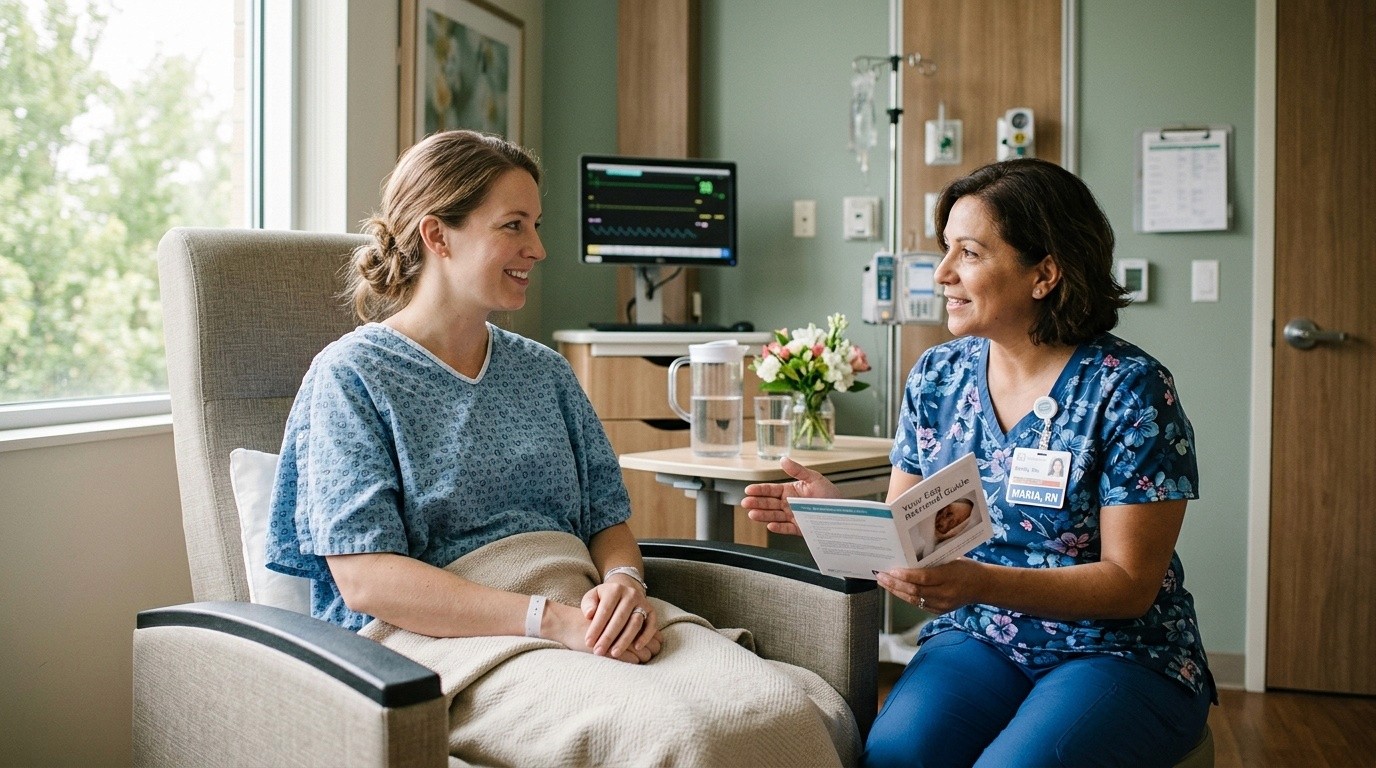
TIP FROM THE EMBRYOLOGIST Your partner or companion needs to be organized — not just present You can't drive after sedation. That's not a preference, it's a physiological and legal limit. But bringing someone with you is only half the preparation. The person who comes should know where the clinic is and how long it takes to get there, plan to wait around 3 to 4 hours, and bring something to keep themselves occupied. They may be the one who needs to absorb and remember discharge instructions while you're still groggy — and they should be available for the rest of the day, not just the drive home. If sperm collection is part of your cycle, your male partner typically has his own time slot a couple of hours after retrieval, though the exact timing varies between clinics. |
What Are the Risks of Egg Retrieval?
Egg retrieval is one of the safer invasive procedures performed in reproductive medicine, but it's not risk-free. The largest published series — a single-center cohort of 7,098 transvaginal oocyte retrievals — reported a severe complication rate of 0.08%.[^19][^20] That's six patients out of more than seven thousand.
What Specific Risks Should You Know About?
Complication | Frequency | What it means |
|---|---|---|
Intraperitoneal bleeding | About 0.06% | Bleeding from a punctured follicle or vessel. Most cases present within 2–12 hours; surgical management is occasionally required. |
Pelvic abscess or infection | About 0.003% | Rare. Risk is higher in patients with pre-existing pelvic adhesions or unrecognized infection at the time of retrieval. |
Ovarian hyperstimulation syndrome (OHSS) | Under 3% (severe) | An exaggerated response to stimulation; modern protocols using GnRH antagonist with agonist trigger have significantly reduced severe OHSS in high-risk patients. |
Injury to nearby structures | Very rare | Bowel, bladder, ureter, or iliac vessel injury. Reported as isolated case reports rather than measurable rates. |
Sources: Aragona C et al. Fertil Steril (2011);[^20] El-Shawarby SA et al. Hum Fertil (2004);[^17] Ellis D, Tsen L. BJA Education (2024)[^4]
Key Insight:
Bleeding complications can present as late as 12 hours after the procedure, not just immediately afterward.[^20] That's why discharge instructions cover the evening and following day — and why you should not be alone in the hours after retrieval. Severe abdominal pain, fever, shortness of breath, fainting, or heavy vaginal bleeding all warrant a same-day call to the clinic.
What Happens After Egg Retrieval?
After the procedure, you'll spend 1 to 2 hours in recovery while the sedation wears off. Some clinics perform a brief transvaginal ultrasound before discharge to check for free fluid and confirm there's no bleeding. Some clinics may also administer a single prophylactic dose of intravenous antibiotic to reduce the risk of infection.[^20]
What's Normal in the Hours and Days Afterward?
Mild cramping similar to period pain, for 1 to 3 days
Light vaginal spotting from the needle punctures, usually resolving within 24–48 hours
Mild bloating from enlarged stimulated ovaries; this can take a week or more to fully settle
Fatigue for the rest of the day from sedation and the emotional weight of the procedure
What Warrants a Same-Day Call to the Clinic?
Important:
Call the clinic — or use the out-of-hours number — if you experience severe abdominal pain, heavy vaginal bleeding (soaking a pad within an hour), fever above 38°C, fainting, persistent vomiting, or shortness of breath.[^4][^18][^20] These can be early signs of bleeding, infection, or OHSS, and they're easier to manage when reported promptly.
What Does the Egg Count Actually Tell You?
The number the clinic gives you right after retrieval is the first number in a series, not the final score.[^2][^8][^11] Every IVF cycle is a funnel: of the follicles seen on scan, a subset yield eggs; of those eggs, a subset are mature; of the mature ones, a subset fertilize; of the fertilized ones, a subset reach the blastocyst stage.
This drop at every stage isn't failure. It's biology working as expected. Cumulative live birth rates increase with every additional oocyte retrieved [^8], which is precisely why stimulation protocols aim to retrieve an adequate number of eggs while keeping the cycle safe.[^8][^11]
TIP FROM THE EMBRYOLOGIST Empty follicles happen — and it doesn't mean anything was done wrong Patients often assume that every follicle on the ultrasound scan will produce an egg. Not always. Some follicles do not yield an egg at retrieval, particularly the smaller ones at the edge of the measurable range. Some contain immature eggs that can't be used right away, though practices vary — some labs mature them in culture (in vitro maturation, or IVM), and some labs can fertilize even immature eggs. In rare cases of an unexpectedly poor response, even follicles that appear mature on ultrasound yield no eggs. Oocyte retrieval efficiency — the percentage of follicles that yield a usable egg — varies between patients and even between cycles in the same patient. |
→ Treatment option: In Vitro Fertilization (IVF)
What Happens in the Lab Between Retrieval and the Fertilization Call?
Between retrieval and the fertilization call, the lab assesses each egg for maturity, combines mature eggs with prepared sperm, and rechecks the dishes 16 to 18 hours later to confirm fertilization.[^2][^3] Patients go home after retrieval, and there's silence until the following morning — but inside the lab, that quiet stretch is when most of the early decisions are made.
How Are the Eggs Assessed?
The embryologist examines each oocyte under a microscope to determine its maturity. Only MII oocytes — eggs that have completed nuclear maturation and extruded the first polar body — are suitable for conventional IVF or intracytoplasmic sperm injection (ICSI).[^2][^3] Immature eggs may be set aside to mature further in culture, or fertilized immediately, depending on the clinic's policy. There's still a chance of fertilization in those cases, though the chance is lower.
When Does Fertilization Happen?
Mature eggs are combined with prepared sperm — through conventional IVF or ICSI — within hours of retrieval. The embryologist returns 16 to 18 hours later to check for two pronuclei (2PN) — the genetic material from each parent, visible side by side inside the egg. Two pronuclei confirm normal fertilization.[^2][^3] That's what they call the next morning reports.
So, What Should You Do Now?
If your retrieval is scheduled, here's the order of operations.
Step 1: Lock In the Trigger Time
When the clinic confirms the trigger time, set multiple alarms, tell your partner, and save the out-of-hours number. Take the injection at the exact time — not the rough time. This is the one rule with the least flexibility.
Step 2: Confirm Fasting Instructions
Standard rules: no solid food for 6–8 hours before sedation; clear liquids allowed up to 2 hours before. Your clinic may modify this if you have diabetes, severe reflux, or other risk factors — confirm in advance, not the morning of.[^4]
Step 3: Plan the Day, Not Just the Morning
Arrange a companion who can stay for the day, not just the drive home. Pack photo ID, comfortable clothes, a sanitary pad, and something warm. Remove jewelry and piercings before leaving the house.
Step 4: Know What's Normal and What's Not
Light spotting, mild cramping, and bloating are expected. Severe pain, heavy bleeding, fever above 38°C, fainting, or shortness of breath are not — call the clinic immediately if they appear, even hours after discharge.[^4][^18][^20]
Step 5: Wait for the Lab Call — But Set Expectations First
The morning-after call reports fertilization, not final results. Even confident-looking retrievals lose numbers at every stage — eggs, mature eggs, fertilized eggs, blastocysts. Each step is normal attrition, not failure.
Step 6: Compare Clinics Before You Commit
Not every clinic uses the same stimulation protocols, trigger choices, or sedation approaches. If you're still choosing, compare lab credentials, OHSS prevention strategies, and the clinic's handling of low- and high-responders. The differences matter.
→ Compare fertility clinics worldwide: MedicalNavigator.com/fertility-clinics
Too Long, Didn't Read
Egg retrieval typically happens 34–36 hours after the trigger shot — significant timing errors can affect egg maturation or risk ovulation before retrieval.
Fast from solid food for 6–8 hours, but clear liquids are allowed up to 2 hours before sedation.
Wear loose clothes, leave jewelry and piercings at home, and bring a photo ID and a companion who can stay for the day.
Severe complications affect just 0.08% of patients — but call the clinic for severe pain, heavy bleeding, fever, or shortness of breath.
Sedation uses propofol in most centers; you'll be in recovery for 1–2 hours and home the same day.
The egg count is the first number in a funnel — mature eggs, fertilized embryos, and blastocysts all drop further at each stage.
References
[^1]: Bosch E, Broer S, Griesinger G, et al. ESHRE guideline: Ovarian stimulation for IVF/ICSI. Hum Reprod Open. 2020;2020(2):hoaa009.
[^2]: Mancuso F, Singh M, Shanks AL. In Vitro Fertilization. [Updated 2026 Apr 12]. In: StatPearls [Internet]. Treasure Island (FL): StatPearls Publishing; 2026 Jan-.
[^3]: Jain M, Fang E, Singh M. Assisted Reproductive Technology (ART) Techniques. [Updated 2025 Dec 13]. In: StatPearls [Internet]. Treasure Island (FL): StatPearls Publishing; 2026 Jan-.
[^4]: Ellis D, Tsen L. Anaesthesia for assisted reproductive technologies. BJA Education. 2024;24:254–259.
[^5]: Kol S, Castillo Farfan JC, Trolice MP, Quaas AM. Monitoring of controlled ovarian stimulation in IVF. J Assist Reprod Genet. 2024;41(7):1715–1717.
[^6]: Turner K, Reynolds-May MF, Zitek EM, et al. Stress and anxiety scores in first and repeat IVF cycles: a pilot study. PLoS One. 2013;8(5):e63743.
[^7]: Quaas AM. Triggering change in stimulation protocols: a matter of oocyte maturation and beyond. J Assist Reprod Genet. 2021;38(6):1285–1287.
[^8]: Ata B. Why ovarian stimulation should be aimed to maximize oocyte yield. Reprod Biomed Online. 2023;46(4):655–658.
[^9]: Enatsu N, Furuhashi K, Otsuki J, et al. Optimal timing for triggering oocyte maturation during in vitro fertilization cycles varies between gonadotropin-releasing hormone agonist and human chorionic gonadotropin use. F&S Reports. 2025;6(4):446–454.
[^10]: Practice Committee of ASRM. Prevention and treatment of moderate and severe ovarian hyperstimulation syndrome: a guideline. Fertil Steril. 2023.
[^11]: Harvey AJ, Willson BE, Surrey ES, Gardner DK. Ovarian stimulation protocols: impact on oocyte and endometrial quality and function. Fertil Steril. 2025;123(1):10–21.
[^12]: Baldini GM, Baldini D, Lot D, et al. The Trigger in IVF Cycles: Molecular Pathways and Clinical Implications. Int J Mol Sci. 2025;26(24):11962.
[^13]: Rüggeberg A, Meybohm P, Nickel EA. Preoperative fasting and the risk of pulmonary aspiration — a narrative review of historical concepts, physiological effects, and new perspectives. BJA Open. 2024;10:100282.
[^14]: Haikin Herzberger E, Levy O, Sun B, et al. General anesthesia with propofol during oocyte retrieval and in vitro fertilization outcomes: retrospective cohort study. Sci Rep. 2023;13(1):8021.
[^15]: Matsota P, Sidiropoulou T, Vrantza T, et al. Comparison of Two Different Sedation Protocols during Transvaginal Oocyte Retrieval: Effects on Propofol Consumption and IVF Outcome. J Clin Med. 2021;10(5):963.
[^16]: Liu XM, Zhang F, Lu XS, Xi HT, Zhao JZ. Effects and safety of propofol intravenous anesthesia in transvaginal oocyte retrieval on outcomes of in vitro fertilization and embryo transplantation. Front Endocrinol. 2024;15:1497948.
[^17]: El-Shawarby SA, Margara RA, Trew GH, Lavery SA. A review of complications following transvaginal oocyte retrieval for in-vitro fertilization. Hum Fertil. 2004;7(2):127–133.
[^18]: Kyrou D, Popovic-Todorovic B, Papanikolaou E, et al. Discomfort and complications related to oocyte retrieval: a prospective cohort study. Fertil Steril. 2013;100:S478.
[^19]: National Academies of Sciences, Engineering, and Medicine. Assessing the Medical Risks of Human Oocyte Donation for Stem Cell Research: Workshop Report. Chapter 3 — Potential Risks Associated with Egg Retrieval. Washington, DC: The National Academies Press; 2007.
[^20]: Aragona C, Mohamed MA, Espinola MSB, et al. Clinical complications after transvaginal oocyte retrieval in 7,098 IVF cycles. Fertil Steril. 2011;95(1):293–294.
This guide is for informational purposes only. Always consult qualified healthcare providers for personalized recommendations. For full details, read our Medical Disclaimer.

Author of the article
Date of publication