


What Does a PGT Result Actually Tell You?
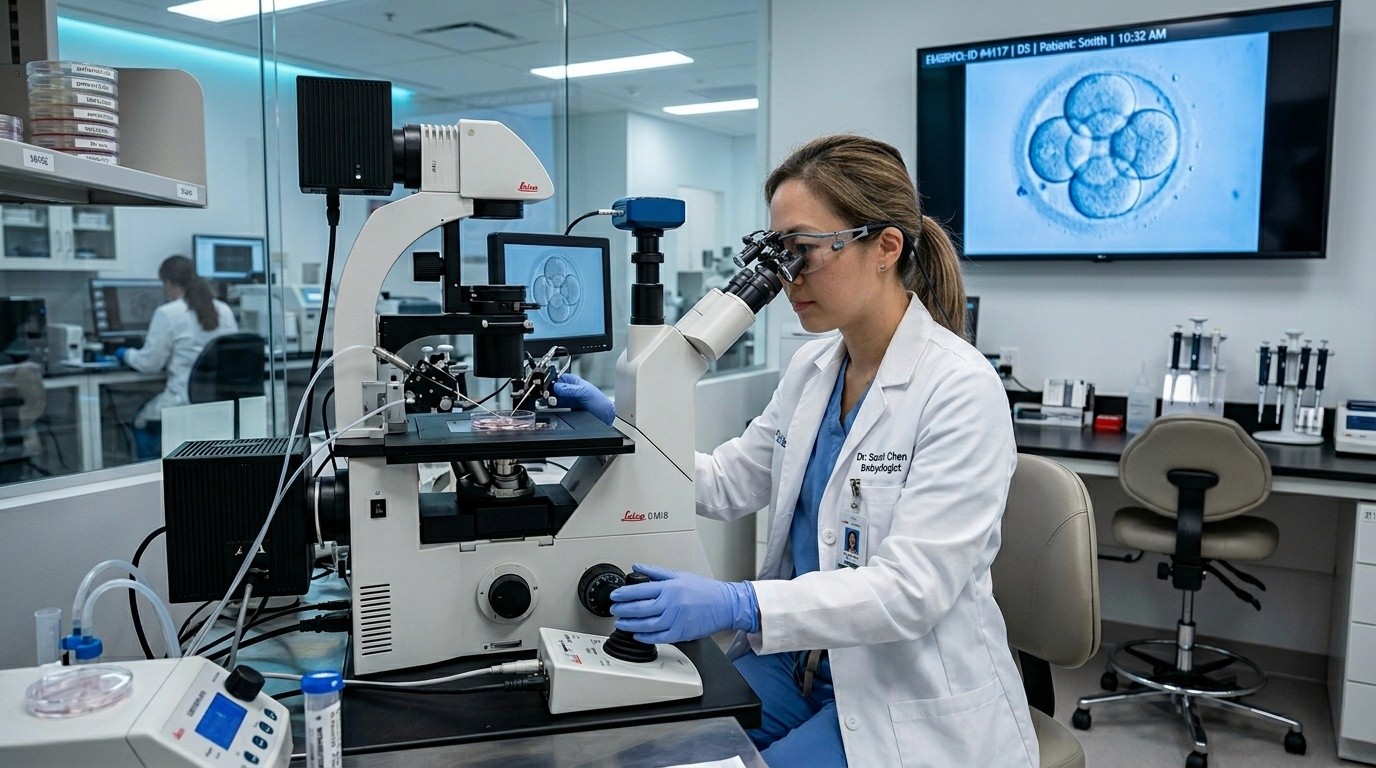
A preimplantation genetic testing (PGT) result tells you the chromosomal status of a small biopsy taken from your embryo — not a guarantee, not a verdict. The lab analyses 5–10 cells extracted from the trophectoderm (the outer layer of the blastocyst that later forms the placenta) and reports on their genetic characteristics.[^2][^3] That’s the short version.
Three results dominate every report from preimplantation genetic testing for aneuploidy (PGT-A) — the most common type of PGT: euploid, aneuploid, and mosaic. A fourth — “no result” or “inconclusive” — shows up in roughly 0.86–3.8% of cases when the lab can’t read the sample reliably.[^1] Each label carries different odds of pregnancy and a different recommendation from your clinic.
If your testing was for a specific genetic disease (PGT-M, for monogenic conditions) or a known chromosomal rearrangement (PGT-SR, for structural rearrangements), the report will look different — usually “affected,” “unaffected,” or “carrier” for that specific condition. Most of this guide focuses on PGT-A results, which are by far the most common type ordered alongside IVF.[^4][^14]
→ Learn more: Pre-implantation Genetic Testing (PGT)
What Does Euploid Mean?
Euploid means the biopsied cells contain the normal 46 chromosomes arranged in 23 pairs. This is the result every patient hopes to see, and it’s the lab’s strongest chromosomal candidate for transfer.[^1]
But “euploid” isn’t “guaranteed pregnancy.” The live birth rate per single euploid embryo transfer ranges from 54.1% to 55.1% in recent large datasets that pool patients of different ages and clinics.[^3] Roughly four in ten transfers of a tested, normal-looking embryo still does not result in a baby. Implantation depends on more than chromosomes — endometrial receptivity, embryo-uterine signaling, and other factors that researchers candidly call a “black box.”[^3] The honest translation: doctors can see what goes in and what comes out, but not yet everything that happens in between.
In the Miller et al. 2025 single-clinic series of 224 euploid embryo transfers, the live birth rate was 42%.[^5] Different clinics, different patient mixes — but the pattern is consistent: euploid raises your odds substantially without removing risk.
Bottom Line:
Euploid is the strongest result available. It isn’t a promise of a baby. Plan your transfer with hope; plan your follow-up with the realism this process demands.
What Does Aneuploid Mean?
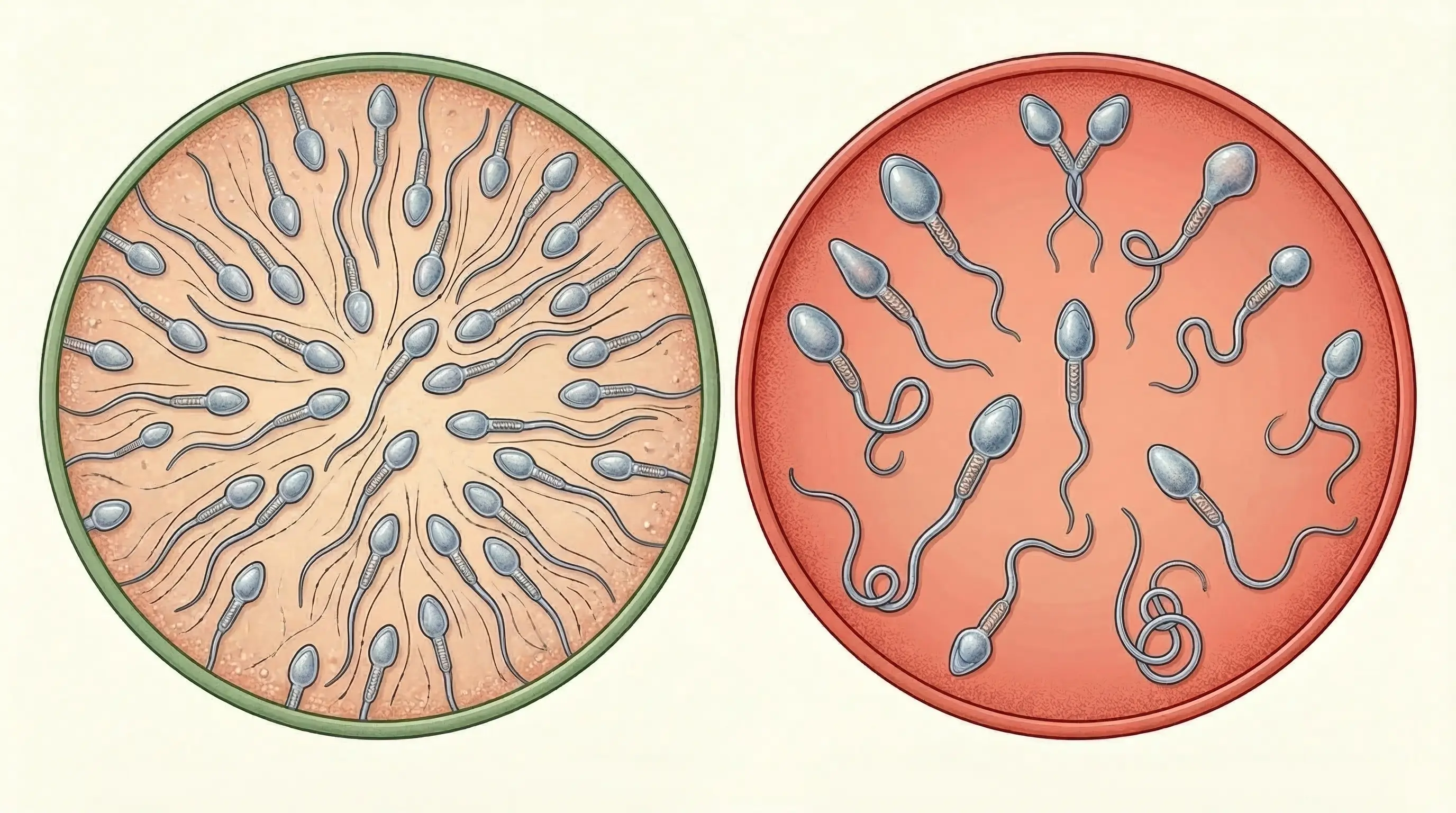
Aneuploid means the biopsied cells had too many or too few chromosomes — extra copies (trisomies), missing copies (monosomies), or partial gains and losses of chromosomal segments. Most aneuploidies aren’t viable. They tend to fail implantation, miscarry early in pregnancy, or — in a small subset involving chromosomes 13, 18, 21, X, or Y — proceed to birth with serious genetic conditions.[^1][^3]
Why so often? Mainly maternal age. Aneuploidy rates climb sharply through the late thirties and into the forties because oocytes accumulate chromosomal segregation errors over time.[^1][^3]
A 2025 single-clinic study transferred 15 known aneuploid embryos over a two-year period. The result: zero live births. Five transfers produced a positive beta-hCG; one progressed to clinical pregnancy and miscarried.[^5] The same clinic transferred 224 euploid embryos in the same period and saw 96 live births.[^5] Earlier non-selection studies have reported similar findings.[^1]
Important:
Most clinics don’t offer to transfer aneuploid embryos. Where it is offered, it’s after extensive genetic counseling and is the patient’s informed choice. The reproductive potential, on current evidence, is very close to zero.[^1][^5]
What Does Mosaic Mean?
Mosaic means the biopsied sample contained more than one chromosomally distinct cell line — some normal, some abnormal — within the same embryo.[^1] This is the result that confuses patients most, because for years it was treated as borderline-aneuploid and discarded. Science has moved on.
Mosaicism rates in tested blastocysts range from 15.8% to 17.4% in the largest published series.[^3] Here’s the catch. Between clinics, reported rates range from 6.5% to 35.6% — the same embryo, biopsied identically, could be called euploid in one lab and mosaic in another.[^3] That’s a diagnostic gray zone, not a hidden flaw in the embryo.
So why do many “mosaic” embryos go on to produce healthy babies? Two main theories explain it. First, self-correction: abnormal cells in the inner cell mass may undergo programmed cell death, leaving normal cells to form the fetus. Second, PGT-A overestimation: the trophectoderm biopsy may misrepresent the rest of the embryo, especially when intermediate copy-number signals are interpreted as mosaicism.[^7]
Think of a mosaic biopsy result as a single core sample from a much larger embryo — you’re looking at 5–10 cells out of more than a hundred. What’s in your sample isn’t always what’s in the rest of the embryo.[^2][^7]
Low-Level vs High-Level Mosaicism: What’s the Difference?
The difference is how much of the biopsy shows abnormal cells — and it changes the prognosis. By international convention:[^1][^8]
Low-level mosaic: less than 50% of the analyzed sample shows abnormal cells.
High-level mosaic: 50% or more of cells are abnormal.
Outcomes track this divide. A 2025 single-transfer study from an 832-blastocyst time-lapse cohort found:[^6]
Embryo Type | Implantation Rate | Ongoing Pregnancy / Live Birth |
Euploid | 56.9% | 52.8% |
Low-level mosaic | 40.0% | comparable to euploid |
High-level mosaic | 23.5% | 17.6% |
Source: Listorti et al. (2025), Journal of Assisted Reproduction and Genetics[^6]
The pattern holds across larger datasets. Low-level mosaics behave much like euploid embryos; high-level mosaics implant less frequently and miscarry more often.[^8]
Should Mosaic Embryos Be Transferred?
Yes — under specific conditions and after genetic counseling. We’ve come a long way from the original assumption that mosaic embryos shouldn’t be used at all. The American Society for Reproductive Medicine (ASRM) 2024 committee opinion explicitly supports mosaic embryo transfer when no euploid embryos are available, with appropriate counseling and follow-up.[^1] The Preimplantation Genetic Diagnosis International Society (PGDIS) 2021 position statement confirms that mosaic transfers don’t appear to raise the risk of abnormal birth outcomes. However, implantation rates are lower and miscarriage rates higher than for euploid transfers.[^8]
Persistence of mosaicism through pregnancy is rare. In one prospective series, only 1.2% (3 out of 250) of mosaic embryo pregnancies showed detectable mosaicism on prenatal testing — a rate consistent with the general population baseline.[^7] That low number is reassuring — but the ASRM 2024 committee opinion still recommends offering prenatal genetic diagnosis, such as chorionic villus sampling or amniocentesis, after a mosaic transfer to confirm the baby’s chromosomes.[^1]
Key Insight:
Many patients are still told mosaic embryos are “not transferable.” That’s an outdated view. Current ASRM and ESHRE guidance both support transfer with counseling, and in older patients, a mosaic embryo can be a better option than another retrieval cycle.[^1][^10][^11]
→ Learn more: How to Understand Embryo Grading
What If Your Result Is “No-Result” or Inconclusive?
A no-result happens when the lab couldn’t extract enough usable DNA from the biopsy to make a chromosomal call. This occurs in 0.86% to 3.8% of PGT-A cases.[^1] The embryo isn’t necessarily abnormal — the test didn’t work.
Two paths usually exist. The right one for you depends on your age, the number of other embryos you have, and how much risk to the embryo you’re willing to accept.
Re-biopsy: The embryo is thawed, biopsied a second time, and re-frozen. Some embryos tolerate this well, but evidence from multiple vitrification-and-biopsy cycles is mixed — clinical pregnancy rates may drop in embryos that undergo two rounds of both — and the lower an embryo’s grade, the less likely it is to survive a second freeze-and-thaw at all.[^1]
Transfer without testing: In selected cases, especially when the embryo looks morphologically strong, your clinician may recommend transferring the no-result embryo and following up with prenatal diagnostic testing (chorionic villus sampling, CVS, or amniocentesis) later in pregnancy.[^1]
There’s no single correct answer, and this is exactly the conversation to have with your fertility specialist before agreeing to any further procedure on a no-result embryo.
What If All Your Embryos Are Abnormal?
If all your embryos come back abnormal, you have several real options — and the situation is more common than patients expect. In a study of women with only 1–3 blastocysts available, 46% of PGT-A cycles produced zero euploid embryos, and the live birth rate per retrieval was actually lower in the PGT-A group (20%) than in the untested group (43%).[^9] For patients with low embryo numbers, PGT-A can subtract more than it adds.
If your full report comes back without a euploid embryo, the ASRM 2024 committee opinion lays out four broad options:[^1]
Another egg retrieval cycle — most likely to help younger patients with reasonable ovarian reserve.
Mosaic embryo transfer with genetic counselling — increasingly considered standard when no euploid is available.
Donor eggs — particularly relevant for advanced maternal age or after multiple unsuccessful cycles.
Stopping treatment, alone or alongside considering adoption or building a life without biological children, is a valid choice that fertility care often understates.
A Stanford decision-analysis model put numbers on the trade-off between trying again versus transferring a mosaic embryo when only mosaic embryos remain:[^10]
Patient Age | Better Average Outcome | Cost Difference (USD) |
Under 43 | New IVF cycle with PGT-A (+14.5% LBR) | +$16,633 vs mosaic transfer |
Over 42 | Mosaic embryo transfer (+4% LBR) | $9,572 less than the new cycle |
Source: Khorshid et al. (2024), Journal of Assisted Reproduction and Genetics[^10]. Figures adjusted to 2023 USD.
Numbers aren’t the whole story. Time, emotional reserve, financial limits, and your own definition of an acceptable outcome all belong in this conversation.
→ Treatment option: In Vitro Fertilization (IVF)
What Is It Like Living with Difficult PGT Results?
A result of “all abnormal” or “high-level mosaic” can feel like a second diagnosis — separate from infertility itself. Patients commonly describe shock, anger at the body, and a sense that the test stripped away the optimism of the cycle. This can sound alarming. It usually isn’t the end of the road.
Research consistently shows that psychological distress and infertility outcomes are linked in both directions: distress affects engagement with treatment, and treatment outcomes affect distress.[^13] The European Society of Human Reproduction and Embryology (ESHRE) psychosocial care guideline recommends that fertility clinics offer counseling as a routine part of treatment, not as an emergency response after bad results arrive.[^12]
If your clinic doesn’t proactively offer counseling, ask for it. Some practical anchors:
Pause before deciding. A result is information, not a deadline. Most reasonable next steps can wait two to four weeks while you think.
Seek a second opinion if the recommendation feels rushed. Mosaic interpretation, in particular, varies across labs and clinicians.[^3][^7]
Talk to a genetic counselor. This is a separate professional from your fertility specialist and is increasingly a standard part of PGT care.[^1]
So, What Should You Do Now?
If your PGT report has just landed — or if you’re about to start a cycle that will include testing — these are the practical next steps:
Step 1: Read the Full Report, Not Just the Headline
Your report includes more than a single label per embryo. Look for the specific chromosomes involved, the percentage of abnormal cells (for mosaic results), and the morphological grade alongside the genetic call.
Step 2: Schedule a Result Consultation
Ask for a dedicated appointment to review the report with your fertility specialist or a genetic counselor — not a hallway conversation. Bring questions in writing.
Step 3: Understand Your Specific Numbers
Ask: “Given my age, my embryo report, and my history, what is my realistic chance per transfer?” Generic statistics don’t apply equally to every patient. Published live birth rates assume single transfers in pooled cohorts.
Step 4: Explore Every Option Before Discarding Embryos
If you have any non-euploid embryos, ask whether mosaic transfer with counseling is an option, what the lab’s mosaicism reporting threshold is, and what donor egg or untested transfer pathways might look like.
Step 5: Make Sure You Have Psychological Support in Place
This applies whether your results are good or difficult. Counseling is most effective before decisions are made under emotional pressure.
Step 6: Choose the Right Clinic for Your Next Step
PGT laboratories vary significantly in how they classify mosaic results, and clinic protocols vary in what they offer for non-euploid embryos. Compare clinics on their lab partnerships, mosaic transfer policies, and counseling availability.
→ Compare fertility clinics worldwide: MedicalNavigator.com/fertility-clinics
Too Long, Didn’t Read
Euploid embryos have the normal 46 chromosomes and produce live births in roughly 54–55% of single transfers, pooled across ages.
Aneuploid embryos carry the wrong chromosome number; in one 2025 series, 15 transfers produced zero live births.
Mosaic embryos contain both normal and abnormal cells and can produce healthy babies, with implantation rates around 40% for low-level cases.
A “no-result” report occurs in 0.86–3.8% of cases; re-biopsy is possible, but each cycle increases the risk to the embryo.
When all embryos are abnormal, options include another retrieval, a counseled mosaic transfer, donor eggs, or stopping treatment.
Genetic counseling before transfer is the standard of care for any non-euploid result, per ASRM and ESHRE guidance.
References
[^1]: Practice Committees of the American Society for Reproductive Medicine and the Society for Assisted Reproductive Technology. (2024). The use of preimplantation genetic testing for aneuploidy: a committee opinion. Fertility and Sterility, 122(3), 421–434.
[^2]: De Vos A, De Munck N. (2025). Trophectoderm Biopsy: Present State of the Art. Genes, 16(2), 134.
[^3]: Zhou F, Chen X, Liu S, Wang X. (2025). The clinical application and challenges of preimplantation genetic testing. Frontiers in Genetics, 16, 1599088.
[^4]: Fernandes SLE, de Carvalho FAG. (2024). Preimplantation genetic testing: A narrative review. Porto Biomedical Journal, 9(4), 262.
[^5]: Miller J, Pavlik O, Barker L, Gordon T. (2025). Comparing the potential of euploid, aneuploid, and mosaic embryos: one clinic’s real experience transferring embryos with aneuploid results. Fertility and Sterility, 124, e79–e80.
[^6]: Listorti I, Pirastu G, Ruberti A, et al. (2025). Time-lapse analysis of embryos classified as euploid, mosaic, and aneuploid after embryonic trophectoderm biopsy. Journal of Assisted Reproduction and Genetics, 42(1), 125–138.
[^7]: Campos G, Sciorio R, Fleming S. (2024). Healthy Live Births after the Transfer of Mosaic Embryos: Self-Correction or PGT-A Overestimation? Genes, 15(1), 18.
[^8]: Leigh D, Cram DS, Rechitsky S, et al. (2022). PGDIS position statement on the transfer of mosaic embryos 2021. Reproductive BioMedicine Online, 45(1), 19–25.
[^9]: Mahesan AM, Chang PT, Ronn R, Paul ABM, Meriano J, Casper RF. (2022). Preimplantation genetic testing for aneuploidy in patients with low embryo numbers: benefit or harm? Journal of Assisted Reproduction and Genetics, 39(9), 2027–2033.
[^10]: Khorshid A, Bavan B, Chung EH, Lathi RB. (2024). Mosaic embryo transfer versus additional IVF with PGT-A cycle: a decision model comparing live birth rate and cost. Journal of Assisted Reproduction and Genetics, 41(3), 635–641.
[^11]: European Society of Human Reproduction and Embryology (ESHRE). (2020). Good practice recommendations for preimplantation genetic testing (PGT). Human Reproduction Open.
[^12]: Gameiro S, Boivin J, Dancet E, et al. (2015). ESHRE guideline: routine psychosocial care in infertility and medically assisted reproduction — a guide for fertility staff. Human Reproduction, 30(11), 2476–2485.
[^13]: Pasch LA, Gregorich SE, Katz PK, et al. (2012). Psychological distress and in vitro fertilization outcome. Fertility and Sterility, 98(2), 459–464.
[^14]: Giuliano R, Maione A, Vallefuoco A, Sorrentino U, Zuccarello D. (2023). Preimplantation Genetic Testing for Genetic Diseases: Limits and Review of Current Literature. Genes, 14(11), 2095.
This guide is for informational purposes only. Always consult qualified healthcare providers for personalized recommendations. For full details, read our Medical Disclaimer.

Author of the article
Date of publication